Germany debates proposal to re-open Nord Stream pipelines – Members of the conservative CDU party, likely to lead the next German government, have raised the possibility of importing Russian gas again. The far right has welcomed the idea.
Parliamentarians of the Christian Democratic Union (CDU) have caused a political row in Germany by welcoming an apparent US initiative to repair and re-open the Nord Stream gas pipelines in the Baltic Sea between Russia and Germany.
Germany’s established “democratic” political parties are turning Germany “far-right” by not addressing the migrant madness.
And not addressing the Green energy madness. And not addressing the taxation madness. And not addressing the bureaucracy madness. And that’s not all of the madness that’s not being addressed, either. All this madness, you see, is what’s making everybody so mad.
In other words: Fix it already. Or go “far-right.”
Is Germany turning to the far-right? Inside the country’s battle for power – Germany heads to the polls this week facing a challenge for power from the far-right. In the run-up to the historic vote, Siobhan Robbins heads to the country’s right-wing heartland.
Doesn’t that reflect German majority opinion? Well… No, it doesn’t. Not when the polls all indicate the opposite.
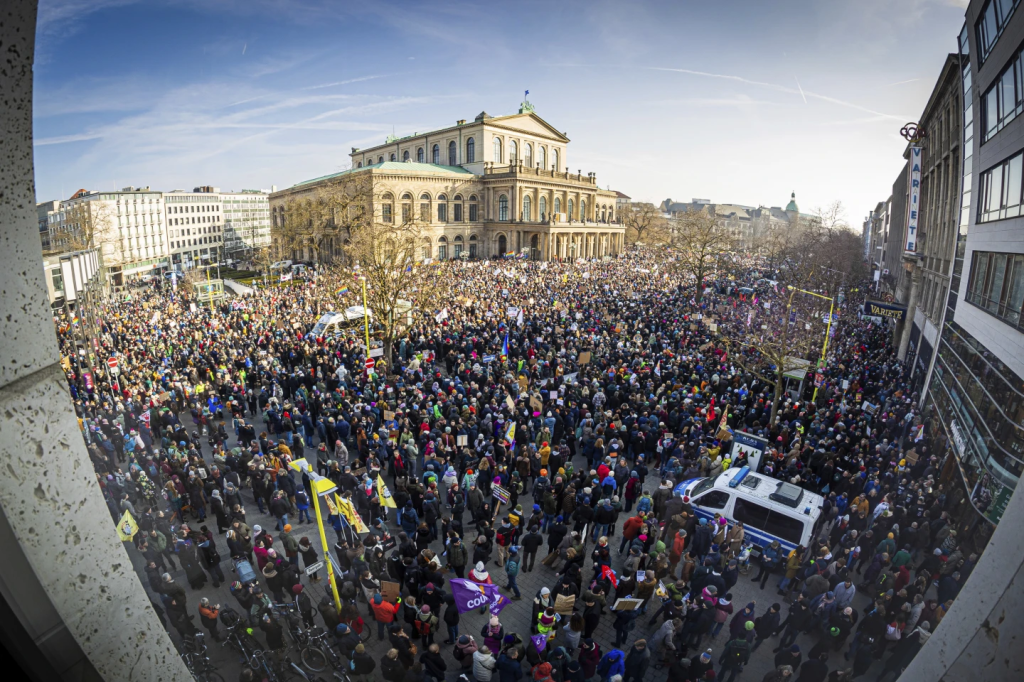
At least 200,000 protesters rally in Munich against far-right AfD ahead of German election – More than 200,000 protesters rallied in Munich, Germany, on Saturday against far-right extremism ahead of the country’s general election.
The far-right, anti-immigrant Alternative for Germany, or AfD, is in second place in recent polls and has prompted widespread protests across the country before voters cast their ballots on Feb. 23…
FDP deputy leader Kubicki rejects the idea that “firewall” demonstrations reflect majority opinion: Otherwise the red-green party would have made huge gains in the polls.
All those hundreds of thousands protesting against the “CDU-AfD collaboration?” That must have been a misunderstanding or something.
German election: CDU still leads in the polls – The conservative Christian Democrats haven’t sustained major damage despite having accepted support from the Alternative for Germany. But fewer people now trust chancellor hopeful Friedrich Merz not to veer to the right.
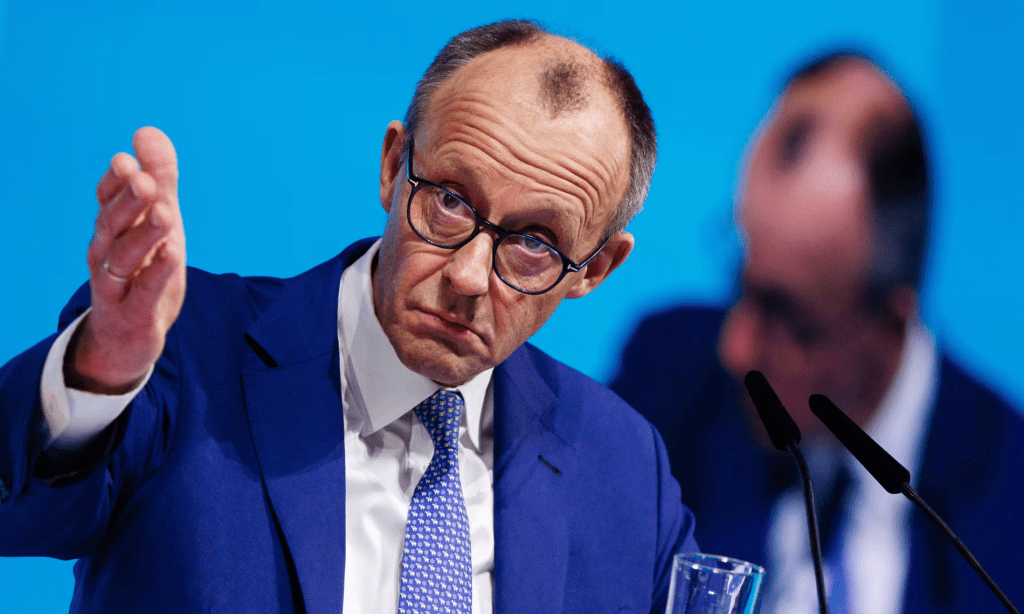
Merz doubles down on gambit with German far right in combative speech – Prospective chancellor takes startlingly aggressive line against those protesting against gamble with AfD.
The German conservative opposition leader, Friedrich Merz, whose party is widely tipped to win this month’s general election, defended his hardline migration proposals after a wave of protests accused him of breaching the time-honoured “firewall” between the far right and centrists.
In an uncompromising speech to a party congress of his Christian Democratic Union (CDU) in Berlin, Merz said he was confident they would win the 23 February vote “with a very good result”, well ahead of the anti-immigration, anti-Islam Alternative für Deutschland (AfD), which has been consistently placing second in the polls.
Five days after passing a non-binding resolution on border policy with the votes of the far right – marking a historic breach of a taboo – Merz renewed a promise to bar any formal cooperation with the AfD in future.
“We will not work with the Alternative für Deutschland – not before [the election], not after – never,” he said to a lengthy standing ovation from delegates.
As in dissenters within your own party. In this case, Germany’s CDU.
Germany’s parliament rejects radical migration plan – Greens and SPD earlier refused to support the Influx Limitation Act amid fierce criticism from Merkel over Merz’s cooperation with AfD…
The highly-controversial proposal, put forward by the CDU/CSU opposition party which leads in the polls, failed to secure a majority in the Bundestag, despite the backing of the far-right Alternative für Deutschland.
German immigration motion passes, breaking taboo on cooperation with AfD – Narrow passage of controversial CDU-CSU motion ends longstanding boycott on cooperating with far-right party.
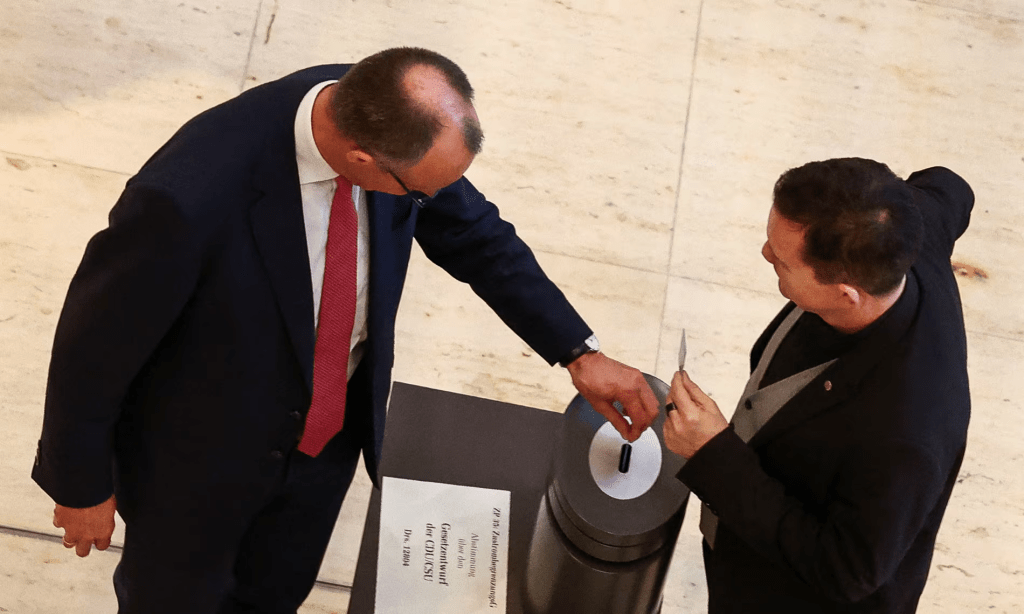
The German parliament has narrowly passed a motion urging tough restrictions on immigration that was highly controversial because it was backed by the far-right Alternative für Deutschland party.
The motion was brought by the conservative opposition CDU-CSU and backed by, among others, the AfD, breaking a longstanding taboo on cooperation with the anti-immigration party.
Despite Scholz’s criticism (German Chancellor Olaf Scholz, SPD): majority of SPD voters support Merz’s asylum ban, according to poll – Scholz had protested vehemently against the CDU’s push for a turnaround on migration. A survey now shows that 66% of Germans support Merz – as do the majority of SPD voters.
When it comes to Germany’s migration policy. Something that has never been taken before. Or maybe this time doch (after all)? Could it really be possible now?? Nah.
Germany’s opposition leader Merz under fire for vowing migration crackdown – Germany’s opposition leader Friedrich Merz is under fire for vowing strict border controls if he is elected chancellor, with the frontrunner citing a deadly knife attack that was allegedly carried out by a rejected asylum seeker as justification for a migration overhaul.
The leader of the Christian Democratic Union (CDU) on Thursday presented a five-point migration plan calling for, among other things, a “de facto entry ban” for all people without valid documents and permanent control of all of Germany’s borders…
Merz has steadfastly ruled out the possibility of working with the controversial AfD — which has been traditionally shunned in parliament amongst Germany’s more established parties.
Yet the AfD’s candidate for chancellor, Alice Weidel, emphatically supported Merz’s proposals, which she claimed her party had put forward first. Weidel said that the AfD could work with the CDU in order to gather enough votes for Merz’s measures to pass.
In Germany. When it comes to climate change, I mean.
Endlich (finally).
Germany’s likely next chancellor vows to put economy before climate – Conservative chancellor candidate Friedrich Merz railed against the climate policies of the left-leaning parties he’ll likely have to govern with.
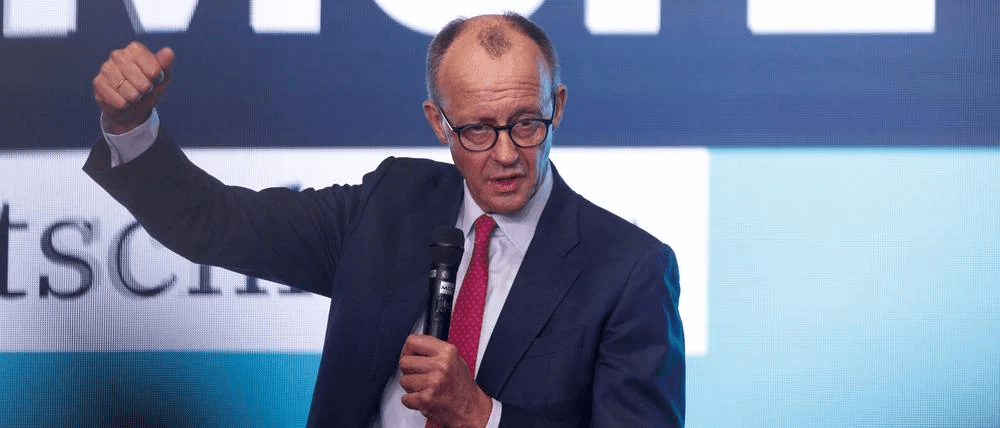
Germany’s economic policies have been “almost exclusively geared toward climate protection” during the reign of Chancellor Olaf Scholz, Merz said during a campaign speech in the western industrial city of Bochum on Monday. “I want to say it clearly as I mean it: We will and we must change that.”





 Observing Hermann