German of the day: Insolvenz

That means bankruptcy.

German business bankruptcies hit decade high amid downturn – Business bankruptcies have climbed to an 11-year high, with small firms hardest hit by Germany’s anemic growth. Economists warn of job losses but see tentative signs that the insolvency wave may be leveling off.

Don’t worry, in other words. Once everybody has gone bankrupt the bankruptcies will stop.

Germany to finally bow to the United States’ wishes

And become less dependent on the United States.

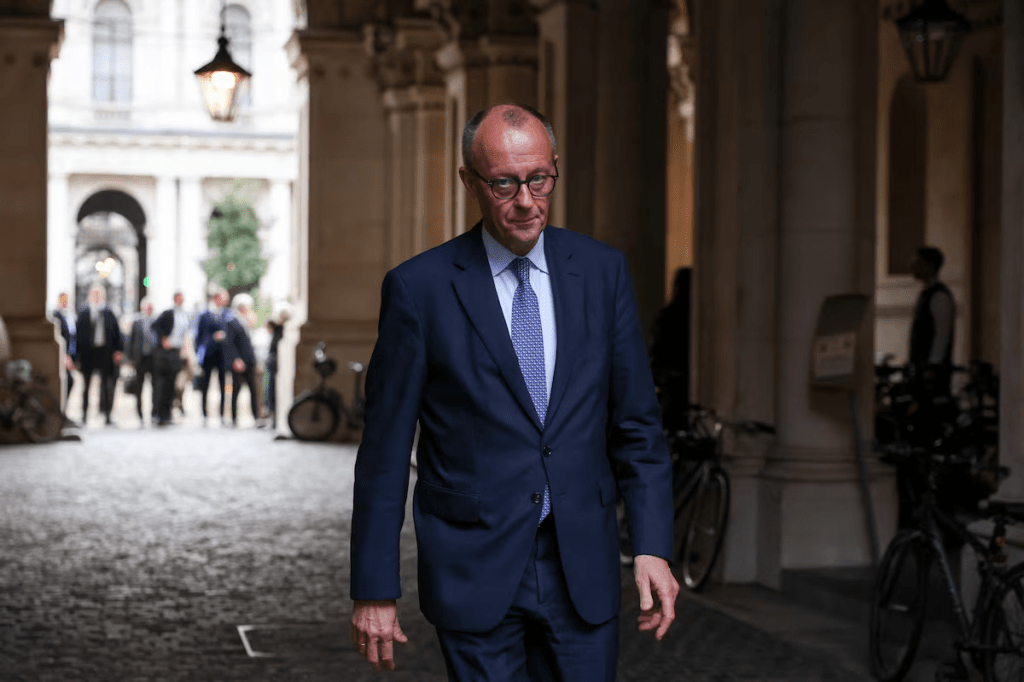
Germany’s Merz: Europe must become less dependent on United States – German Chancellor Friedrich Merz on Tuesday rejected a blistering attack on European democracies by the Trump administration, which issued a strategy paper last week declaring that the continent faced “civilizational erasure.”

The U.S. National Security Strategy, made public last week, caused shock across Europe, with a broadside that accused European governments of “subversion of democratic processes” and said U.S. policy should include “cultivating resistance” within the European Union.

German of the day: Freier Fall

That means free fall.

The Federation of German Industries (BDI) believes that Germany’s economy is in “free fall.” German industry is currently facing a dramatic low point, BDI President Peter Leibinger told the news agency dpa. “The economy is in its worst crisis since the Federal Republic was founded, but the federal government is not responding decisively enough.”

A new industry report expects industrial production to decline by two percent this year. This would be the fourth consecutive year of decline. “This is not a temporary dip, but a structural decline,” Leibinger said. German industry is continuously losing ground.

Germans feel less gloomy?

Despite economic clouds?

Depends on who you ask. And how you look at it. My experience has been that Germans are the happiest when they’re the gloomiest.

Germans Feel a Little Less Gloomy Despite Economic Clouds – The pickup in consumer mood contrasts with a worsening outlook among German business.

Growth driver now just backseat driver…

Who doesn’t know what he’s driving at.

Germany was billed as Europe’s growth driver. Now economists are saying: Not so fast – Huge investment pledges and major fiscal changes had bolstered hopes that Germany could give the euro zone economy a much-needed boost, but economists are starting to question if — and when — that will happen.

“The actual spending is slower than many of the more excitable pundits had expected. In Germany, it takes time to spend money.”

German of the day: Schattenwirtschaft

That means shadow or underground economy.

It’s a Volkssport (national pastime) here. Over-taxed Germans get even with the government any and every chance they get. See Schwarzarbeit.

German shadow economy booms amid high taxes and state aid – While Germany’s economy falters, the country is experiencing a rise in undeclared work. What role do taxes and generous state aid for the poor play in the surge?

Is that from the same guy who wrote “Fear and Loathing in Las Vegas?”

Debt and precarious stagnation in the EU and Germany” sounds like a good read too.

Europe faces mounting fiscal strain as Germany pivots toward debt-financed spending to maintain political support…

The public has now lost faith in traditional muddling through and demands drastic changes.

This report focuses on Europe, where the economic situation has worsened considerably in recent years. Several countries on the old continent have become more vulnerable to shocks, and imbalances have piled up. Moreover, leaders have demonstrated an inability or unwillingness to address structural problems, yet they are all too eager to haughtily break their electoral promises, swim with the tide and gather consensus through frantic lawmaking in the name of emergencies, fairness and social justice.

It’s not because we have the highest energy costs in the world…

Or the shortest number of hours (days) worked in any industrialized country. Or the most restrictive bureaucracy of any G7 nation. Or even that we continue to miss the boat when it comes to embracing new technological developments. To name just a few.

No. Germany’s economy continues to fail (for the third year now) because of Donald Trump.

Germany sees zero growth in 2025, blames Trump tariffs – Germany was the only G7 economy that failed to grow for the last two years, and is on track for a third year without growth in 2025.

The German government cut its economic growth forecast to zero citing the impact of US President Donald Trump’s trade policies .

“There is above all one reason for this, namely Donald Trump’s trade policy and the effects of the trade policy on Germany,” outgoing Economy Minister Robert Habeck said.