It’s the energy, stupid

They may beat them in footbal (2-1 last night, without a manager) but…

German economic weakness belies France’s outperformance – Germany’s economic weakness is casting a flattering light on France’s relative resilience that belies the otherwise middling performance of the euro zone’s second-biggest economy, economists say…

Germany’s manufacturing-focused economy is struggling to adapt to being cutoff from cheap Russian gas and the rise of the electric vehicle, said Charles-Henri Colombier with the Rexecode economics think tank in Paris.

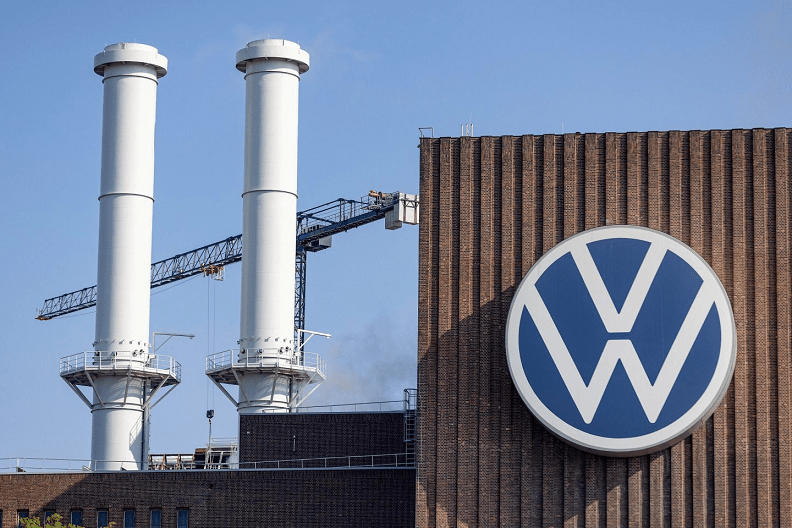
Germany’s gas-hungry chemical industry has seen production fall 18% from 2019 levels while in France it is only 8%, Colombier said. Meanwhile, German motor vehicle production is down 26% and only 6% in France.

We’re number one!

At saving the planet.

Too bad we’re destroying ourselves in the process.

Strike one: Germany’s nuclear phase-out.
Strike two: Its self-inflicted energy dependency on Russia.
Strike three: Still believing that renewable energy can run an industrialized country.

Green energy prices are killing German industry right before our very eyes.

Germany predicted to be the only major European economy to contract this year as recession lingers – The German economy has struggled in the wake of Russia’s invasion of Ukraine, with Berlin having to, very quickly, end years of energy dependency on the Kremlin. The International Monetary Fund said in July that Germany would likely contract by 0.3% this year.

German of the day: alles bestens

That means everything is fine, cool, hunky-dory.

Falling industrial output for three straight months ain’t no big deal, says German Green Vice Chancellor Robert Habeck. And “not everything is bad,” he added. Wow. That’s actually unbridled optimism for a Green.

Habeck defends German economy as output drops – Vice Chancellor Robert Habeck said Germany remains a “highly attractive location” for investors. But the statistics agency said industrial output fell for a third straight month, and that wasn’t the only negative news.

Slowcession?

Is that like shrinkflation?

Because Germany is definitely suffering from that.

Is Germany’s great economy sinking into ‘slowcession’? Key data this week will offer a hint as to whether the eurozone’s powerhouse can shake off recent stagnation.

Engine of the eurozone, industrial powerhouse, export world champion – just some of the ways Germany’s economy has been described over the years.

However, recent figures have indicated that the good times have come to an end, with Europe’s largest economy stuck in recession.

It’s not a slowdown…

It’s more like a Vollbremsung. That’s German for full braking or emergency stop.

Germany’s highest court just cancelled the Green’s latest rush-rush trick, I mean plan to save the planet at German taxpayers’ expense.

Germany’s Green Slowdown – While voters may still broadly support net zero goals, they’re not necessarily on board with the escalating costs of the transition.

… Today, it’s the Greens’ proposed ban on new gas boilers in homes that’s causing trouble. Against a backdrop of sliding poll ratings, the party’s partners in the coalition forced a dilution of the plan last month in a package that also included a massive road-building program.

In another blow to the policy — dubbed Habeck’s Heating Hammer by the opposition — Germany’s constitutional court has made a highly unusual intervention in the legislative process and ordered the government to give parliament more time to scrutinize the plan.

German Of The Day: Schrumpfen

That means to shrink.

You know. As in the Sick Man of Europe? The Incredible Shrinking (or was it Sinking) Country?

German Economy Shrinks Faster Than Expected – It’s a rare thing to happen, but Germany now looks like the sick man of Europe, a phrase previously often used to describe Britain.

The health of the business sector dropped significantly in June, according to recent data. The Ifo Business Climate index for Germany, which measures the health of the commercial sector, registered 88.5 in June, down from 91.5 in May. Higher numbers show economic strength, whereas lower ones show a weakening of the economy.

Speaking of sinking…

Talk The Talk

But walk the walk? And give up one of my many annual vacations, say?

Thanks, but we’ll just stick to the talking, if you don’t mind.

This, folks, is “saving the planet” rhetoric in a nutshell.

Germans Want Climate Policy – Just Not in Their Homes. A new law about home heating reveals political constraints on the energy transition.

Polls show that Germans are earnestly worried about the climate crisis and in favor of more climate action. The fallout of global warming is one of their most pressing concerns, indeed as it is across Europe. And yet, when it comes to modifying their lifestyles or paying higher prices to curb emissions, most say they’re not willing, or only as much as it doesn’t sting.

German Of The Day: Hiobsbotschaft

Literally, “Job of the Bible’s message.” Bad news, in other words. Evil tidings.

HIOBSBOTSCHAFT FOR GERMAN ECONOMY: Industrial Production Surprisingly Down Sharply.

Germany’s Industrial Plunge Revives Winter Recession Fears – German industrial production sank by the most in a year — raising the risk that Europe’s largest economy slipped into a winter recession.

Output dropped 3.4% in March, more than the 1.5% decline economists had predicted in a Bloomberg survey. The decrease was especially pronounced in the automotive sector, according to the statistics office.

German Of The Day: Schlechte Laune

The good news? Germans still have schlechte Laune (they’re still in a bad mood).

The bad news? They’re not in as bad a mood as they ought to be.

German consumer morale slows down on path to recovery – German consumer sentiment is set to nudge up in April as energy prices have relented somewhat from record highs, though a full recovery is not in sight anytime soon, showed a GfK institute survey on Wednesday.

The institute forecast its consumer sentiment index to improve to -29.5 heading into April from a revised reading of -30.6 in March, slightly below the expectations of analysts polled by Reuters of -29.0.