It’s Time To Drop Your Masks, Germans

And show us your real faces.

Faces plagued by real problems, for a change. Problems like finding new sources of energy that will keep your homes heated and your economy running (and breaking free from your dependency on Russian energy = 50%), skyrocketing inflation, dire economic forecasts and that little war thing going on in Ukraine just a few miles down the road, for instance. COVID-19? What’s COVID-19?

Starting Friday, a number of rules and restrictions went away in much of Germany. That means no more masks in most shops, and no more proof of vaccination or day-of test in restaurants. Though some public transportation systems, individual businesses and institutions will keep mask requirements in place, the move to drop the majority of mandates tracks with many of Germany’s neighbors.
Great Idea!

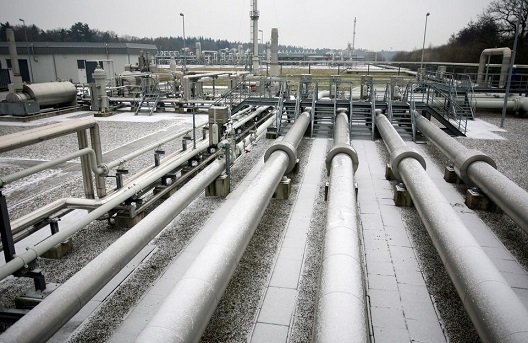
Pass a law that mandates gas storage facilities be filled by winter.

Only, what are you going to fill these storage facilties with? If Vladimir Putin turns off the gas, I mean. Oktoberfest beer?

Germany approves law mandating full gas storage before winter – The Bundestag lower house on Friday approved legislation requiring Germany’s privately-operated gas storage facilities to be full at the start of the next winter, to try to avert shortages in the event of a halt in Russian gas imports.

German Of The Day: Tank-Rabatt

That means tank discount.

No. Not those kind of tanks. Like tanks of gas. Germans will soon only have to pay an arm for their gasoline. They can keep their legs. For now.

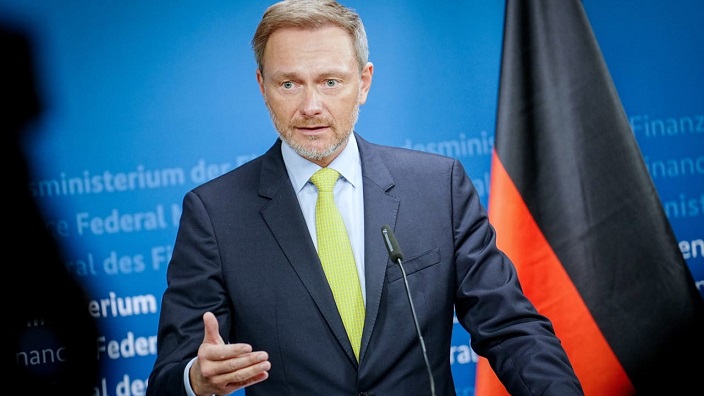
German finance minister plans gasoline discount – German Finance Minister Christian Lindner plans to introduce a discount on gasoline to help motorists cope with doaring prices, Bild daily reported on Sunday.

In A Quandary?

Germany is in a quandary over its dependency on Russian energy?

Quandary: a state of perplexity or uncertainty, especially as to what to do; dilemma.

When 50% of your oil, gas and coal comes from Russia, that’s no quandary at all. That just means you’re screwed.

Germany in a quandary over Russian energy – Germany has rejected a complete ban on Russian gas and oil imports over Russia invading Ukraine, but voices are growing louder for Berlin to ditch its economic imperative to take a moral stand.

50% Is Pretty Dependent

I’d say. But maybe that’s just me.

Hey, the Germans couldn’t have done it without Angela Merkel.

Factbox: How dependent is Germany on Russian gas?

Russia has warned it may shut off its main Nord Stream gas pipeline to Germany after Berlin halted approval of a second line across the Baltic Sea in response to Russia’s invasion of Ukraine.

Bad American Fracking LNG Suddenly Not That Bad After All

In Germany. Not nearly as bad as it was a few days ago, in fact. Just like that. It’s magic or something. It’s fracking inexplicable!

Germany Goes Ahead With First LNG Terminal to Cut Dependence on Russian Gas – Germany unveiled more details Saturday on its plan to build its first liquefied natural-gas terminals as it seeks to wean itself off its dependence on Russian gas.

The terminals are the latest step in Berlin’s diversification efforts that have been urgently ramped up in recent days following Russia’s attack on Ukraine. Germany gets around 55% of its gas from Moscow and has long been resistant to diversifying away from cheap and plentiful Russian energy supplies.

Germany last week halted the $11 billion Nord Stream 2 project, which would have doubled the capacity of an existing pipeline traveling along a similar route. The government also announced plans for gas and coal storage and commissioned its gas market trading hub to buy LNG for 1.5 billion euros, or the equivalent of $1.64 billion, from outside Russia.

Any Other Country Could

And would, of course. But Germany? Planet Germany? German Renewable Energy Disneyland itself? Do NOT place any bets on that one.

Explainer: Could Germany keep its nuclear plants running?

Of the 17 nuclear power plants Germany had at the time, only three remain in operation now: Isar 2, Emsland and Neckarwestheim 2, which are operated by German energy firms E.ON (EONGn.DE), RWE (RWEG.DE) and EnBW (EBKG.DE), respectively.

Under current plans, the plants, with combined capacity of 4,200 gigawatts (GW), will be shut down by the end of 2022.

More Than Double?

For the country that already pays the highest energy prices in Europe?

Why The Latest Russia Crisis Might Be Worse For Berlin Than Moscow And Kyiv – Germany is wedded to Russian oil and gas. If things got hot, what would Russia do?

“In the hypothetical event of a full-blown conflict between Russia and Ukraine, we would expect the main impact on the eurozone economy to stem from higher gas prices. We would expect gas prices to more than double. Eurozone inflation would hit over 6% by the spring and remain elevated longer than in our base case.”

German Of The Day: Cyber-Attacke

That means cyberattack.

An oil storage and a supply firm? Why would anybody attack oil storage and supply firms in Germany these days? And who could have possibly done it?

Germany: 2 oil storage and supply firms hit by cyberattack – Two companies involved in storing and supplying oil and other materials said Tuesday they have been hit by a cyberattack that has impacted operations in Germany.

Oiltanking GmbH Group and Mabanaft Group on Saturday discovered what they called a “cyber incident affecting our IT systems” and launched an investigation together with external specialists, the companies said in an emailed statement. They did not elaborate on the nature of the incident or address who might be responsible, and said they are working to understand its “full scope.”

This Is CNN?

How refreshing or something. What others (conservative voices) have been warning about for years and years has finally gone “mainstream” – as in North Stream 2.

Why Germany is so vulnerable to Russian blackmail – Roughly half of Germany’s natural gas imports come from Russia. That reliance will become increasingly important in coming years as Germany embarks on a simultaneous phaseout from coal and nuclear energy. Russia is also an important destination for German exports. And for historical reasons, German leaders have long desired close relations with Russia.

Slowly but surely, Germany has maneuvered itself into a position of vulnerability vis-à-vis the Kremlin.