We’re number one!

At saving the planet.

Too bad we’re destroying ourselves in the process.

Strike one: Germany’s nuclear phase-out.
Strike two: Its self-inflicted energy dependency on Russia.
Strike three: Still believing that renewable energy can run an industrialized country.

Green energy prices are killing German industry right before our very eyes.

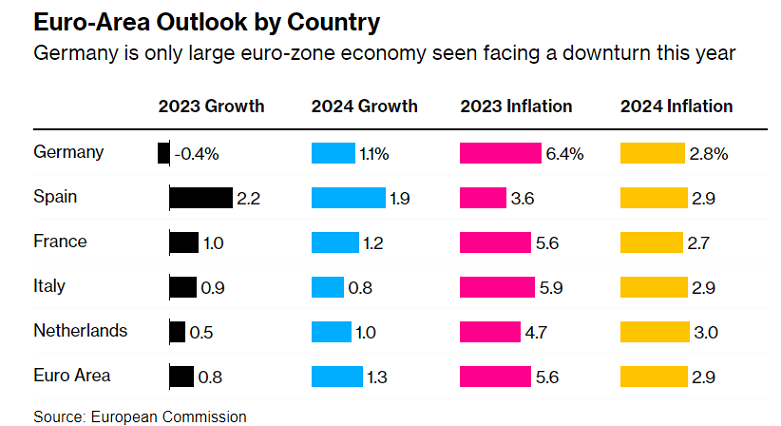
Germany predicted to be the only major European economy to contract this year as recession lingers – The German economy has struggled in the wake of Russia’s invasion of Ukraine, with Berlin having to, very quickly, end years of energy dependency on the Kremlin. The International Monetary Fund said in July that Germany would likely contract by 0.3% this year.

The lack of Russian gas isn’t your problem, Germany

It was your willing dependency on it. And your systematic shutdown of reliable energy sources at home.

Green ideology got you here. Now sit back and enjoy it. And remember: You’re setting an example for the rest of the world.

Energy fears spur German industrials to seek investments abroad – Annual business survey finds concern over country’s future without Russian gas.

Nearly a third of German industrial companies are planning to boost production abroad rather than at home amid increasing concern over the country’s future without Russian gas, according to a closely watched annual survey.

The annual “Energy Transition Barometer” by the German Chamber of Commerce and Industry (DIHK) found that 32 per cent of companies surveyed favoured investment abroad over domestic expansion. The figure was double the 16 per cent in last year’s survey.

Russia’s Economy Growing More Than Germany’s

Which isn’t hard to do. Germany’s economy isn’t growing at all.

Let’s call it the German Green New Deal.

Germany expected to be only major economy not to grow this year – According to the latest figures from the International Monetary Fund, Germany’s GDP is forecast to drop 0.3% this year while other countries continue to grow.

The German economy is still failing to grow, figures showed on Friday, as the country that should be the industrial powerhouse for all of Europe struggles with high energy prices, rising borrowing costs and a lagging rebound from key trading partner China…

In Germany, the economy has been buffeted by several challenges. Above all, its long-term dependence on Russian natural gas to fuel industry backfired when the invasion of Ukraine led to the loss of most of Moscow’s supply and to higher costs for energy-intensive industries such as metals, glass, cars and fertilizer.

The best we can offer you is five

Although originally shooting for at least ten, Germany’s Greens must now sheepishly admit that the best they can offer the country is five tough years of economic stagnation.

Germany faces 5 tough years, economy minister warns – Berlin should borrow money to subsidize energy for companies or risk losing its industry, Robert Habeck.

Germany faces five difficult years of green industrial transition that “will put a burden” on people, Economy Minister Robert Habeck warned — while urging his government to approve fresh subsidies to safeguard the country’s industrial base.

It’s not a slowdown…

It’s more like a Vollbremsung. That’s German for full braking or emergency stop.

Germany’s highest court just cancelled the Green’s latest rush-rush trick, I mean plan to save the planet at German taxpayers’ expense.

Germany’s Green Slowdown – While voters may still broadly support net zero goals, they’re not necessarily on board with the escalating costs of the transition.

… Today, it’s the Greens’ proposed ban on new gas boilers in homes that’s causing trouble. Against a backdrop of sliding poll ratings, the party’s partners in the coalition forced a dilution of the plan last month in a package that also included a massive road-building program.

In another blow to the policy — dubbed Habeck’s Heating Hammer by the opposition — Germany’s constitutional court has made a highly unusual intervention in the legislative process and ordered the government to give parliament more time to scrutinize the plan.

Save The Planet

Leave the country.

It’s the only Green thing to do.

German energy prices are so high they’re driving companies to relocate, industry body says…

In May, the German government revealed plans to set aside around 4 billion euros ($4.4 billion) each year to subsidize electricity prices for energy-intensive industries, in an attempt to shield businesses from high electricity prices.

“A lot of family-owned companies … have very operational plans to relocate.”

German Of The Day: Deprimiert

That means depressed.

German bosses are depressed – And dissatisfied with the government.

We are at a dangerous point,” worries Arndt Kirchhoff, boss of the employers’ association in North Rhine-Westphalia and one of three brothers who run Kirchhoff, a maker of car components. Germany recently slipped into a technical recession. Many companies are investing abroad rather than at home. Chinese consumers are importing less after the lifting of pandemic restrictions than German manufacturers had been hoping. And Ukraine’s counter-offensive against Russian invaders is injecting uncertainty into Germany’s backyard.

I Think I’ll Call It…

The Flux Capacitor!

Oh. Well, how about the Stellarator?

German start-up wins initial funding for revolutionary fusion energy machine – Proxima Fusion aims to build complex device to generate emissions-free power by fusing atoms.

A German start-up has secured initial funding to develop a revolutionary fusion energy machine that it hopes can provide a future source of abundant, emissions-free power.

Proxima Fusion, incorporated in January, aims to build a complex device known as a stellarator and is the latest company to join the emerging fusion industry’s effort to generate electricity by fusing atoms.

Green Hydrogen?

Do you mean green like in pink unicorns or like in red herrings?

I see. As in both.

How Germany’s Hydrogen Boom Stalled – Green hydrogen has the potential to heat millions of homes and keep German industry humming. So far, though, a lack of the environmentally friendly gas and the infrastructure needed to transport it have prevented its wide-scale use.

Welcome to the sobering hydrogen reality. While Germany hopes that it will soon be able to run basement gas heating systems on hydrogen, steel manufacturers are converting their production to the green gas at a cost of billions and energy companies are planning new power plants that will generate electricity from hydrogen, almost everything needed to make the climate-neutral dreams a reality in the near future is still lacking. The environmentally friendly hydrogen is missing, as are the pipeline networks to carry it across the country, not to mention reliable business models.

Talk The Talk

But walk the walk? And give up one of my many annual vacations, say?

Thanks, but we’ll just stick to the talking, if you don’t mind.

This, folks, is “saving the planet” rhetoric in a nutshell.

Germans Want Climate Policy – Just Not in Their Homes. A new law about home heating reveals political constraints on the energy transition.

Polls show that Germans are earnestly worried about the climate crisis and in favor of more climate action. The fallout of global warming is one of their most pressing concerns, indeed as it is across Europe. And yet, when it comes to modifying their lifestyles or paying higher prices to curb emissions, most say they’re not willing, or only as much as it doesn’t sting.