German of the day: Büroschlaf ist am gesündesten

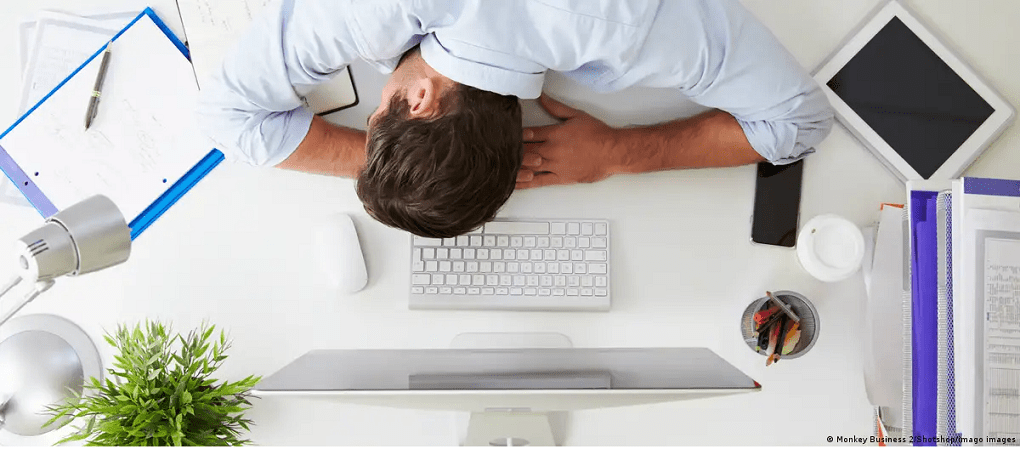
That means sleeping in the office is the most healthy kind of sleep.
Have the Germans become lazy at work?

Germans have long been known for their diligence, sense of duty, reliability and productivity. Recent data suggests that Germans are working fewer hours. But that doesn’t tell the whole story.

A glance at current OECD labor figures can be startling. In 2022, the average American worked over 1,800 hours per year, while the average German worked only 1,340 hours. However, labor market researcher Enzo Weber from the Institute for Employment Research (IAB) in Nuremberg, Germany, dismisses suggestions of the once-industrious Germans now only wanting to enjoy their sweet lives.

“Germany has a very high female labor force participation rate compared to most other countries,” Weber told DW, noting that the main difference to other countries was that about every second woman works part-time, which mathematically lowers the average annual working hours.

I don’t think Indian students deserve this

They didn’t do anything wrong.

Why can’t we just learn to live in peace?

Germany targets Indian students to address labor shortages – Germany looks to tap into international student talent to keep its engineering and IT sectors afloat.

Germany is grappling with a critical labor shortage and aging population, with projections indicating a deficit of seven million skilled workers by 2035.

With some 700,000 vacancies currently unfilled, Germany’s economic growth potential has dropped to about 0.7% now from around 2% in the 1980s, and is set to fall further to 0.5% if the country fails to resolve this problem, German Economy Minister Robert Habeck has said, stressing the importance of migration in bridging this widening gap.

Engaging Germany’s Indian student population in the workforce may be part of the solution.

Human robots don’t cut it in Germany anymore

They’re just not as, well, robotic as their parents and grandparents used to be.

It’s time to replace them with the real thing.

As baby boomers retire, German businesses turn to robots – At machine parts producer S&D Blech, the head of the grinding unit is retiring. With Germany’s acute labour shortage leaving few candidates to take on the skilled but dirty and hazardous manual work, the company will replace him with a robot.

Other small and medium-sized companies are also turning to automation as the gradual exit from the workplace of Germany’s post-war “baby boom” generation tightens the labour squeeze.

Above Average?

Germany’s labor costs above EU average? Sure. But take a closer look. Forget about Eastern Europe.

Cost

Germany is one of the lowest when it comes to labor costs in Western Europe. And maybe there’s a connection here somewhere but it’s unemployment rate is also one the lowest.

“This convergence of relative labor costs results from the fact that in countries with low labor costs, growth rates have been well above those of countries with already high labor costs for many years.”

Do They Strike This Much In Greece?

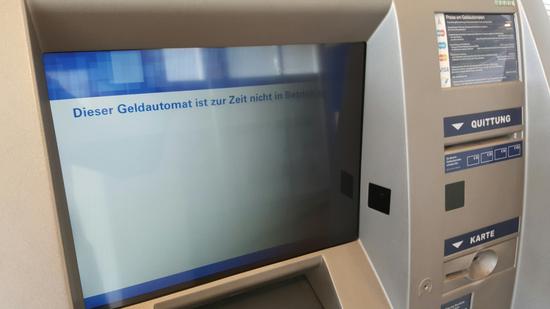
European travelers have contended for weeks with the possibility that Greece’s dwindling finances might lead to empty ATMs. They should have concerned themselves instead with Germany.

ATM

While cash machines in Athens are still operating without any trouble, striking couriers in Berlin this week stopped filling ATMs, leading to a crunch for those trying to make withdrawals. And the open-ended labor dispute with a local security company means there’s no end in sight.

Berlin’s strike is the latest in a series of walkouts that have riled a nation more accustomed to mocking the labor strife which has so often beset neighboring France. A strike by train drivers that began Tuesday is paralyzing travel and clogging highways throughout Germany. That action follows a March walkout by pilots at Deutsche Lufthansa AG that led to flight cancellations for 220,000 people.

German Blue Cards Going Like Hotcakes

A mass influx of skilled foreign laborers with “blue cards” to Germany is causing unexpected bureaucratic headaches and unsettling the already unsettled German xenophobic population at large.

So far, a grand total of 139 (that’s 1-3-9) foreign professionals have received the coveted card, camparable to the US-Amerikan “green card,” since its introduction in August.

“Wow. We had no idea just how bad people wanted to come here,” said one suprised immigration official. “This was way too easy. But how are we going to find jobs for all these folks now?”

Skilled employees from outside the European Union have apparantly been lining up everywhere and eating their achy breaky yearning little hearts out in earnest for this envied piece of blue plastic for quite some time now, partly due, it seems, to Germany’s celebrated image of being an overly bureaucratic and unwelcoming place for foreigners of all non-German kinds.

“German immigration law is still complicated and not very transparent for foreign skilled employees.”