Franz-Peter Tebartz-van Bling

I mean Tebartz-van Elst, of course.

Bling

“I got your church and state for ya right here, pal.”

What’s all the excitement about? Religious Germans contribute freely to their churches. It’s not as if the money this guy burned had been levied by taxation or anything. Uh, wait a second. OK. So I guess it had been.

Germany separates church and state much less clearly than does America but more explicitly than Anglican Britain or Orthodox Greece. Its post-war constitution, in a clause carried over verbatim from the Weimar constitution of 1919, favours no particular faith but lets all churches levy taxes on their members through the income-tax system (8% or 9% of a taxpayer’s bill, depending on the state).

Next Troubling Demographic Development Stuns Germany

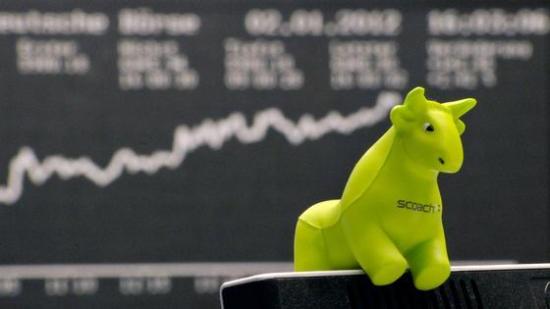
As if Germans did not have enough to worry about already, a study from Credit Suisse has just confirmed that more than 1.7 million German citizens are now living above the millionaire line.

Wealth

In fact, despite the so-called financial crisis, the amount of personal wealth has nearly doubled here since the year 2000.

German experts are grappling to find a sufficient explanation for this troubling development, as the causes of excessive German wealth were hitherto thought to have been fully understood and firmly under control.

With the release of these new findings, however, it appears as if some sources of this disgusting German wealth may be attributable to certain socio-demographic characteristics or other social, political, economic and cultural factors that may not have been fully comprehended up until now.

“This is absolutely shameful,” one grudging expert said. “It is an absolute outrage that wealth like this could exist in such an advanced and envious society as ours. We will not tolerate it and we shall never cease our efforts until the causes for this injustice are found and alleviated.”

Seit Mitte 2012 seien 221.000 Menschen hinzugekommen; insgesamt lebten in Deutschland nun gut 1.735.000 Dollar-Millionäre.

It’s Good To Be The German

In case you didn’t know it, Germans are sitting on a big honking tremendous pile of money.

The Bundesbank thinks that German private households are in posession of ein paar tausend Milliarden or “a few thousand billion” euros (stick with that, believe me: Billion is Milliarde in German, trillion is Billion). They’ve got more set aside now then ever before, in other words; some 4.7 trillion euros.

And the punch line is that they seem to have invested most of it at those awful horrible dreadful banks they like to despise so much (they make big banks even bigger, you might say). Investments in real estate haven’t even been calculated here, by the way. Rereading this is starting to make my stomach hurt.

Privatleute vertrauen Vermögen den Banken an.

We Are Still More Equal Than The Rest Of You

German lawmakers are like lawmakers everywhere else on the planet. At least when it comes to giving themselves raises, they are. They give themselves modest raises, of course, albeit at very regular intervals, and as quietly as humanly possible.

This time they’re giving themselves a ridiculously measly 500 euro a month raise, bringing the grand total up to a less than measly 10,700 euros per month.

Now that may seem like a lot to you, but it really isn’t. Ask any SPD man and he’ll tell you why: “Representatives cannot be compared to those in lower income brackets.”

Well there we have it. They have to be on equal footing with others out there with, uh, I dunno,  lots of money? Otherwise they might be susceptible to corruption or something. And we (I mean you) don’t want that because in Germany, as you may know, there is no corruption. So shut up and pay up.

“Abgeordnete kann ich nicht vergleichen mit unteren Einkommensgruppen.”

Google Still Evil

But at least it saves German companies tons of money.

Something called the Institute for German Economy has just found out that fast research (and other services) carried out using Google saves German companies some 6.84 euros per employee per year. And how did they find this stuff out? I dunno. I guess they googled it or something.

Unfortunately, Google doesn’t seem to be helping the German national debt very much these days. In absolute terms, every German citizen carries 24,904 euros worth of public debt, whatever public debt is worth these days. Are we having a Greece here yet?

„Wirkungsvolle Online-Tools sind heute entscheidend für Umsatz, Produktivität und Innovationsfähigkeit vieler Unternehmen.“ 

What’s Mine Is Mine

And what’s yours we probably don’t even want to talk about.

German households have never had as much money at their disposal as they do now = Germans have never been as rich as they are now. Private financial assets are now valued at 5000 billion euros here (is that more than a bazillion?).

Like I always say:

A mark, a yen, a buck, or a pound
A buck or a pound
A buck or a pound
Is all that makes the world go around

Vermehrt wurde das Vermögen vor allem in Form von Bankeinlagen und Bargeld.

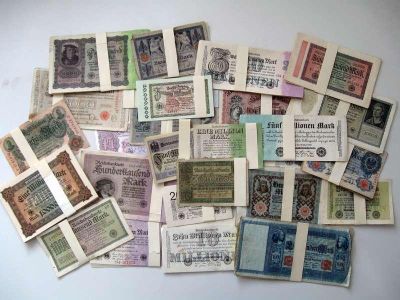
665 million marks won’t buy you what it used to

Especially when you find them strewn along the side of the A10 near Berlin, wrapped up in little aluminium packets.

And especially when you consider that nobody here pays with marks anymore. And especially so when they’re the old Reichsmark type issued between 1913 and 1923.

Maybe this was a foiled caper by those great poker tournament robbery robber guys. Maybe it wasn’t.

Hinweise auf den Besitzer des Geldes fanden sich nicht.

It’s a bug, not a feature

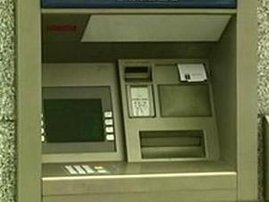
Normally quite fleißig (industrious) when it comes to things like preparing for creepy global threats like the imfamous YK2 bug – which of course they actually did some, let me think, ten freaking years ago – more than 25 million German bank card owners have nevertheless been hit hard by said bug since New Year’s Day (2010) and can’t like get their Geld (money) already. Plastic money, I mean = the only kind there is.

Why the Y2K bug hit ten years late, and only here in Germany of all places, is unclear at the moment. Germans like to keep their computers a long time you know so there are certainly bound to still be a lot of really slow ones out there and all… Like mine. But ten years? Just a thought.

Y2K10 oder wat?