Renewable Energy Keeps Renewing Its Price

Ever upward, of course.

Renewable

But Germans don’t mind paying this. That’s just the price they have to pay for, uh, the price they have to pay.

Germany’s green energy levy for 2017, the surcharge in consumers bills that supports renewable energy generators, will increase by 8.3% year-on-year to EUR 0.0688 (USD 0.076) per kWh.

Verbraucher müssen zur Förderung von Strom aus Windkraft und Sonne wohl auch im nächsten Jahr tiefer in die Tasche greifen. Die sogenannte Ökostrom-Umlage wird von derzeit 6,35 Cent auf 6,88 Cent pro Kilowattstunde angehoben.

Germany Leading From Behind

While going in the wrong direction. With lots of wind in its face.

Energy

At one point this month renewable energy sources briefly supplied close to 90 percent of the power on Germany’s electric grid. But that doesn’t mean the world’s fourth-largest economy is close to being run on zero-carbon electricity. In fact, Germany is giving the rest of the world a lesson in just how much can go wrong when you try to reduce carbon emissions solely by installing lots of wind and solar.

After years of declines, Germany’s carbon emissions rose slightly in 2015, largely because the country produces more electricity than it needs. That’s happening because even if there are times when renewables can supply nearly all of the electricity on the grid, the variability of those sources forces Germany to keep other power plants running. And in Germany, which is phasing out its nuclear plants, those other plants primarily burn dirty coal.

Renewable Energy Actually Works In Germany

But only if it stays REALLY sunny and REALLY windy ALL the time. Like even at night.

Renewable

For those of us who live here, well… Let’s just say that they’re still working on that part.

Germany hit an incredible new high in renewable energy generation at the weekend – pushing power prices into the negative and allowing consumers to get paid to consume electricity.

At one point, the sunny and windy day weather propelling its solar plants and wind turbines supplied 87 percent of the power being consumed.

Meanwhile… Solarworld verdoppelt Verluste.

Hysteria Half-Life Not Yet Reached In Germany

Nor will it be any time soon. It must be artificially maintained in order to justify the German Energiewende, you see.

Chernobyl

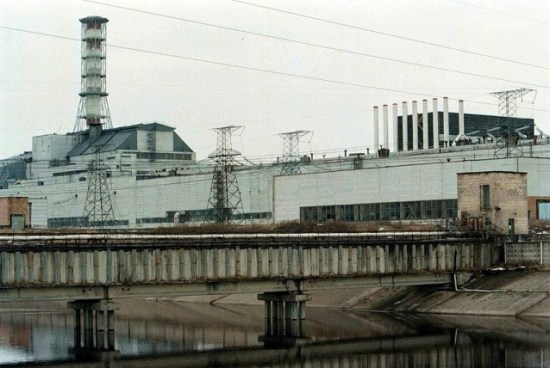
Thirty years after the Chernobyl disaster, it has become clear that radioactivity might be less harmful than originally thought. Some researchers even believe it may be beneficial in small doses.

That is a surprising finding. Three decades ago, half of Western Europe was contaminated with weakly radioactive precipitation. The public at large was taught to view the ubiquitous radioactivity as particularly insidious.

But now, apparently not everything that gives off radiation is bad after all. The body seems to be able to cope with low doses of radon. “We are continuing to search for damage to the genome,” says Fournier, “but so far we aren’t seeing anything.”

Who would voluntarily breathe in radioactive gas? These days, there are people who do. They swear by the notorious noble gas radon, created by the decay of uranium: They inhale it deeply.

German Of The Day: Fiasko

That means fiasco. You know, like the state-ordained Energiewende?

Wind

Berlin likes to think of itself as a green-energy example to the rest of the world. It sure is.

It makes you wonder if there’s any form of energy-price signal that governments won’t ignore. Germany’s 16-year-old Energiewende, or energy transformation, already has wrecked the country’s energy market in its quest to wean the economy off fossil fuels and nuclear power. Traditional power plants, including those that burn cleaner gas, have been closing left and right while soaring electricity prices push industries overseas and bankrupt households. Job losses run to the tens of thousands.

But now Berlin is going to fix all of this – again.

Derzeit gehe der Ausbau zu schnell und werde zu erheblichen Mehrkosten bei der Umlage zur Ökostrom-Förderung führen.

Fukushima Five Years Later: Everything The Germans Feared Has Come True

Well, not really. Actually, none of it has. But still.

Fukushima

Let’s see… The reactor is under control – still. There are no cancer deaths or deformed babies to report after the radiation in Japan. Not one. The UN (UNSCEAR) even predicts that there will be no significant increase in the cancer rate in the area at all. The exclusion zone around Fukushima keeps getting smaller and smaller. Japan is not saying no to nuclear energy. Im Gegenteil (on the contrary): After a short break, Japan has returned wholeheartedly to nuclear energy. France and America never contemplated doing away with nuclear energy. Of all the countries that have access to nuclear energy, only Germany has taken such drastic action.

By the way, the fish in the waters around Fukushima have no more higher level of radiation than the fish found in the North Sea. Put that in your Spiegel and smoke it.

But the Atomausstieg (nuclear phase-out) – in Germany – was certainly worth it (this is what Germans still repeat to themselves before going to bed each night).

Well, maybe “worth it” isn’t quite the right term to use, taking into account the outrageous wind and solar energy subsidies that have driven/are still driving energy prices up through the roof here in Germany. But other than that, though, everything seems to be going to plan.

I’ve just got to ask: Are these the same people who planned Germany’s refugee policy, too?

Japan auf Jahrzehnte verseucht, Hunderte verstrahlt, Unzählige an Krebs gestorben. So stellte man sich die Folgen von Fukushima vor. Doch vieles ist anders gekommen.

I Got Your Green Credentials For You Right Here, Pal

“It’s ugly, but it gets you there.” But it’s ugly. And it’s getting uglier by the minute.

VW

The timing of the scandal could not be worse for the government.

Chancellor Angela Merkel is scheduled to travel to New York on Friday to persuade fellow members of the United Nations to adopt climate goals ahead of a UN climate conference in Paris in December.

Merkel sees herself as champion of climate issues and would like to see Germany’s decision to abandon nuclear power and the transition to renewable energy as one of her most lasting legacies.

In June, she helped draw up ambitious carbon emission reduction goals adopted by the Group of Seven (G7) countries.

At the same time, she has always robustly defended the interests of her country’s automakers and postponed the implementation of European emission limits.

Top Speed Ever: 26 Percent

Wind energy is inexhaustible, right? Well, not really. The talk about it is, though.

Wind

Researchers now tell us that when it comes to wind parks, due to a saturation effect, the upper limit for natural wind energy produced is one watt per square meter – not the seven watts per square meter as we had been told about before now. This means that a maximum of 26 percent of natural wind energy can be turned into energy here. “The more wind turbines I install, the less energy is produced by the individual turbines.”

“Wind turbines remove kinetic energy from the atmospheric flow, which reduces wind speeds and limits generation rates of large wind farms. These interactions can be approximated using a vertical kinetic energy (VKE) flux method, which predicts that the maximum power generation potential is 26% of the instantaneous downward transport of kinetic energy using the preturbine climatology.”

Maximal 26 Prozent der natürlichen Windenergie lassen sich für Strom nutzen.

A Green Superpower?

Germany?

Coal

Germany is a superpower when it comes to setting ambitious goals. But it’s even better at burning coal.

Germany aims to generate 80% of its power from renewable sources by 2050 with nuclear being fully phased out by 2021. But given the costs associated with renewables and the challenge of replacing nuclear power efficiently, it is not clear that Germany will succeed in either of these goals…

The Germans have increasingly turned to coal as their power generation source of choice, especially U.S. coal. Today coal power plants are responsible for generating nearly half of Germany’s power, and numerous new plants are scheduled to come online in the next few years.

Overall, the increase in coal is likely to create a significant increase in airborne pollution and potentially stoke tension between Germany and its neighbors. But at the same time, if Germany wants to phase out nuclear power, coal is the only realistic option; a fact which some German politicians are starting to admit.

The Next Thing You Know They’ll Be Selling These On Ebay

Germany’s utilities, battered by the country’s shift to wind turbines and solar panels, would be glad to sell you a power plant on the cheap. They’ll even pack it up and ship it to another country.

Power Plant

The two largest power producers, RWE AG and EON SE, are especially keen to sell their gas-fired plants, rendered uncompetitive by the rise of renewable energy on the one hand and record low coal prices on the other. It’s a relatively easy task to take them apart, move them by truck and ship and reassemble them elsewhere.

“There is a liquid global market for gas turbines. Transport costs are entirely marginal.”