Reproduction Regulators Recommend Rigorous Reform

The logic appears to go like this: Germans will only have children if they are paid by the state to do so.

Children

That this money must first be taken from them by the state to only later be given back to them if they behave properly (improperly?) is the first oddity here but not really the issue at the moment – or at least not the one German politicians want to talk about. The problem now is that Germans aren’t having enough children (only 12% of families with children here have 3 or more). They are not following the German reproduction regulation logic like they are supposed to and are refusing to have large families despite regular increases to the child benefit or Kindergeld payments given here.

In an attempt to counteract what is now the German one-child-per-family-if-they-have-any-children-at-all tradition, some reproduction regulators are suggesting that families now be given higher payments for each successive child born. I’m sure this will work just great. Well, I’m kind of sure it might work maybe, I mean.

Of course more money will first have to be taken in from the Germans before some of it can be given back to some of them again but that’s never bothered legislators here before so why break with a tradition like that now?

“Die wirtschaftliche Situation von Familien verbessert sich trotz der staatlichen Unterstützung im Durchschnitt nicht.”


German Of The Day: Lieber ein Ende mit Schrecken als ein Schrecken ohne Ende

That means “better a terrifying end than unending terror.” In other words, it’s time for Greece to get those drachma machines running again.

Greece

But the Greeks already know this themselves. That’s what they just voted for. Sure, we’ll get to watch how Greece and the EU (Germany) play around with each other for a few weeks as if both sides are tying to find a new solution for a solution that has already long been in place but in the end Greece will leave the EU. This new Greek government is the undertaker man (don’t shake that guy’s hand!). They will point their fingers at Germany on the way out telling Greek voters “we tried everything we could, but…” and then, well, it’s back to the real world again. And this will be a good thing for Greece – in the long run.

Hey, this reminds me of another German saying: Geh mit Gott, aber geh! Go with God, but go!

Entgegen allen Warnungen aus Deutschland und Europa lehnt die griechische Regierung Gespräche mit den internationalen Geldgebern ab. Sie seien in Athen nicht willkommen.

German Poverty?

Nice try. This is another one of my favorite German myths. You can claim that poverty exists here all you want but everybody knows that poverty only exists in the real world and has nothing at all to do with this country. Or could it be that I am the one with an “unrealistic” definition of what poverty is?

Poverty

Report: About 3.1 million wage and salary earners in Germany had an income below the poverty threshold, according to Saturday’s edition of the Saarbrücker Zeitung newspaper.

You have to understand how Germany works to know that this is ridiculous. For one thing, nobody has to work in Germany if he or she does not want to – ever. They get their rent paid and a low monthly allowance (and then work illegally on the side in a lot of cases) indefinitely = for life, if they want to (everybody know how or knows someone who does).  Many people choose to live this way (I know a few personally). Their welfare system is called Hartz IV, by the way. So like, are you a victim of “poverty” if you choose to be? In a country that has the money to pay your way, I mean?

And you must also understand how a German defines poverty in Germany: “Every second low wage worker, some 1.5 million Germans, would not be able to pay for a one-week holiday per year outside their own four walls. About 600,000 workers were forgoing having their own car because they could not afford it.”

OMG. It’s certainly a cold, cruel world out there when you can’t fly off to Mallorca twice a year like everybody else does and/or keep your expensive German sports car on the road as God intended you to (even though you don’t believe in God, but still).

“The number of workers who earn scarcely or marginally more than the government unemployment benefits (Hartz IV) is alarmingly high.”

PS: Speaking of poverty, get your free copy of Dumb Deutsch here. Offer ends Monday.

German Of The Day: 5 Billionen

That means 5 trillion (don’t ask, but it really does). And that’s how many euros German savers have set aside for a rainy day.

Trillion

That’s going to be one rainy day.

Zwar investierten die privaten Haushalte ihr Geld trotz niedriger Zinsen vor allem in kurzfristige und vermeintlich sichere Bankeinlagen. Trotzdem wuchs ihr Geldvermögen von Juli bis September 2014 um 28 Milliarden Euro oder 0,6 Prozent auf 5,01 Billionen Euro, wie die Deutsche Bundesbank mitteilte.

More Strikes Like These Please

“Amazon is being striked – and nobody is noticing it.”

Strikes

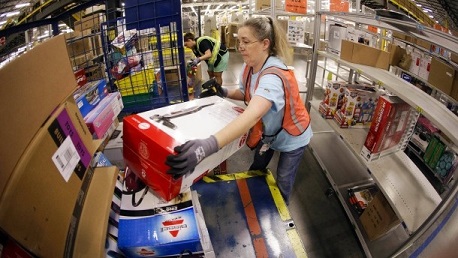
Amazon employees (in Germany) have already been on strike for an entire week. The union Verdi is looking to disrupt the delivery of Christmas packages but our user survey (Frankfurt Allgemeine Zeitung) indicates that it isn’t having any luck.

This survey indicates that 86% of Amazon packages have come on time – the other mail-order companies only managed 73% of the time.

Von dem Streik bekommen die weitaus meisten Kunden nichts mit. Laut Umfrage ist Amazon sogar jetzt noch pünktlicher als die anderen Versandhändler. 86 Prozent der Amazon-Pakete aus unserer Umfrage sind pünktlich angekommen, von den anderen Versandhändlern waren es nur 73 Prozent.

Would Numbers Lie?

News products can be that way. On the one hand the numbers tell us today that the mood in the German economy has picked up yet again and that German companies are looking ahead to 2015 with renewed confidence.

Positive

At the same time we read how Germany’s National Office for Statistics has determined that one in every five Germans is a victim of poverty.

A contradiction? Not necessarily, I guess. That’s why everybody’s kind of happy sort of around here these days. And that’s why I, for one, believe everything I read.

Die Stimmung in der deutschen Wirtschaft hat sich im Dezember erneut verbessert: Der Ifo-Index legte zum zweiten Mal zu.

The Fall Of The Berlin Mall Of Berlin

Jeepers. That didn’t take very long.

Mall of Berlin

This is not just any mall, mind you, but the hubristically named Mall of Berlin—the largest Germany’s capital has ever seen, including not only shops but (as yet unfinished) apartments and a hotel. And guess what? While it’s only been open since the autumn, the whole project is already bombing…

It’s not that Berlin’s government and developers don’t have the guts to take on major projects to transform the city. They just really suck at them.

The End Of An Aura

It’s amazing these sleeper trains have lasted as long as they have, if you stop and think about it.

Night Train

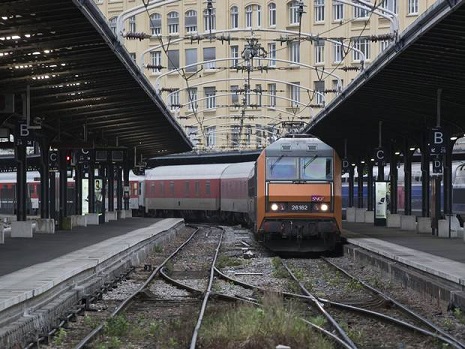
Saturday marked the end of the line for this Paris-Berlin sleeper, at any rate. Slow food might be able to make a stand here and there but it looks like slow travel is definitely out.

Deutsche Bahn, the German rail network which operates the sleeper said the service was incurring debts over €20 million a year and losing out to cheap bus connections and easyJet which offers a regular service between the two capitals. Along with the Paris-Berlin sleeper, overnight train services linking Berlin with Copenhagen and Amsterdam are also being axed.