
Speaking Of Null…
Zero, that is.

Germany May Abandon Its Beloved Black Zero – Chancellor Angela Merkel is still clinging to her policy of a balanced budget, but it is becoming increasingly clear that Germany’s economic downturn could soon usher in a return to deficit spending…
For years now, a balanced federal budget, known here in Germany as the “schwarze Null,” or black zero, without any fresh borrowing, has been a permanent fixture of German fiscal policy. After four decades of chronic borrowing to finance the German national budget, the shift stood for the renunciation of the debt state and became a symbol of sound policy. But now the issue is the subject of debate again — not only due to expensive political plans, but also the threat of a recession in Germany…
“We can accomplish the tasks at hand without accruing new debt.”
German Of The Day: Null
That means zero. Nothing. Nada.

And zero is what you get if you purchase the world’s first 30-year bond featuring – zero income. Not much of an outcome there. What a steal. In more ways than one.
Germany Regrets Size of Bond That Pays Nothing as Auction Flops – The world’s first 30-year bond featuring zero income struggled to find buyers, prompting Germany’s debt agency to admit the sale may have been “too large.”
The nation failed to meet a 2-billion-euro target ($2.2 billion) for the auction of notes maturing in 2050, signaling that negative yields across Europe may finally be taking their toll on demand. It’s another sign that the global bond rally may be coming to a halt now that more than $16 trillion of securities have negative yields.
“The broader conclusion is that this is an ominous sign for cash bonds.”
And What’s The Problem With That?
German-U.S. Ties Are Breaking Down – Never since the founding of postwar Germany have relations between Berlin and the United States been as fragile as they are today. There is virtual radio silence between Chancellor Angela Merkel and President Donald Trump and U.S. Ambassador Richard Grenell is doing more to agitate the situation than to mediate.
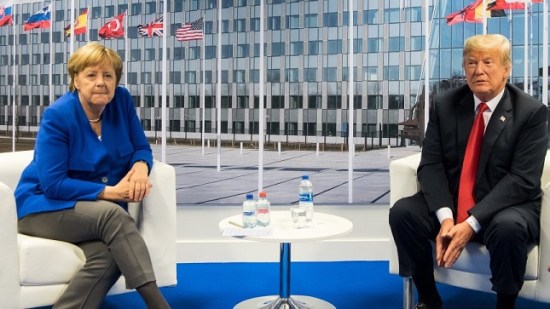
It’s quite easy to explain, really: “I’m making them pay their bills” and the Germans don’t want to pay these bills. They’ve never paid them in the past, they’re thinking, so why should we pay them now? If there’s anything else I can do to straighten any of this up for you here, just ask.
“There is no understanding, but there are also no misunderstandings.”
Dying?
Long dead is more like it. The German Air Farce.
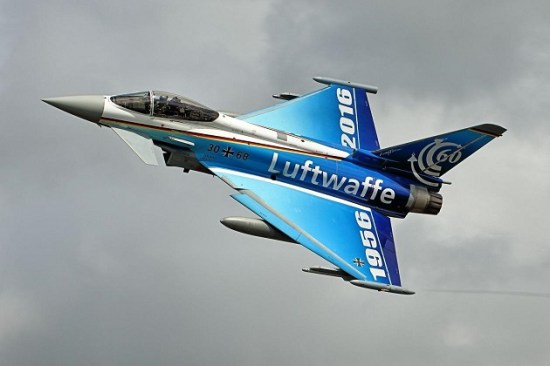
Germany’s Air Force Is Dying: Everything You Need To Know – AFebruary ministry report showed only 39 of 128 Eurofighter jets were available for training and combat use last year on average, and just 26 of 93 older-model Tornado fighter jets.
The problem – for anybody on the outside out there – is assuming that anyone here gives a damn. And the punchline: The German defense minister directly responsible for this just got promoted and will now be running the EU. Get it?
Die Luftwaffe is at a low point.
Happy Potato Day
Just in case you didn’t know, Germans have this thing with patatoes. That’s why a group of German agi-taters lobbied to make August 19 Potato Day.

I guess that makes the rest of us speck-taters.
Not that I’m complaining or anything, I’m just a commen-tater, folks.
The Germans’ insatiable love affair with potatoes – They were once guarded by the king and are sometimes eaten with apple sauce. For Potato Day on August 19, here are some things you maybe didn’t know about potatoes in Germany…
By the way, how can you tell how fast a German potato is going? Check its spud-ometer.
What Goes Up
Must go flat.

And then shrink.
Germany’s economy is now shrinking – The mood music had grown so ominous that the shock was somewhat muted. After weeks of dismal survey and industrial-output numbers, it was little surprise to learn on August 14th that Germany’s gdp had contracted by 0.1% in the second quarter of 2019 compared with the previous three months. The economy has been essentially flat over the past year. Household spending, bolstered by wage growth in a tight labour market, has held up but the slump in manufacturing, which represents over one-fifth of output, is deepening. Companies are cutting work hours and issuing profit warnings. Many analysts think Germany is heading for outright recession.
Will the government open the spending taps? Probably not.
Britta H.

A nine-year-old girl in Berlin who was refused entrance to a centuries-old boys’ choir is filing a lawsuit for gender bias.
A nine-year-old girl in Berlin who was refused entrance to a centuries-old boys’ choir is filing a lawsuit for gender bias.

A nine-year-old girl in Berlin who was refused entrance to a centuries-old boys’ choir is filing a lawsuit for gender bias.
A nine-year-old girl in Berlin who was refused entrance to a centuries-old boys’ choir is filing a lawsuit for gender bias.
“Crotchety, Over-Critical Culture” Part II
As reported earlier, Germans themselves will be the first to admit that, when it comes to entrepreneurship, they have a “crotchety, over-critical culture, with its fear and condemnation of failure,” but it is what it is and they are what they are.

There’s even a saying/joke here that goes “anything in Germany that is not expressly permitted is forbidden.” Take electric cars, for example. Their production may not be expressly forbidden but the German automobile industry is doing its damnedest to pretend like they don’t exist. One could say this has more to do with “never touch a running system” (this industry still makes piles of money) but it really gets down to being crotchety again. They’re missing the boat and they know it.
Concern is rising in Europe’s automobile heartland about the economic impact of the industry’s move to electric vehicles from gasoline-powered cars.
Officials and executives in Germany fear the country’s big car companies and rich ecosystem of suppliers and service providers are insufficiently prepared for the transition, and that their leadership may not be assured in an electric-car world, threatening jobs, tax revenue and even growth.
Assembling electric cars isn’t as complex or labor intensive as making traditional vehicles and relies partly on imported technology. At the same time, China has made rapid forays in electrification and is shaping up as a potentially formidable competitor in the field.
The trepidation is particularly acute in the city of Stuttgart, hub to one of the country’s biggest automotive clusters at the heart of the nation’s dynamic south. It comes as Europe’s largest economy is showing signs of weakness amid a chill in global trade.
“The greatest catastrophe would be if the industry fell asleep at the wheel. It is crucial for jobs that companies like Daimler make a massive push into this technology and build locally.”

