Big Phasehout Payout On The Way

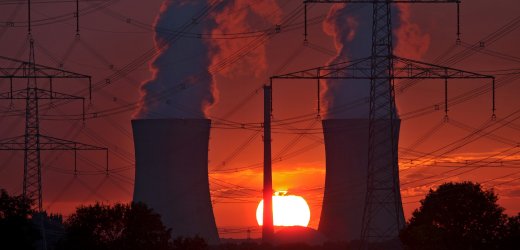
A three-month closure imposed by the government on RWE’s Biblis A and B reactors as an immediate response to the Fukushima accident was illegal, a German court has ruled.

Phaseout

The administrative court for the German state of Hesse has found the state ministry of the environment acted illegally on 18 March 2011 when it issued an order for the immediate closure of the Biblis units.

This decision, as well as a tax on nuclear fuel levied in anticipation of continued operation of nuclear plants before the phaseout decision, have cost German nuclear operators dear: RWE estimated that the phase-out cost the company over €1 billion ($1.3 billion) in 2011 alone.

Any claims for damages against the state of Hesse would be decided in subsequent civil court proceedings.
More Green Energy Jobs

More jobs lost to green energy, I mean.

Offshore

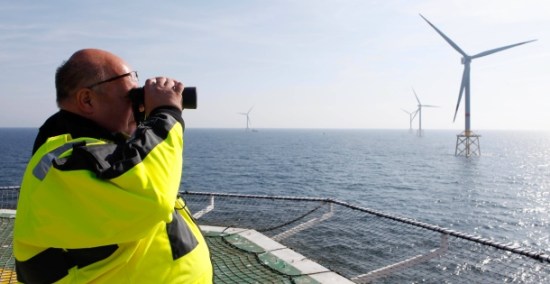
Worlee-Chemie GmbH, a family-owned company that has produced resins in the city of Hamburg for almost a century, is trying to escape the spiraling cost of Germany’s shift to renewable energy.

A 47 percent increase on Jan. 1 in the fees grid operators set to fund wind and solar investments is driving the maker of paint ingredients to Turkey, where next month it will start making a new type of hardening agent at a factory near Istanbul.

The levy will cost Worlee 465,000 euros ($620,000) this year, the equivalent of 10 full-time salaries, or one-third of the company’s tax bill. As German labor costs rise at the fastest pace in a decade, the price of weaning the country off nuclear energy by 2022 is crushing the so-called Mittelstand, the three million small and medium-sized businesses like Worlee that account for about half of gross domestic product.

Wow. Now that’s what I call government intervention in action. This German energy turnaround thing is working out practically as well as the European cap-and-trade system itself.

“It could be the proverbial straw that breaks the camel’s back. It comes on top of tax, general production costs, raw-material availability and bureaucracy, which have led to a deterioration of the investment climate in Germany.”

Don’t Hold Your Breath, Tokyo

Two years after the Fukushima nuclear disaster, Japan is making a big push to win back German tourists, who are still avoiding the country because of concerns over radiation.  Visitor numbers from Germany, the world’s biggest spenders on foreign holidays in 2011, fell 35 percent between 2010 and 2011, and in 2012 did not recover as much as other markets, officials said in Frankfurt on Thursday.

Tokyo

It’s like this, folks: The level of radiation occurring naturally in Japan is much lower than that of Germany. The levels of naturally occurring radiation PLUS the radiation resulting from the accident at Fukushima are still within the range considered average for Germany.

None of this matters, of course. Hysteria bleibt (stays) hysteria.

Even at the dentist, Germans are often skeptical about the effects of x-rays and require reassurance over radiation levels.

PS: Speaking of hypochondria (sort of), Berliner Beamte (civil servants with disgustingly cushy benefits), police mostly, are off sick two months a year – on average.

The N-Word

You know, it starts with an n and ends with an r*? Do not even think about using it over here in Germany these days, people. Not that you would even want to or anything, even if you could. I’m just sayin’.

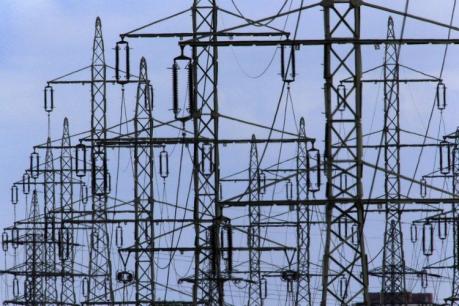
Why is this the case? I’ll tell you why. Because everybody’s all touchy these days. German power grids are less stable than they ought to be and nobody wants to address the reason why that is. Folks have gotten all sensitive and defensive because, well, because of that “power networks more unstable since n-word drop-out” thing.  And no, I didn’t think up that subtitle. I’m just quoting it, sort of. Civilized folks don’t use the n-word. And I ain’t a-gonna use it either.

Kritisch werden könnte es nach Auffassung von Fachleuten generell vor allem in Süddeutschland, wo der Strom der abgeschalteten Atomkraftwerke fehlt.

* “Nuclear”

We Must Save The World But It Must Be Affordable

Cheap, in other words.

Germans everywhere are slowly waking up to the fact that their revolutionary switch to renewable energy sources is going to cost way too way much more than they ever thought they would ever have to pay – and the German government has now woken up to this.

That is why they have now begun a quiet backpedaling policy designed to prepare the German population for a slow turnaround from the energy turnaround that hasn’t even begun to turn around yet.

“For me it’s a priority that electricity remains affordable,” Germany’s new Environment Minister Peter Altmaier says, for instance.

He also says he doubts that Germany will be able to reach its goal of introducing one million electric cars by 2020.

Nor does he think that Germany will be able to cut its energy consumption by 10 percent that year, a precondition for reaching the illusory goal of 35 percent renewables the government is still aiming for, sort of.

This is the German Environment Minister talking here, folks. So you get the message, don’t you? And if you don’t get it now, you’ll get it later.

Regierung fürchtet die Strompreis-Wut der Wähler

Germany’s Energy Turnaround Rocks

They never promised you a rose garden (actually, they did). It looks like Germany’s Energiewende (the energy turnaround = shutting down nuclear power and waiting for solar and wind energy to pick up slack) is going to have its price, too.

And it looks likes the first installment will by about a seven percent increase in energy costs for private housholds. But Germans pay these increases gladly, I think. At least for now (seven percent is just the start, of course). It’s back to the future. It’s for the common good. Or it’s for saving the planet or something.

Uh, like why don’t they just have “the state” pay for it. Oh, that’s right. They already are (the taxpayers are, that is).

Stromtrassen, Umschlagwerke oder intelligente Stromzähler kosten den Staat Milliarden. Draufzahlen muss am Ende oft der Verbraucher – offenbar bis zu sieben Prozent in den kommenden Jahren.

Unterdeckungen

That’s German for deficient coverage. And German readers might be reading that word a lot in the weeks to come, at least when it comes to the electricity supply in Germany.

„We have been observing for weeks now that something with the system just doesn’t seem to be right,” one market expert said.

And in a letter from Germany’s Federal Network Agency to the power traders it deals with, it makes clear its concern about the rather volitile situation going on at the moment and has even warned of the collapse of the German power network. It almost happened on Febuary 6, already, they wrote, as “substantial undercoverage continuing over several hours” nearly brought the system to its knees.

Hmmm. Last year at this time, during one of the coldest winters ever, there wasn’t any problem with the German electricity supply at all. What on earth could have possibly happened since then and now to have caused this disturbing situation?

Nach dem Reuters vorliegenden Schreiben stand das Stromnetz in den vergangenen Tagen mehrfach vor dem Kollaps.

Electricity Scarce In Germany These Days For Some Reason

Germany’s power operators have requested that reserve generators at a power plant in southern Germany and two plants in Austria be activated because, well, the lights are fixin’ to go out here (it’s c-c-cold).

But don’t think for a moment that this has anything at all to do with eight of Germany’s 17 nuclear reactors having been switched off because of an earthquake in Japan last year because it doesn’t. You got that?

We do not have a problem of supply, of quantity, it’s principally a question of stabilizing the network.”

We’ll Import Power From Anywhere

Even from Austria, if need be. And need there be.

“Missing power lines” are the cause behind the missing energy being missed in Southern Germany these days, we are told. That’s why Austria is being asked to help big buddy Germany out with a little “emergency energy,” pretty please.

But Austrians do this gladly, I think, because they know that if those missing German power lines weren’t missing than those missing power lines would be transporting tons of wonderful wind energy from the high German north to those energy-hungry factories in the south (and beyond to Austria?) where it’s missing at the moment, the energy. Like I said. Or so the theory.

The missing German nuclear power plants that were shut off after Fukushima (that’s in Japan) aren’t being missed by anybody here, though. Forget about them. It’s not the missing German nuclear power plants. It’s the missing power lines that are missing, I mean messing everything up around here.

Die Bundesnetzagentur hatte vor langfristigen Engpässen bei der Stromversorgung gewarnt. Die Versorgungssicherheit bleibe durch den Atomausstieg für eine Reihe von Jahren angespannt.

Phase Out vs. Cash In

“Fukushima changed my attitude towards nuclear energy,” she said.

Now, though, it would appear that German industry is relying on government assistance to pursue the construction of nuclear power plants abroad.

Four applications for government export guarantees on nuclear power plant projects are currently under consideration. Known as Hermes guarantees, the program protects German companies from non-payment on overseas deals. The four projects are located in Finland, Great Britain, China and India.

“The nuclear phaseout must also apply to export guarantees.”