We will not give in!

We’ll just give up. Probably next week some time.

But we will not give in!

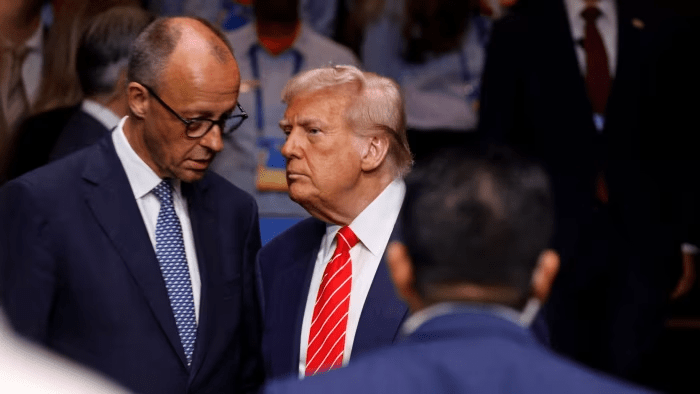
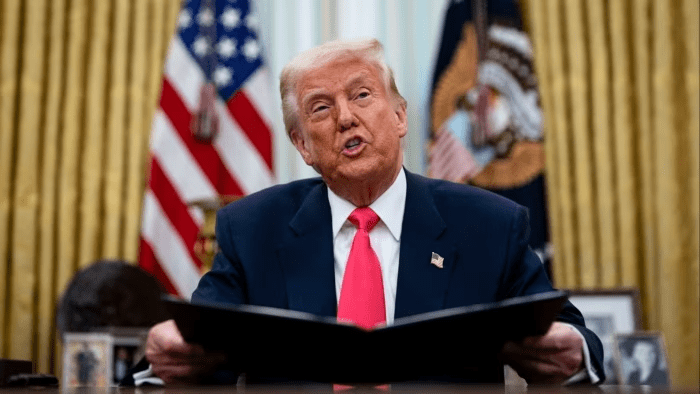
Germany leads defiance of Trump car tariffs, saying it ‘will not give in’ – President Donald Trump targets imported cars and car parts with a 25% tax in his latest tariffs.

Other major world economies have vowed to retaliate, with France’s president branding the move “a waste of time” and “incoherent”, Canada calling it a “direct attack”, and China accusing Washington of violating international trade rules.

Let’s talk

Talking is always good. But action is better.

Until today, the EU imposed import tariffs on US cars five times higher than the tariffs imposed by the US on European imports.

That’s changed now.

German minister, autos lobby call for urgent EU-US talks over tariffs.

Huge funeral attendance

At Germany’s automobile industry burial.

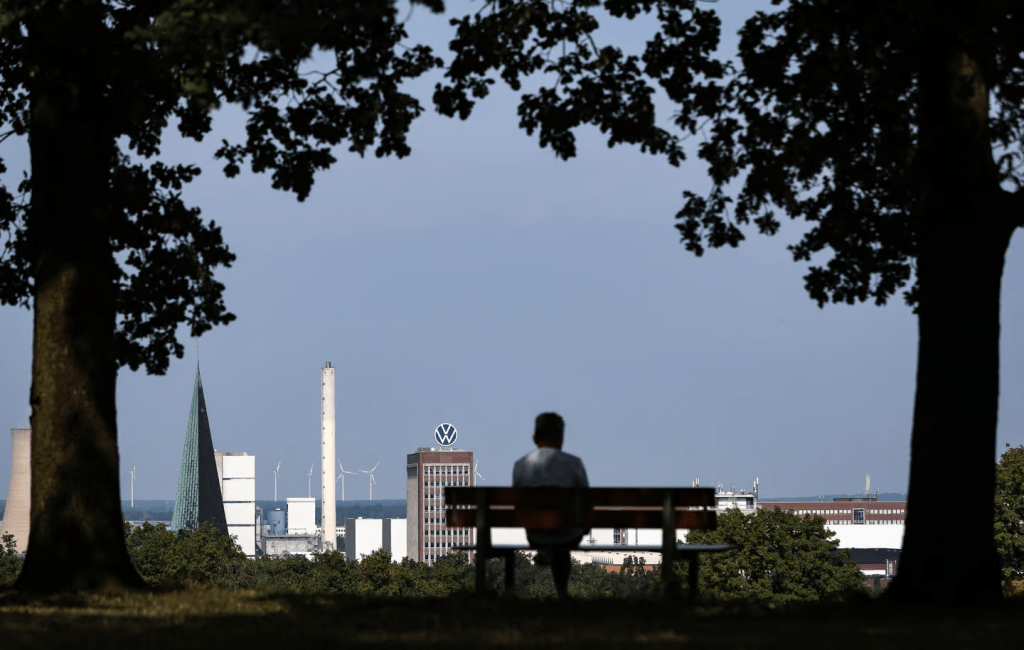
Volkswagen AG workers in Germany will pause production on Monday to join rallies about the automaker’s plans for unprecedented factory closures in the country.

Labor leaders plan to inform employees at 11 German sites about the latest on negotiations with the company. The events kick off a contentious week for Europe’s biggest carmaker, which is expected to post declining sales and profit when it reports third-quarter results on Wednesday…

The automaker has had a rough few weeks since it issued its second profit warning in three months in late September. While its premium brands including Audi and Porsche have been the carmaker’s biggest source of profit in recent years, they’re now struggling. Porsche AG on Friday said it’s weighing cost cuts and reviewing its model lineup after a demand slump in China hit its profits.

“Everything that could go wrong went wrong, or is going wrong”

Other than that though, alles ist in Ordnung (everything’s OK).

Germany’s lost decade: How the Fortune 500 Europe giant is flirting with long-term irrelevance – There is an elephant in the room of the 2024 edition of the Fortune 500 Europe. It’s not a crisis-riddled company or scandal-hit CEO. Rather, it’s the whole German economy.

For most of the 21st century, economists and neighboring countries have looked to Germany with admiration and envy as it managed to weather economic storms with relative ease, capitalizing on trade with growing economies and expanding the power of its industrial giants in the process.

However, a shifting world order has pulled the carpet out from underneath Germany. The industrial quirks that once helped it outgrow its European peers are fast becoming a burden, and crisis after crisis has exposed a lack of planning at the top of government.

Car science isn’t rocket science, people

Nobody wants Volkswagen’s electric cars.

The fewest German drivers do, anyway.

Driving on empty: The German government has few options to help an ailing car industry – Economy Minister Robert Habeck will meet with carmakers — but he has few weapons to stave off a car industry crisis.

Threats of historic job cuts and plant closures at German car giant Volkswagen and plunging earnings elsewhere in the industry are prompting Federal Economy Minister Robert Habeck to hold crisis talks on Monday.

But strained federal finances, fights with China over car tariffs and looming EU environmental regulations leave Habeck with few tools to help an industry which is the country’s economic backbone.

A self-inflicted hostage-taking situation?

Why is it that big German automakers are worried about Chinese retaliation?

Because they voluntarily put themselves in the position to be retaliated against. Think Germany’s voluntary dependency on Russian gas recently. That didn’t work out very well either. But for whatever reason, this is what Germans do.

Germany launches 11th-hour bid to avert trade war with China – Germany wants the EU to set tariffs on electric vehicles at a low level to avoid severe retaliation from Beijing…

Germany’s position was “problematic,” he said: While big German automakers still entertain good ties with Beijing, that’s not necessarily the case for smaller businesses, meaning “the German economy as a whole has an interest in a more assertive policy towards China.”

It HAS stopped making cars…

Real cars. And with that, the fun for Germany has only just begun.

What if Germany stopped making cars? Imagine Volkswagen goes the way of Nokia.

“The future of the vw brand is at stake.” When Thomas Schäfer, the mass-market marque’s newish boss, gave a presentation to his management team in early July, he did not sugarcoat its problems. High costs, falling demand, growing competition—the list goes on. “The roof is on fire,” he warned, echoing one of the most noted alarm calls in recent business history—from Stephen Elop, who in 2011 compared his company to a “burning platform” shortly after taking the helm at Nokia, then the world’s largest maker of mobile phones…

Export This

Germany still exports cars like hotcakes.

But China exports more.

China’s car exports surpass Germany’s after 54.4 per cent surge to 3.11 million in 2022, narrowing Japan’s lead – China has surpassed Germany to become the world’s second-largest car exporter after mainland exports jumped 54.4 per cent year on year to 3.11 million vehicles in 2022, according to the China Association of Automobile Manufacturers (CAAM).

Save The Trees – And The German Automobile Industry!

Too late for the later, I think.

Trees

Germany Promises Elon Musk Whatever He Needs For Tesla Berlin Plant – The factory, under construction, would be Tesla’s first European car plant, and could employ an estimated 12,000 people, making as many as 500,000 cars a year. The factory is slated to start production in summer 2021, an aggressive timetable for a car plant…

Locals have complained that trees were cut down for the factory and that it’s being built in a region with scarce water resources, but construction has progressed relatively smoothly so far.

“We are very proud of your car plant in Brandenburg and we wish you good luck with that. You’ll have every assistance you need.”

The Decline and Fall of the German Empire

The German Automobile Empire.

Cars

Could 400,000 car industry jobs in Germany be lost? – The car industry is in apparent decline in Germany. Some estimates predict that half its 800,000 jobs will be gone by 2030. The industry disagrees with that estimate, but the road ahead looks bumpy.

“The production of electric vehicles can be automated more easily. If there is no improvement in the competitive position of the German industry in the area of electromobility in the next few years, and if the need for imports of battery cells and electric vehicles continues to grow in light of the launch of electromobility, employment structures will be severely hit.”