Step 1, Page 1: Have an army.

Step 2, Page 2: No. A real army.

Germany Has Drawn Up a 1,200-page War Plan for a Russian Attack – Germany has quietly produced a 1,200-page Operational Plan for Germany that assumes a large-scale war with Russia and treats time as the key variable.

Drawn up at Julius Leber Barracks, the plan details how up to 800,000 German, U.S. and other NATO troops would flow east via ports, rivers, rail and roads—and how they’d be supplied and protected en route.

Rather than just counting tanks and troops, Berlin is betting on logistics and an “all-of-society” approach, from infrastructure to cyber. With Russian sabotage and probing already mounting, officials see a genuine race against time to be ready.

“Learn to code?”

Forget that one, right? Get a job with a German armaments firm instead.

That’s the only industry booming over here at the moment.

German Shipbuilder TKMS Reports Rise in Sales, Earnings Fueled by Europe’s Defense Spending – Results are first since spinning off from Thyssenkrupp and its Frankfurt IPO.

“I don’t want to be part of this war machine!”

“One that actually works, maybe. But not this one.”

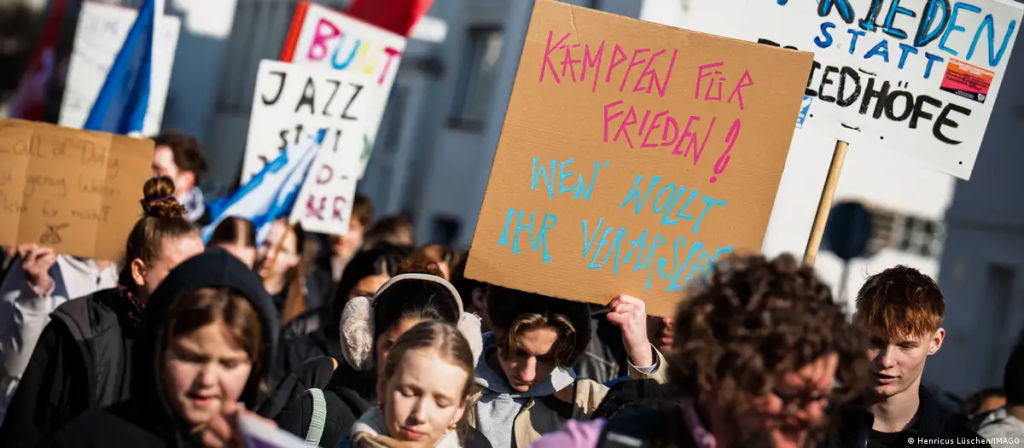
‘I don’t want to be part of this war machine’: Young Germans protest against military service plans – Young people have taken to the streets of Berlin to protest against the German parliament’s decision to introduce voluntary military service to boost national defences after Russia’s full-scale invasion of Ukraine.

The change means that all 18-year-olds in Germany will be sent a questionnaire from January 2026 asking if they are interested and willing to join the armed forces.

We can’t defend our own country…

From drones. It’s illegal or something here in Germany.

So we’ll send our drone-defense experts to help some other country. Keeps them busy.

German Luftwaffe dispatches drone-defense experts to help Belgium – The German military has sent specialists to Belgium to help authorities there combat drones following sightings near crucial military facilities, including those housing nuclear weapons.

The Bundeswehr announced the move in a press release late Thursday. According to the military, first units of the Luftwaffe – Germany’s air force – have already arrived in Belgium, where they are investigating the situation on the ground and coordinating with the Belgian armed forces. Further German forces would “soon follow,” the military said.

German of the day: Russische Wegwerf-Agenten

That means disposable Russian agents.

You know, low-level agents who are not not professional spies but hired for small sums to carry out minor acts of sabotage, then “discarded?”

Things like photographing military sites, setting vehicles and facilities on fire, spray-painting political slogans, spreading pro-Russian content and conspiracy theories, etc. They would normally also sabotage rail lines and other forms of strategic infrastructure but the Germans have already beat them to it.

Putin’s secret terror in Germany – Russia’s “disposable agents” pose a threat to internal and external security. It is difficult to expose them. That is why German politicians are puzzling over how to defend the country against them. Now, for the first time, a strategy is taking shape.

By 2029?

In Germany? I have my doubts.

And “cost-effective?” This is more doubtful yet.

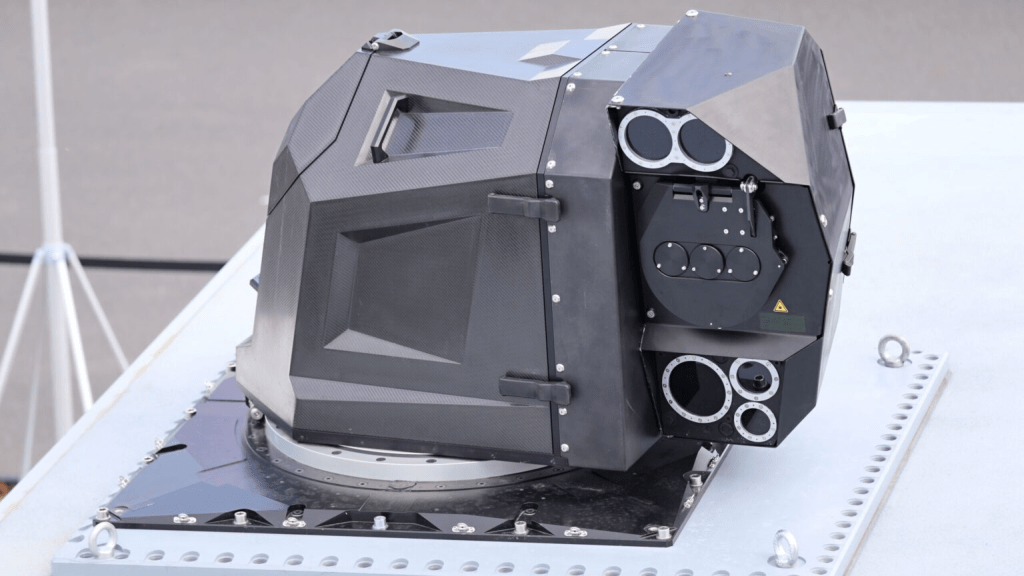
German laser weapon could be on ships by 2029, say contractors – “Successful tests conducted on the frigate SACHSEN proved the demonstrator’s tracking capability, effectiveness and precision under real operational conditions for the first time in Europe,” the announcement says...

“Based on this, an operational laser weapon system could be available to the German Navy as of 2029, providing a powerful and cost-effective addition to conventional guided missiles,” the statement adds.

German of the day: Drohen

That means to threaten.

And Drone means drone.

Germany to spend 10 bln euros on drones in coming years, defence minister says – Germany will spend 10 billion euros($11.62 billion)in coming years for all kinds of drones, German Defence Minister Boris Pistorius said at a meeting of NATO defence ministers in Brussels.

He also said that Germany will offer to take the lead in an European Union air defence shield and that Germany will increase its contribution to air policing.

German of the day: Eskalationsfalle

That means escalation trap.

Berlin calls for strengthening defenses without falling into Putin’s “escalation trap” – The German Minister of Defense, Boris Pistorius, said Sunday that Germany must strengthen its defense capabilities, particularly against drones, while avoiding falling into what he called “the escalation trap” set by the Russian president Vladimir Putin.

During a defense exercise in Hamburg, the minister stressed the need for Berlin to invest in anti-drone and electronic jamming systems, as incursions into European airspace have increased since the start of the war in Ukraine.

“We must build strong defenses, but without responding precipitously to every provocation. This is exactly what Putin wants: a spiral of reactions that would lead to a direct confrontation,” Pistorius warned.

German of the day: Drohnenschwarm

That means drone swarm.

Test reactions and agitate – According to security authorities, the recent drone flights in Schleswig-Holstein are not so much for espionage as for other purposes. The perpetrators presumably also want to send a warning...

Last week, drones flew over a power plant in Kiel, the university hospital, the Thyssenkrupp marine division’s factory premises, the state parliament in Kiel, and other buildings.

If you have to debate this now…

Then you know it ain’t never gonna happen.

Germany debates return to compulsory military service – As Germany adapts to a volatile geopolitical landscape, attention has turned to filling the ranks of its armed forces. Among Germany’s youth, attitudes towards the Bundeswehr have been shifting…

A new draft law aims to boost Bundeswehr troop numbers by surveying 18-year-olds — mandatory for men, voluntary for women.