The 30 Percent Solution

That’s how much more German households will likely have to pay for energy in the coming years due to the country’s way cool “energy turnaround.”

Investments of at least 150 billion euros will be needed in the next few years and that’s just the beginning and absolutely positively nothing is working out reibungslos (smoothly) as not planned. And that’s the crux of the biscuit: This is what happens when you do your panicked decision making first and your planning later.

“Wir müssen davon ausgehen, dass die Gestaltung der Energiewende länger dauert als geplant.”

Clean Power Cleaning Us Out

The German textile industry, among others, is mad as hell and isn’t going to take it anymore. Not when it comes to having to pay billions into the governments way cool Ökoenergie-Förderung (clean energy surcharge = tax).

That is why three companies now plan to challenge this surcharge subsidizing renewable energy in court.

More good government in action again, I guess. Energy companies have to pay the price for electricity generated through renewable technologies, and transfer the extra cost on to their customers. While energy-intensive industries like aluminum or steel are free from the surcharge, most of the textile industry has to pay.

“You cannot get an energy turnaround for free.”

Biomass Movement Is Over (If You Want It)

Remember the days when crops were something people would eat?

Well the German National Academy of Sciences Leopoldina has just found out that that maybe wasn’t such a bad idea after all.

The German mania for “bioenergy” seems to have already had its day in the solar-powered sun. The academy’s report “Bioenergy – Chances and Limits” concludes that bioenergy is just a lot of bio gas (or hot bio air, if you prefer).

It plays “a minor role in the transition to renewable, sustainable energy sources in Germany at the present time and probably in the future,” requiring more surface area, creating higher greenhouse gas emissions and being more harmful to the environment than other renewable sources.

So what are we going to do with all those imported soybeans now? Eat them? Hey, the plan looked good on green paper, though.

“Die Produktion von Biokraftstoffen stellte eine extrem ineffiziente Nutzung der verfügbaren landwirtschaftlichen Fläche dar.”

German Solar Energy Industry Tanks, German Tanks Don’t

Unable to compete in the global market without the subsidy drug, state-ordained “energy turnaround” or not, Germany’s solar energy industry is getting eaten alive by cheap Chinese imports as we speak, so-to-speak.

“Ah, screw it,” German industrialists elsewhere in the country say to that. “We’ll just keep making a killing producing what we’ve always produced best: War technology. Tanks, Saudi Arabia!”

“But it’s not like we don’t continue to support the Arab Spring or anything,” another tankful German industrialist added ruefully.

German paper says Saudis want 600-800 tanks.

Germany’s Energy Turnaround Rocks

They never promised you a rose garden (actually, they did). It looks like Germany’s Energiewende (the energy turnaround = shutting down nuclear power and waiting for solar and wind energy to pick up slack) is going to have its price, too.

And it looks likes the first installment will by about a seven percent increase in energy costs for private housholds. But Germans pay these increases gladly, I think. At least for now (seven percent is just the start, of course). It’s back to the future. It’s for the common good. Or it’s for saving the planet or something.

Uh, like why don’t they just have “the state” pay for it. Oh, that’s right. They already are (the taxpayers are, that is).

Stromtrassen, Umschlagwerke oder intelligente Stromzähler kosten den Staat Milliarden. Draufzahlen muss am Ende oft der Verbraucher – offenbar bis zu sieben Prozent in den kommenden Jahren.

Germans To End Opposition To New Overhead Power Lines Overnight

As reported earlier, in order to avoid stunting the growth in Europe’s largest economy after its decision to shut down nuclear power forever, Germany must now carry out a massive expansion of it’s electricity-delivery network.

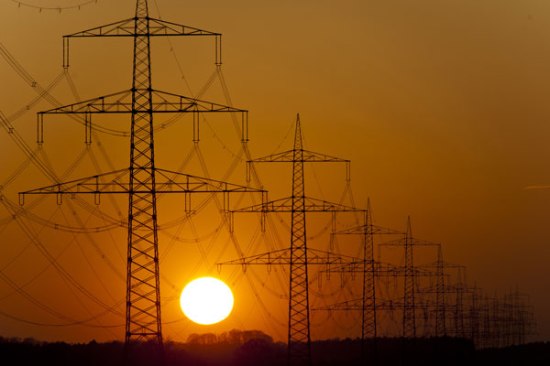
The overhead power lines which will be necessary to connect new offshore wind farms in the north to the factory-rich south and to allow the high-volume energy transfer from French nuclear reactors to cover the shortfall as Germany phases out its own reactors (they only provide a mere 23 percent of the country’s current energy demand) are, however, “unsightly and yucky,” as all Germans know. And they will also probably cause cancer, too (the next DANGER, but that will be another story later, guaranteed).

Fortunately for the German nation, it’s altruistic, selfless citizens have spontaneously decided to sacrifice their own petty personal concerns and grievences in regard to these power lines and win one for the collective common good by immediately ending all opposition to the construction of said yucky power lines and promising to never ever bitch or moan about them ever again, honest.

And if you believe that you can build your overhead power line on some prime Florida swamp land I’ve got for sale for you right here.

A grid upgrade is essential, and Germans must end their opposition to new power lines overhead, energy economics professor Christoph Weber said.

German Vocabulary of the Day

Alleingang: Going it alone.

Although every German knows that things go invariably terribly wrong whenever Germans do this (go it alone), they sometimes simply just can’t help themselves (think the recent UN Libya resolution episode, for instance) and let this atavistic throwback throw them back to behavior (misbehavior) they will bald (soon) regret. For the latest case in point see Ausstieg.

Ausstieg: This means to exit, phase-out. Germans are the born Aussteiger (exit-ers or escapists), but this is getting ever harder and harder for them to do. Executive Director Nobuo Tanaka of the International Atomic Energy Agency, IAEA (not IKEA), for instance,  has warned Germany about going their nuclear phase-out alone (see Alleingang). Germany’s policies here affect all of Europe, he says, and “it’s not about a German problem, it’s an overall European problem.”

Blackout: This means blackout. German power companies are now warning that should the Ausstieg and Alleingang described above be implemented too quickly and too efficiently (a grave possibility in Germany), they will not be able to guarantee an uninterupted power supply for their customers in Southern Germany during the so-called “winter” months.

Die Netzfirmen warnten, wenn nur die im Zuge des Atom-Moratoriums stillgelegten Alt-Meiler weiter vom Netz blieben, fehlten an kalten Wintertagen in Süddeutschland etwa 2000 Megawatt Leistung.