German Of The Day: Blockadepolitik

That means “blockade politics” or conducting a policy of obstruction.

Geez. The EU is getting really frustrated with Germany these days because it still acts as if it were a sovereign country from time to time.

Germany Is Becoming a Roadblock for More and More EU Business – Row over combustion-engine ban symptomatic of wider problem, Conduct seen as especially unhelpful during period of upheaval.

The unpredictable behavior of Germany’s ruling coalition is becoming a disruptive influence in Europe and raising hackles across the continent.

A last-ditch move this month to block a European Union push to phase out combustion-engine vehicles was only the latest example. On issues ranging from financial aid for Ukraine to reform of state-aid and budget rules, Germany’s EU partners and officials in Brussels have become increasingly frustrated with Chancellor Olaf Scholz’s center—left alliance of his Social Democrats, the Greens and the business-friendly Free Democrats.

German Of The Day: Abhängigkeit

That means dependency.

In this case, being dependent on China.

Germany planning to ban Huawei, ZTE from parts of 5G networks.

There is no evidence that China is spying with the help of the telecom equipment suppliers’ technology. Nevertheless, they are to be banned from the 5-G network – for fear of dependencies.

When Women Come Too Early

That German Foreign Minister Annalena Baerbock is a real eager beaver, isn’t she?

She goes on an official visit to India, is überpünktlich (arrives ahead of schedule), and then unceremoniously leaves the plane without anyone there to ceremoniously greet her. Now she has hurt feelings or something.

“She Was A Little Early”: German Envoy On Protocol Row Over Minister Visit – Amid the protocol-related controversy on social media, the German Ambassador to India, Philipp Ackermann, yesterday said the German Foreign minister’s plane landed early in Delhi.

German Of The Day: Zeitenwende

That means turning point.

Germans love announcing turning points. It makes things sound so, I dunno, official or something. And it’s official here too: Their latest military turning point is working almost as well as their energy turning point (Energiewende) did. Namely, not at all.

Germany’s military ‘Zeitenwende’ is off to a slow start.

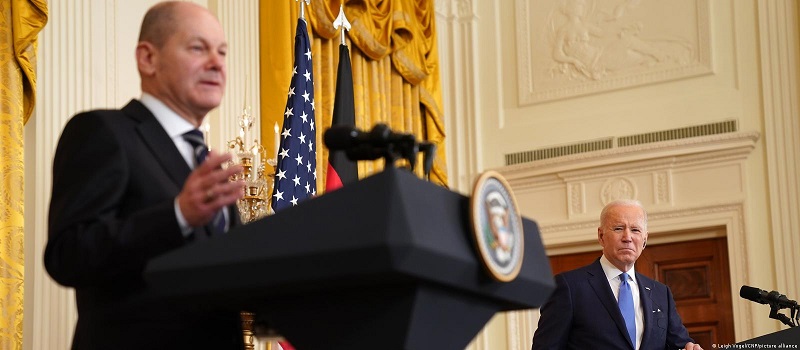
Three days after Russia invaded Ukraine, German Chancellor Olaf Scholz delivered a rousing speech to the Bundestag. He had a clear message: Russian President Vladimir Putin’s aggression has ushered in a new era of war in Europe, and wealthy countries like Germany, having pared down their defense spending for decades, needed to rearm. A year after German lawmakers applauded Scholz’s call to action, and as Scholz visits the White House on March 3, 2023, one must ask what has become of Germany’s much-heralded Zeitenwende, or “turning point.”

I Don’t Know How Much More Feminist Foreign Policy The Germans Can Take

Didn’t they just have, like, forty years or something of “feminist foreign policy” under Angela Merkel? And wasn’t Urusla von der Leyen a big German Exportschlager (top export) in the EU feminist foreign policy department?

Look where that got them. But hey, this Annalena Baerbock really strikes me as someone who can finally get this feminist foreign policy stuff down pat. Something tells me that feminist foreign policy is now going to bring peace to Ukraine overnight. All you have to do is ask for it! A man would have never thought of doing this.

Germany announces new “feminist foreign policy” – Germany’s centre-left government on Wednesday announced new feminist guidelines to shape its diplomacy and development work including the creation of a new role for an “ambassador for feminist foreign policy”.

Germany will lobby to ensure women’s concerns are more in focus worldwide, that women are better represented and that the country’s generous development funds are allocated more to projects that tackle gender inequality, according to the guidelines.

“How The Biggest Fraud In German History Unravelled?”

Do they mean the Energiewende (the Green renewable “energy turnaround”)?

Oh. They’re only talking about Wirecard. Yeah. That one was pretty cool too. Peanuts compared to the Energiewende fraud, though. But still.

The tech company Wirecard was embraced by the German élite. But a reporter discovered that behind the façade of innovation were lies and links to Russian intelligence.

Nor Will He

Olaf Scholz has not delivered on his sweeping vision for a more modern, more active German military.

And anybody who thinks will ever live up to their promises about defense spending is a fool.

Chancellor Olaf Scholz summarized his country’s approach to the war in Ukraine. “Despite all the pressure to take action,” he said, “caution must take priority over hasty decisions, unity over solo actions.” The line provided Scholz’s most explicit defense to date of Germany’s cycle of denial and delay.

A year ago, Scholz announced a special investment fund of more than 100 billion euros to strengthen the German military, but less than a third of those euros have been assigned to contracts. Defense Minister Boris Pistorius recently aired concerns that Germany’s stockpiles have been depleted by its generous transfers to Ukraine. These comments strain common sense when most of the “special funds” remained unspent until December, when lawmakers finally approved the first procurements. This month, Scholz also abandoned plans to establish a National Security Council, a body that would have been well suited to manage an expanded role in the defense of Europe.

No Scheiße, Sherlock

Ukraine updates: Germans see arming Ukraine as involvement.

A poll conducted by Germany’s DPA news agency suggests many Germans disapprove of arming Ukraine in its war against Russia. Meanwhile, Russia’s Medvedev denied the country was running out of missiles.

Fifty-one percent of the respondents thought arming Ukraine meant being part of the war, an argument that Russia has been pushing. Meanwhile, 37% disagreed with the statement.

Germany has approved some €2.6 billion ($2.75 billion) worth of weapons and armaments since the start of the war.

Forty percent of those polled considered the amount of weapons support from Germany to be too much, 22% thought it was too little, and 23% thought it was just the right amount.

German Of The Day: Sonntagsreden

That means Sunday sermons. As in political sermons that sound nice to those giving them but never lead to anything other than nonbinding resolutions.

Like the one German Foreign Minister Annalena Baerbock gave yesterday at the United Nations – the world’s most popular venue for Sonntagsreden.

Germany’s foreign minister Annalena Baerbock addressed the United Nations General Assembly before a vote for a U.N. resolution upholding Ukraine’s territorial integrity and calling for a cessation of hostilities after Russia’s invasion. Every country, she argued, had a duty to send a clear signal that the war was coming to an end. Addressing the 30 to 40 countries likely to abstain from the resolution, including China, India and South Africa, she noted: “Today each of us has to make a decision to stand in isolation with the oppressor or stand together for peace.”

The U.N. General Assembly then approved a nonbinding resolution Thursday that calls for Russia to end hostilities in Ukraine and withdraw its forces, sending a strong message on the eve of the first anniversary of the invasion that Moscow’s aggression must stop.

The resolution, drafted by Ukraine in consultation with its allies, passed 141-7, with 32 abstentions.