Is that from the same guy who wrote “Fear and Loathing in Las Vegas?”

Debt and precarious stagnation in the EU and Germany” sounds like a good read too.

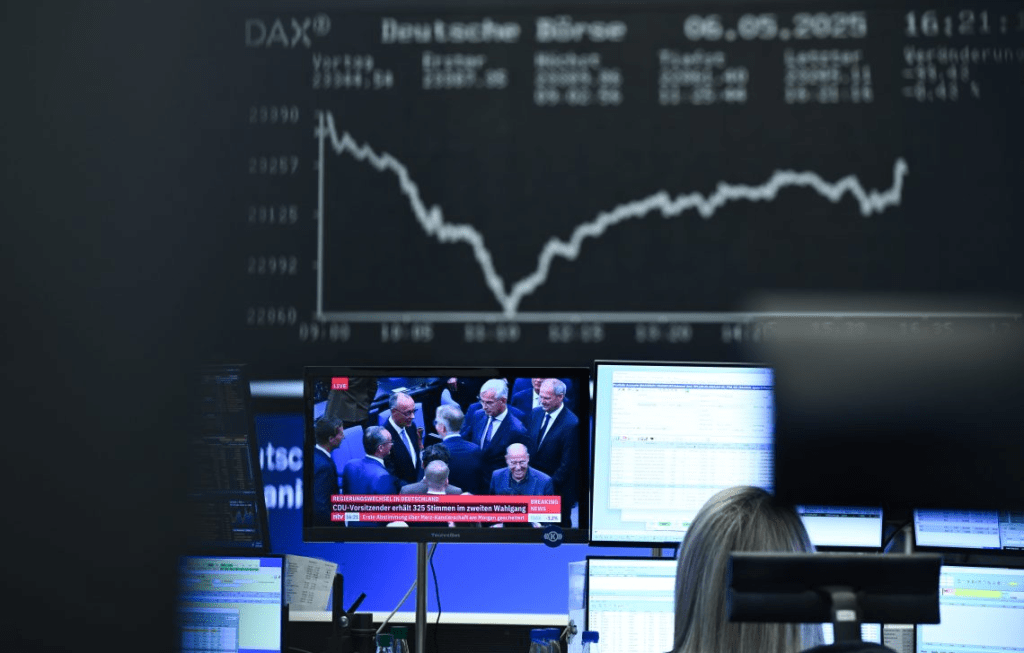
Europe faces mounting fiscal strain as Germany pivots toward debt-financed spending to maintain political support…

The public has now lost faith in traditional muddling through and demands drastic changes.

This report focuses on Europe, where the economic situation has worsened considerably in recent years. Several countries on the old continent have become more vulnerable to shocks, and imbalances have piled up. Moreover, leaders have demonstrated an inability or unwillingness to address structural problems, yet they are all too eager to haughtily break their electoral promises, swim with the tide and gather consensus through frantic lawmaking in the name of emergencies, fairness and social justice.

Germany’s Green economy rocks

It pitches, reels and staggers too.

Talk about having a gross domestic product.

Germany slashes growth outlook in ‘serious’ diagnosis of Europe’s largest economy – The German government on Wednesday slashed its gross domestic product forecast to just 0.3% growth in 2025.

This is down from a previous forecast of 1.1% growth, but broadly in line with estimates from bodies like the International Monetary Fund.

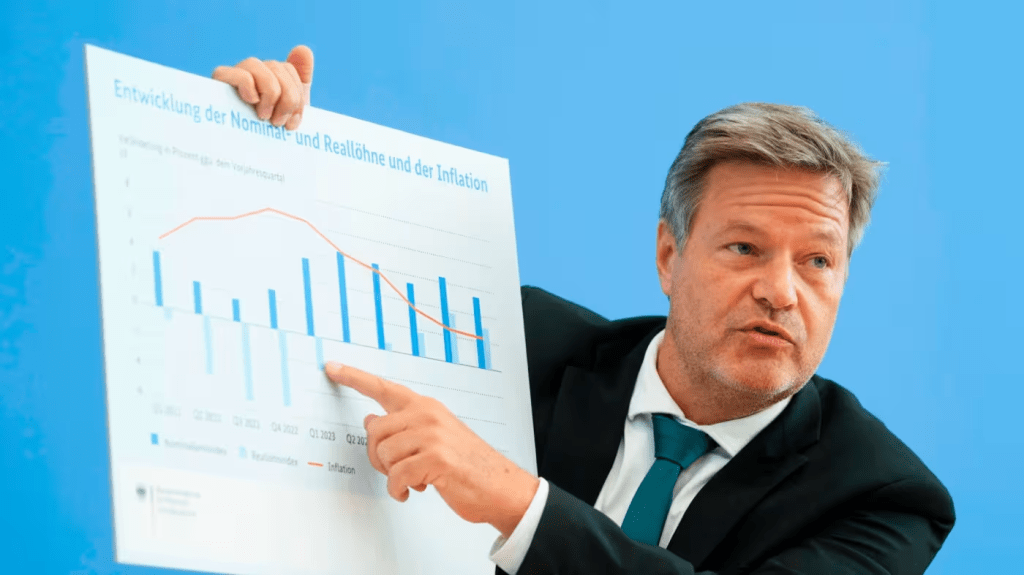
“The diagnosis is serious,” Robert Habeck, Germany’s Economy and Climate Minister, said during a press conference.

German of the day: “nicht zufriedenstellend”

That means not satisfactory or unsatisfactory.

Year number two. Germany is on a roll.

Germany expects economy to shrink after cutting 2024 forecast – Government predicts rebound in 2025 after 0.2% decline this year.

Germany is facing its first two-year recession since the early 2000s, as the government downgraded its growth forecast for 2024, predicting a contraction of 0.2 per cent.

“The situation is not satisfactory,” Robert Habeck, economy minister, said on Wednesday.

Economy shrinks, inflation expands…

Sounds just like back home in US-Amerika. What’s not to like?

German economy unexpectedly shrinks, inflation ticks higher – The German economy unexpectedly contracted in the second quarter after skirting a recession at the beginning of the year and July’s inflation rose, showing the continuing struggles of the euro zone’s biggest economy.

Germany’s gross domestic product contracted by 0.1% in the second quarter compared with the previous three-month period, preliminary data from the statistics office showed on Tuesday.

We’re number one!

At saving the planet.

Too bad we’re destroying ourselves in the process.

Strike one: Germany’s nuclear phase-out.
Strike two: Its self-inflicted energy dependency on Russia.
Strike three: Still believing that renewable energy can run an industrialized country.

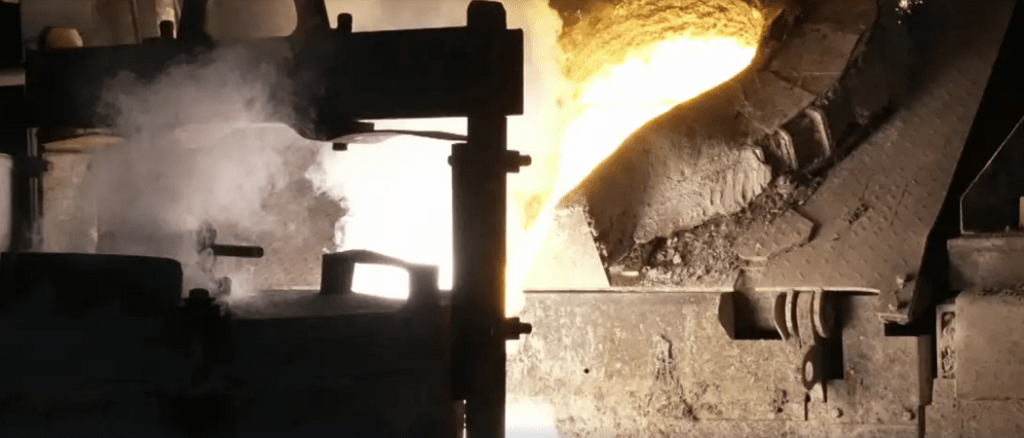
Green energy prices are killing German industry right before our very eyes.

Germany predicted to be the only major European economy to contract this year as recession lingers – The German economy has struggled in the wake of Russia’s invasion of Ukraine, with Berlin having to, very quickly, end years of energy dependency on the Kremlin. The International Monetary Fund said in July that Germany would likely contract by 0.3% this year.

German Of The Day: Schrumpfen

That means to shrink.

You know. As in the Sick Man of Europe? The Incredible Shrinking (or was it Sinking) Country?

German Economy Shrinks Faster Than Expected – It’s a rare thing to happen, but Germany now looks like the sick man of Europe, a phrase previously often used to describe Britain.

The health of the business sector dropped significantly in June, according to recent data. The Ifo Business Climate index for Germany, which measures the health of the commercial sector, registered 88.5 in June, down from 91.5 in May. Higher numbers show economic strength, whereas lower ones show a weakening of the economy.

Speaking of sinking…

German Of The Day: Tiefer Fall

That means a steep fall. Very steep in this case. Really, really, really steep already.

Fall

You would have to back in history some ninety years to find a comparable peacetime decline in German economic activity.

But why would anybody want to do that?

Germany’s Economic Slump Shows Scale of Europe’s Challenge – The 10.1% drop in output in the region’s largest economy is a harbinger of worse figures elsewhere. Spain, France and Italy will probably report even deeper contractions on Friday, reflecting a recession that prompted an unprecedented policy response from governments.

Man wird in der Geschichte bis zur Weltwirtschaftskrise vor rund neunzig Jahren zurückgehen müssen, um in Friedenszeiten einen vergleichbaren Sturz der wirtschaftlichen Tätigkeit in Deutschland zu entdecken.

It’s Magic!

It’s as if none of this Corona crap ever happened at all!

Magic

Maybe that’s because none of this Corona crap ever did happen. Not like it was supposed to happen, I mean. Not that anybody ever really knew how it was supposed to happen but everybody knows now that it simply didn’t happen that way. Folks sure got riled up though, didn’t they?

Germany poised for big economic recovery – The German economy is expected to shrink by more than 6% this year. But a new study found the country could be in for a big economic recovery next year.

In a best-case scenario, the economy could recover in about five months, the institute said. This would result in a more mild economic slump of just 3.9% in 2020.

But in a worst-case scenario, the recovery could also take as long as 16 months. The economy could then shrink by 9.3% this year, with growth of 9.5% forecast for 2021.

“In that case, the recovery would stretch into 2022.”
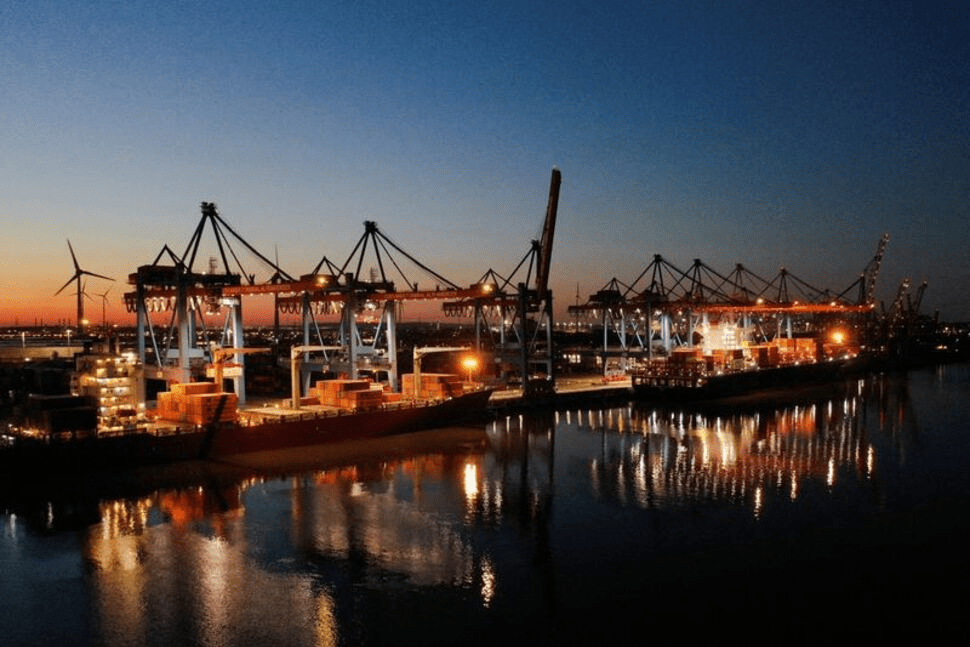
The Third Time’s The Charm

Or it will be. Or it could be. Maybe.

Growth

Germany’s Second Economic Miracle Is Ending – The cognoscenti of international economics are once again agape, and not in a flattering way, at the budget surpluses Germany’s government keeps running, when instead it should be stimulating the economy with tax cuts and higher spending. The surplus revealed this week for 2019, at 13.5 billion euros ($15 billion), is the fifth in a row, and the biggest ever.

Many Germans still regard such numbers as signs of economic virtue and virility, as they keep slashing public debt and reveling in high employment numbers. Alas, these positive indicators are likely to be lagging, not leading. That’s because an unusual era is drawing to an end, one that was likened by Bert Ruerup, one of Germany’s top economists, to a “second economic miracle.” (The first was West Germany’s long postwar rally).

In the past 15 years — somewhat coincidentally, the reign of Angela Merkel as chancellor — Germany turned from the “sick man of Europe” to the continent’s export powerhouse and growth engine. In the next 15 years, Germany won’t necessarily become sick again. But, as Ruerup puts it, it could simply turn economically “gray,” with meager growth indefinitely.