No “hard cutoff” date with me

My government is going to strangle the German car industry slowly, with great care.

And Pleasure.

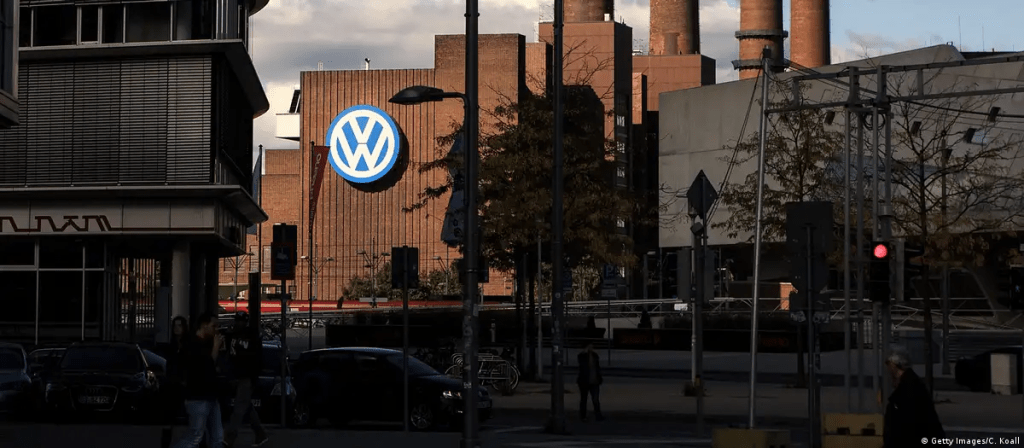
Germany: Merz pledges to resist 2035 EU electric car switch – Chancellor Friedrich Merz said he would oppose the “hard cutoff” currently planned by the EU, aiming to stop registering new internal combustion engine cars by 2035. The goal was already under review and looking fragile.

Output kaputt

To put it nicely.

German industrial output posts biggest decline in more than three years – German industrial output fell much further than expected in August, pushed down by a sharp decrease in car production as frontloaded demand ahead of U.S. tariffs dried up.

Industrial production fell by 4.3% compared with the previous month, the federal statistics office said on Wednesday, the biggest fall since March 2022, just after Russia’s invasion of Ukraine. Analysts polled by Reuters had predicted a 1.0% fall.

13,000 jobs here, 4,000 jobs there…

Progress marches on.

Industrial giant Bosch shocks Germany with plans to cut 13,000 jobs – The Bosch group, one of Germany’s leading industrial players, has announced a far-reaching job cut programme. On 25 September the company said it would cut an additional 13,000 positions by 2030.

Germany’s Lufthansa To Cut 4,000 Jobs By 2030, Targetting Admin – Lufthansa set new financial targets for 2028-2030, including an adjusted operating margin of eight to 10 percent.

Germans feel less gloomy?

Despite economic clouds?

Depends on who you ask. And how you look at it. My experience has been that Germans are the happiest when they’re the gloomiest.

Germans Feel a Little Less Gloomy Despite Economic Clouds – The pickup in consumer mood contrasts with a worsening outlook among German business.

German of the day: Abbau

That means reduction, to dismantle or cut.

German car industry sheds 51,500 jobs in a year – The dip equates to almost 7% of the total workforce in the German auto sector. Faltering exports to China and the US play a role, as new tariffs raise barriers to entry in both these core markets.

“The US and China are currently the cause of major concerns.”

Why should your welfare state be any different than the others?

They all run out of other people’s money eventually.

German welfare state ‘can no longer be financed’ — Merz. The German chancellor has called for a welfare reform, putting him on course for a possible clash with the SPD.

“The welfare state that we have today can no longer be financed with what we produce in the economy,” Merz said in the town of Osnabrück.

The coalition partners had already agreed to reforming the social insurance system, which covers health insurance, pensions and unemployment benefits, due to rising costs and gaps in the federal budget.

The chancellor acknowledged that making cuts to social welfare would not be easy for the center-left SPD, but called for the two parties to work together.

German politicians emitting too much gas

And missing their targets in the process.

German top politicians’ cars exceed CO2 targets: study – If EU emissions targets for the car industry were applied to top German politicians’ official vehicles, the fleet would fail, according to a climate body’s new study, saying it was “emblematic” of German carmakers.

Shock treatment about to begin in Germany

China shock treatment.

If the Chinese can’t displace the American workforce anymore, then they’ll displace another one (or two, or three…).

The China shock hits Germany – Trade with China displaced large parts of the American workforce in the 2000s, but Germany did not experience a similar shock at the time…

Crazy high energy costs, crippling taxation, ever-growing red tape, ineffective government…

In Germany.

What’s not to like? This isn’t rocket science for businesses here. For businesses that are still here, I should say.

Germany’s biggest sports retailer considers moving production to China – Intersport eyes spare Chinese manufacturing capacity as Nike and Adidas back away from the country amid trade war.

One of the world’s largest sporting goods retailers is considering shifting production to China, just as brands including Nike and Adidas move production out of the country in response to US tariffs.