Energy Revolution Not Taking Place Quite Yet

German energy turnaround revolutionaries everywhere are turning around more than usual these days, burning more energy than planned trying to answer all the dumb questions those dumb energy reactionaries are always asking them.
Dumb questions like:
How come the energy turnaround isn’t making any progress?
How come the taxpayers continue to foot the bill?
How come all these renewable energy companies are going broke now that the subsidies are being cut?
How come made in Germany renewable energy technology is now being made in China these days (and German subsidies are actually helping the Chinese)?
How come Germany isn’t in the position to create the power-transmission lines needed to connect these new energy sources to the German power grid?
How come the energy-storage facilities needed for these new technologies are so extremely expensive and, well, just aren’t being built?
How was that again? How come Germany is in the process of turning off all its nuclear power plants?
How come the construction of dozens of new coal-burning power plants will therefore be necessary?

And how could ideology get the upper hand on reality (yet again) in a nation full of such sober, experienced thinkers?

And on and on and on these dumb questioners go. These reactionary types just don’t get it, you see. They don’t have visions like us revolutionary folks do. And they don’t hear the voices, either.

Germany Stalled on the Expressway to a Green Future

Bye Bye Birdie

Those damned Americans again. The shocking news just came out over here that some 6.8 migrating birds die each and every year over there due to all those awful and yucky radio towers they feel compelled to put up all over the place all the time (for conservative talk radio shows, we must assume).

When will they ever learn?

And when will anybody over here ever learn to start publishing the numbers for all those birds that get killed each and every year due to German wind turbines? Hey, you know the deal. One standard for North American radio towers, another for green energy sources.

Wenn die ständig leuchtenden Lampen an den 4500 Türmen, die höher als 150 Meter sind, durch blinkende ersetzt würden, könne die Zahl der daran sterbenden Vögel um 45 Prozent sinken.

German Offshore Wind Farms More Deadly Than Fukushima

Nobody promised the Germans a rose garden when the so-called “energy turnaround” turned around the corner here last year.

So that’s why the three deaths and 80 serious accidents that have taken place so far while building Germany’s so badly needed offshore wind farms are being registered here with such stoic equanimity (or are being ignored altogether). Progress must march on or something. Keine Widerrede (no talking back)!

Do me a favor and wake me once this energy turnaround nonsense has finally turned around (as in over) and died itself.

Der Leiter des Havariekommandos in Cuxhaven, Hans-Werner Monsees, forderte gegenüber FOCUS ein „besseres und dichteres Rettungssystem“. Sonst drohe die Zahl der Toten und Schwerverletzten weiter zu steigen – in den nächsten Jahren werden bis zu 7000 Windräder vor der deutschen Küste installiert.

State Subsidies In Action

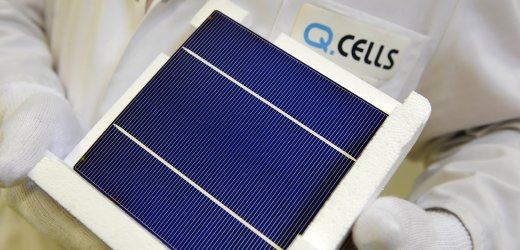
This would be funny if wasn’t so funny. Where do we want to go broke today? Q-Cells is now the fourth major bankruptcy in the German solar industry sector of late and although they are sure to have made a lot of dumb mistakes themselves, they certainly couldn’t have gone bankrupt “this well” without the German government’s relentless and merciless help.

It’s all about drugs, subsidy drugs. And once these subsidy drugs had been administered – in this case promoting wonderful and environmentally friendly solar technology for the good of all German-kind (in a country where sunshine is still a news item) – most of these companies failed to wean themselves from their reliance upon them and made some bad business decisions as a result (decisions they wouldn’t have made if they had been clean).

In the meantime, Asian competitors in the real world learned to produce the solar technology cheaper (as usual) and, just to add a little insult to injury here, it turns out that the German government helped the Chinese solar industry with financial aid , too. Only they did this better than they did in Germany.

Then Berlin finally got tired of shelling out all this money back home and started reducing the dosage faster than the addicts could adapt to and, well,  the rest is history, or Geschichte, if you prefer.

So what’s the moral of the story? Remember those nine most terrifying words in the English language: “We’re from the government and we’re here to help.”

Somehow the German government must have lost sight of the fact that its policy in fact encourages the demise of Germany’s own solar industry. The development bank of the government-owned KfW group of banks supports China’s green industry with low-interest loans. Ironically, the German Investment and Development Company (DEG), also a subsidiary of KfW, is one of the financial backers of Chinese industry giant Yingli Solar.

Lights Turned Out Last Night To Save Planet Earth Again

Damn. I always knew that I was ahead of my time when it came to saving our world as we know it, but up until last night’s “Earth Hour,” I honestly had no idea just how ahead of my time I was, I mean am.

I’ve been turning the lights out at night (when I go to bed) for as long as I can remember, and I’m as old as the hills.

So come on, people. Stop living in the dark and start turning off your lights now, too!

“Indem wir das Licht ausschalten, setzen wir ein Symbol für erneuerbare Energien weltweit.”

Germany’s Energy Turnaround Rocks

They never promised you a rose garden (actually, they did). It looks like Germany’s Energiewende (the energy turnaround = shutting down nuclear power and waiting for solar and wind energy to pick up slack) is going to have its price, too.

And it looks likes the first installment will by about a seven percent increase in energy costs for private housholds. But Germans pay these increases gladly, I think. At least for now (seven percent is just the start, of course). It’s back to the future. It’s for the common good. Or it’s for saving the planet or something.

Uh, like why don’t they just have “the state” pay for it. Oh, that’s right. They already are (the taxpayers are, that is).

Stromtrassen, Umschlagwerke oder intelligente Stromzähler kosten den Staat Milliarden. Draufzahlen muss am Ende oft der Verbraucher – offenbar bis zu sieben Prozent in den kommenden Jahren.

Cut The Loses And Run

The German government is about to cut solar subsidies by 30%.

Despite the massive investment, solar power accounts for only about 0.3% of Germany’s total energy. This is one of the key reasons why Germans now pay the second-highest price for electricity in the developed world (exceeded only by Denmark, which aims to be the “world wind-energy champion”).

According to Der Spiegel, even members of Chancellor Angela Merkel’s staff are now describing the policy as a massive money pit. Philipp Rösler, Germany’s Minister of Economics and Technology, has called the spiralling solar subsidies a “threat to the economy.”

Unterdeckungen

That’s German for deficient coverage. And German readers might be reading that word a lot in the weeks to come, at least when it comes to the electricity supply in Germany.

„We have been observing for weeks now that something with the system just doesn’t seem to be right,” one market expert said.

And in a letter from Germany’s Federal Network Agency to the power traders it deals with, it makes clear its concern about the rather volitile situation going on at the moment and has even warned of the collapse of the German power network. It almost happened on Febuary 6, already, they wrote, as “substantial undercoverage continuing over several hours” nearly brought the system to its knees.

Hmmm. Last year at this time, during one of the coldest winters ever, there wasn’t any problem with the German electricity supply at all. What on earth could have possibly happened since then and now to have caused this disturbing situation?

Nach dem Reuters vorliegenden Schreiben stand das Stromnetz in den vergangenen Tagen mehrfach vor dem Kollaps.

Electricity Scarce In Germany These Days For Some Reason

Germany’s power operators have requested that reserve generators at a power plant in southern Germany and two plants in Austria be activated because, well, the lights are fixin’ to go out here (it’s c-c-cold).

But don’t think for a moment that this has anything at all to do with eight of Germany’s 17 nuclear reactors having been switched off because of an earthquake in Japan last year because it doesn’t. You got that?

We do not have a problem of supply, of quantity, it’s principally a question of stabilizing the network.”

Electric Cars Bad, Too

For the climate, I mean.

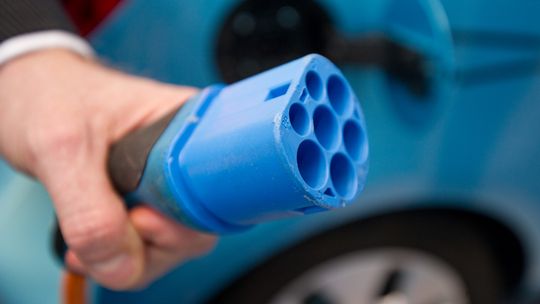
How piquant or exquisite or unintentionally funny or something. An eco-study by an eco-institute (Öko-Institut) has just found out that eco-cars of the ecolectric kind are not nearly as ecological for the ecology as assumed (is there an eco in here?).

Basing its findings upon the amount of additional electricity these cars will have to use in the future, the study determined that if this energy does not come from renewable energy sources (a most unlikely likelihood at this time, it appears), then this increase in electricity production will actually prove to have a detrimental effect upon the so-called climate balance.

Exhaust or not, it must be clear by now that this subject will never be exhausted.

Als Grund nennt das Öko-Institut die Strommengen, die durch Elektroautos verbraucht werden. Die Klimabilanz wäre nur dann ausgewogen, wenn dafür zusätzliche Mengen erneuerbarer Energie in den Strommarkt eingeführt würden.