Because the party that needs it as life insurance (the SPD) has fallen into the abyss.
You don’t need life insurance anymore when you’re already dead.
Germany’s so-called “firewall” was designed to prevent the resurgence of antidemocratic ideology and has shaped German politics for decades. Now, mounting voter support for the far-right AfD is exposing cracks.
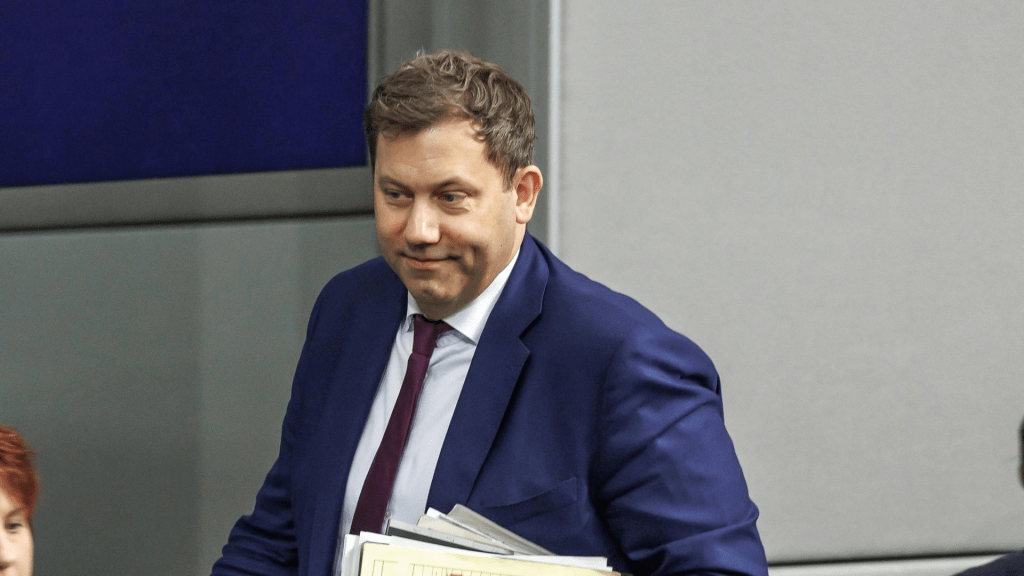
Klingbeil: Transatlantic relations are currently disintegrating – Federal Finance Minister and Vice Chancellor Klingbeil has described relations with the US as severely damaged.
At an event held by the German Institute for Economic Research, the SPD leader said that transatlantic relations as we know them are currently disintegrating. Klingbeil referred to the US military intervention against Venezuela, the conflict over Greenland, and the US government’s new national security strategy. The Trump administration is making it clear that it wants to dominate the Western Hemisphere and is increasingly turning away from Europe politically and culturally, Klingbeil said.
If only he had used a little more imagination and drawn one of these instead.
He’d be in the clear.
German politician steps down over swastika on ballot – The German state of Baden-Württemberg’s deputy speaker stepped down after admitting he drew a swastika on a ballot beside an AfD lawmaker’s name. Daniel Born said he had made a “serious mistake” during a vote.
Gee, I wonder why? German voters seem to be much less concerned.
Poll: Germans largely reject ban on far-right AfD – Germans reject a ban on the far-right Alternative for Germany (AfD) by a majority of 52% to 27% in favour, according to a new representative survey published by the Allensbach Institute polling organization on Saturday.
The proportion opposed to a ban rises to 65% in the east of the country, according to the poll published by the Frankfurter Allgemeine Zeitung daily newspaper, while it falls to 49% in the western states. The AfD enjoys widespread support in the formerly communist eastern states.
Germany urges tough EU response if ‘fair deal’ cannot be reached on US tariffs – Europe’s biggest economy on Sunday urged a tough EU response if the bloc is unable to strike a “fair deal” with the United States over trade tariffs. On Saturday, US President Donald Trump threatened to slap the European Union with 30 percent tariffs. “We won’t accept just anything,” Lars Klingbeil, finance minister of Europe’s biggest economy, told the Sueddeutsche Zeitung newspaper.
The British news magazine “Economist”, which is read by decision-makers worldwide, sounds the alarm: in Germany, freedom of opinion is increasingly under threat – from laws, court judgments and a way of dealing with criticism that raises questions in a liberal democracy.
The report focuses on the case of journalist David Bendels. The editor-in-chief of the right-wing populist “Deutschland-Kurier” had published a manipulated photo of Federal Minister of the Interior Nancy Faeser holding a sign saying “I hate freedom of expression.” The Economist notes: “Such images are commonplace on social media.” However, Faeser filed a criminal complaint – and a court sentenced Bendels to a seven-month suspended sentence, a heavy fine and an apology.
Germany’s established “democratic” political parties are turning Germany “far-right” by not addressing the migrant madness.
And not addressing the Green energy madness. And not addressing the taxation madness. And not addressing the bureaucracy madness. And that’s not all of the madness that’s not being addressed, either. All this madness, you see, is what’s making everybody so mad.
In other words: Fix it already. Or go “far-right.”
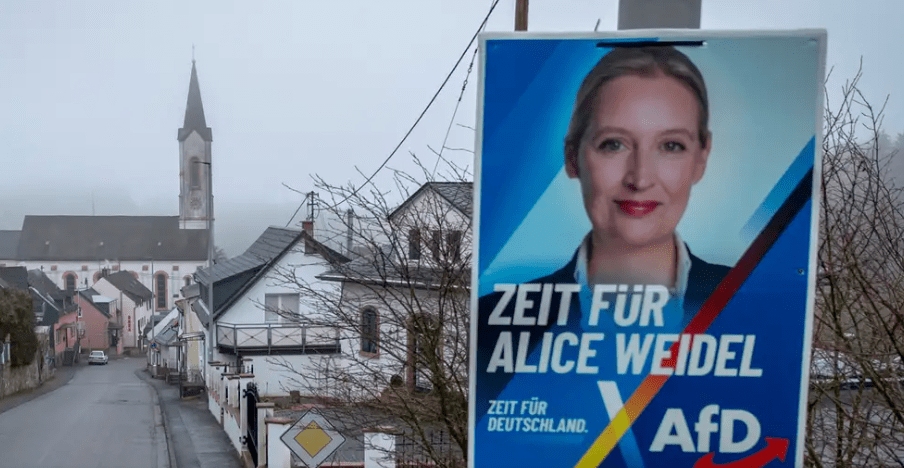
Is Germany turning to the far-right? Inside the country’s battle for power – Germany heads to the polls this week facing a challenge for power from the far-right. In the run-up to the historic vote, Siobhan Robbins heads to the country’s right-wing heartland.
Doesn’t that reflect German majority opinion? Well… No, it doesn’t. Not when the polls all indicate the opposite.
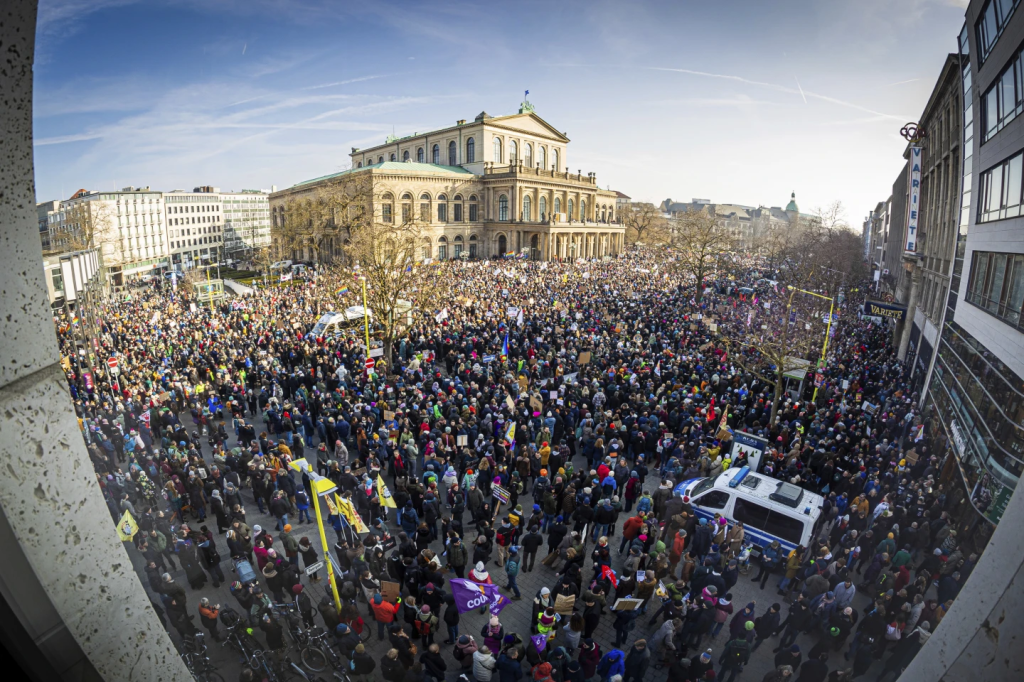
At least 200,000 protesters rally in Munich against far-right AfD ahead of German election – More than 200,000 protesters rallied in Munich, Germany, on Saturday against far-right extremism ahead of the country’s general election.
The far-right, anti-immigrant Alternative for Germany, or AfD, is in second place in recent polls and has prompted widespread protests across the country before voters cast their ballots on Feb. 23…
FDP deputy leader Kubicki rejects the idea that “firewall” demonstrations reflect majority opinion: Otherwise the red-green party would have made huge gains in the polls.
Despite Scholz’s criticism (German Chancellor Olaf Scholz, SPD): majority of SPD voters support Merz’s asylum ban, according to poll – Scholz had protested vehemently against the CDU’s push for a turnaround on migration. A survey now shows that 66% of Germans support Merz – as do the majority of SPD voters.




 Observing Hermann