In Germany they can’t afford to stay (energy costs).
In Hungary they can’t afford to pay (baksheesh). Or so they say.
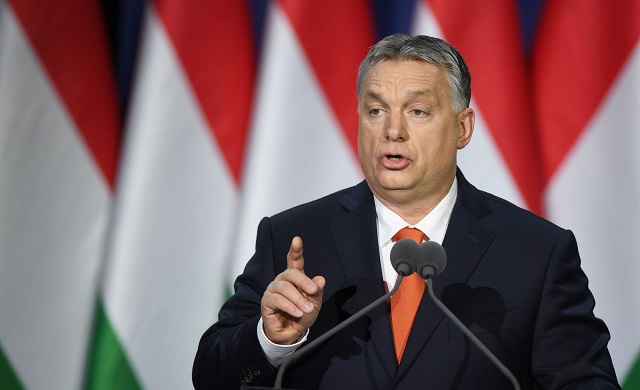
Viktor Orbán Ups the Pressure on German Companies to Leave Hungary – German companies have long been active in Hungary. But now, Viktor Orbán is trying to force some of them to leave. And when they do, his closest allies stand to profit.
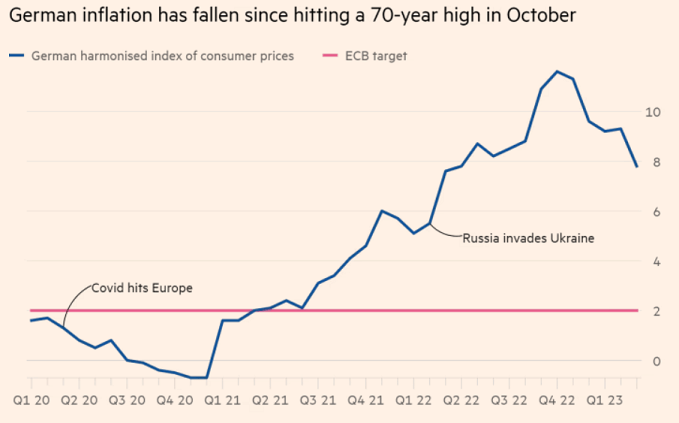
Energy price falls spark drop in German and Spanish inflation – Headline pressures ease but investors bet ECB will have to raise interest rates in May.
Some members of the governing council have called for the bank to adopt a more cautious approach after raising interest rates by half a percentage point this month.
The turmoil in the banking sector has also opened up the prospect of a potential credit crunch that could slam the brakes on both inflation and growth in the coming months.
The good news? Germans still have schlechte Laune (they’re still in a bad mood).
The bad news? They’re not in as bad a mood as they ought to be.
German consumer morale slows down on path to recovery – German consumer sentiment is set to nudge up in April as energy prices have relented somewhat from record highs, though a full recovery is not in sight anytime soon, showed a GfK institute survey on Wednesday.
The institute forecast its consumer sentiment index to improve to -29.5 heading into April from a revised reading of -30.6 in March, slightly below the expectations of analysts polled by Reuters of -29.0.
Strike over pay paralyzes rail, air travel in Germany – Trains, planes and public transit systems stood still across much of Germany on Monday as labor unions called a major one-day strike over salaries in an effort to win inflation-busting raises for their members.
The 24-hour walkout — one of the biggest in decades — also affected cargo transport by rail and ship, as workers at the country’s ports and waterways joined the strike.
Do they mean the Energiewende (the Green renewable “energy turnaround”)?
Oh. They’re only talking about Wirecard. Yeah. That one was pretty cool too. Peanuts compared to the Energiewende fraud, though. But still.
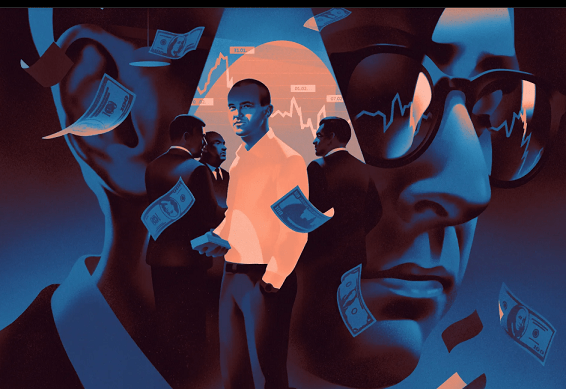
The tech company Wirecard was embraced by the German élite. But a reporter discovered that behind the façade of innovation were lies and links to Russian intelligence.
A German politician’s unfortunate slip twenty years ago, “children instead of Indians,” certainly didn’t work.
Demographics can be a bitch.
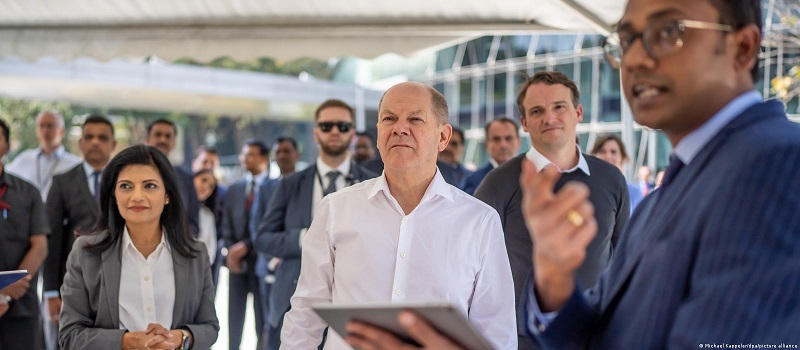
Germany aims to ease visa process for India’s IT workers – Berlin wants to encourage information technology experts from India to come and work in Germany. The plan would be to make it easier for them to come to the country with their families.
German Chancellor Olaf Scholz said on Sunday that his government wants to ease the path for information technology experts from India to obtain work visas in Germany.
While Germany faces a shortfall in skilled worker numbers, India cannot always provide jobs for its large, young population.
Because they’re not the right shade of Green. They’re not European Green, in other words.
They’re more of a Greenback shade of Green. And this makes them Green with envy. Or maybe it’s more like Green about the gills.
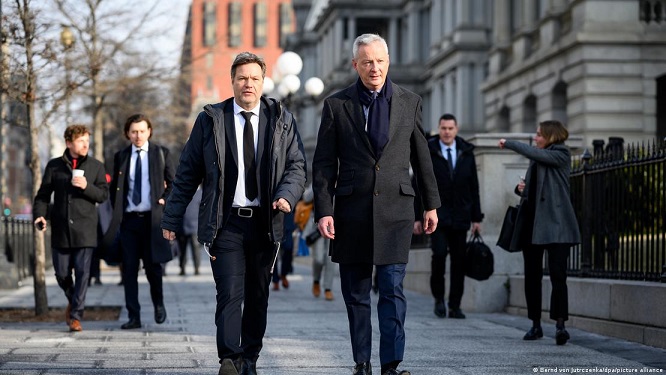
German Vice Chancellor and Economy Minister Robert Habeck was holding talks in Washington on Tuesday focused on the controversial US Inflation Reduction Act (IRA), which foresees huge investments in green technologies.
A large portion of the Inflation Reduction Act, somewhere in the region of $370 billion (roughly €350 billion at current exchange rates), is earmarked for spending and subsidies designed to support the green transition in the US.
For instance, it includes government incentives for consumers to buy electric vehicles, but only if the vehicles and batteries were produced either in the US or a country with a trade deal with the US.
The avalanche Angela Merkel set off back in 2015 is finally starting to pay off!
Shortage of engineers, scientists threatens German industry – Germany’s homegrown population is declining, and with it the number of science and engineering students.
German engineering is known worldwide for its quality and innovation. But that brand is under threat. The number of students beginning university degrees in STEM fields — shorthand for science, technology, engineering, and math — fell 6% in just one year, according to a recent study from the nation’s federal statistics agency.
When prices rise, people buy less. Who would have expected that?
German retail sales post surprise plunge in December amid rising prices – German retail sales unexpectedly fell in December as a Christmas shopping period weighed down by high inflation and the energy crisis revived fears of a more marked slowdown in Europe’s largest economy.
Retail sales decreased by 5.3% in December compared with the previous month, the federal statistics office said on Tuesday. Analysts polled by Reuters had forecast a 0.2% rise in price-adjusted terms.
German economy unexpectedly shrinks in Q4, reviving spectre of recession – The German economy unexpectedly shrank in the fourth quarter, data showed on Monday, a sign that Europe’s largest economy may be entering a much-predicted recession, though likely a shallower one than originally feared.
Gross domestic product decreased 0.2% quarter on quarter in adjusted terms, the federal statistics office said. A Reuters poll of analysts had forecast the economy would stagnate.




 Observing Hermann