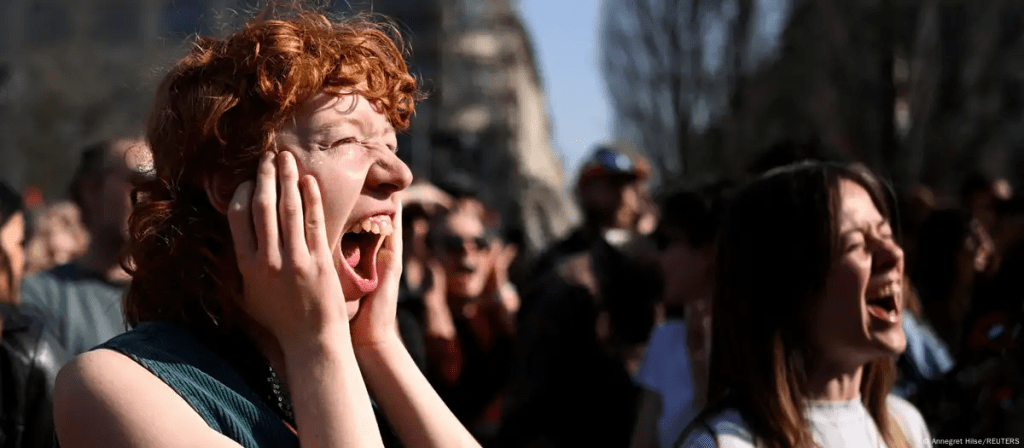
Germany is one of the best places to make a career as an opera singer, with 80 opera houses and billions of Euros in federal support. But mastering German pronunciation can be difficult.
But we’re just stretched too thin at the moment for the past forty years.
Germany likely too stretched to provide troops for Ukraine, foreign minister says – Johann Wadephul’s comments come as the U.S. and European nations discuss security guarantees for Kyiv as a core element of any potential peace deal.
But please keep doing whatever you’re doing by keeping Europe out of this.
German Chancellor Merz Backs Trump Peace Push, Calls For Trilateral Meeting With Putin – German Chancellor Friedrich Merz has backed Donald Trump’s push for a peace deal with Ukraine, saying a swift settlement could outweigh a ceasefire. In interviews, Merz revealed Trump pledged U.S. security guarantees for Kyiv and urged a trilateral summit with Putin, Zelensky, and Europe’s involvement. While EU leaders push for a role, Washington remains the decisive force, with Kremlin aides cautious and U.S. allies pressing Europe to step up.
German states debate who invented Bratwurst sausages – A row has broken out between two German states, Bavaria and Thuringia, as to who can lay claim to inventing the Bratwurst sausage.
Until now, the “Wurstkuchl” tavern in Bavaria has claimed to be “the oldest Bratwurst stand in the world.”
Die Wurstkuchl is situated on the Stone Bridge in Regensburg on the Danube River. The oldest documented evidence of a cook or a food stall at the Stone Bridge is said to date back to 1378.
But now, historians in Erfurt, Thuringia’s state capital, have come across a document from 1269 that mentions people who rented a building with a meat-roasting stand (Brathütte) and a roasting pan (Bräter) – more than 100 years earlier than the Regensburg sausage stand.
And in Germany that means you have to be high to think this stuff up.
A nude visit to the museum? That’s exactly what’s possible on two dates at Stuttgart’s Haus der Geschichte, and it’s even expressly encouraged. Guests can not only explore the exhibition, but also enjoy curator tours and performances.
Germany rejects US censorship claims in human rights report – The report itself has been accused of political bias, with the US softening criticism of Israel and El Salvador. Germany rejected the report saying it has “a very high level of freedom of expression.”
Country by country. There must be a good reason for this. Why are European voters voting for parties that promise to get European migrant madness under control? What’s wrong with them?
Far-right AfD tops German popularity ranking in bombshell new survey – Between Alternative for Germany and France’s National Rally, populists continue to rise in Europe’s most powerful countries.
Germany: Domestic travel drives highest-ever hotel bookings – New figures show that holiday and business travel in Germany is more popular than ever, even though demand from other countries has dropped. Meanwhile, lawmakers are turning to TikTok to engage the youth.
Refugees had to endure freezing temperatures, scaling barbed-wire fences and hiding from soldiers on patrol. Getting caught meant a one-way ticket to one of East Germany’s special prisons — if you were not shot…
How Germany’s “death Strip” Became A Sustainable Lifeline.
Fake news. They really think we’re stupid or something.
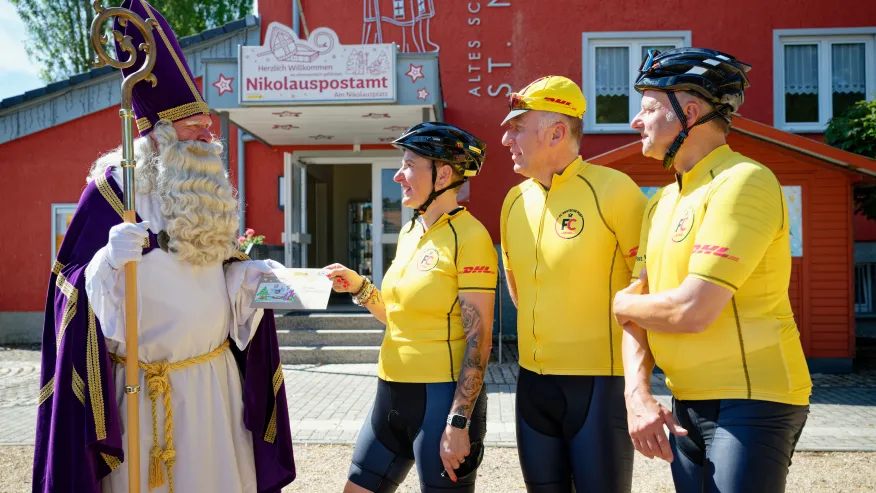
3 elves are cycling from the German town of St. Nikolaus to Finland’s Santa Claus Village – Three postal workers set off Saturday on their nearly 3,000-kilometer (1,860-mile) bicycle journey from St. Nikolaus, Germany, to the small town of Rovaniemi, Finland, which is home to Santa Claus Village, according to German news agency dpa.
The cyclists are traveling north to bring letters and Christmas wish lists addressed to Santa Claus from St. Nikolaus, in Germany’s Saarland state, to the winter-themed amusement park perched on the edge of the Arctic Circle.








 Observing Hermann