One of Santa’s elves!

One of Santa’s elves!
That means to pause, defer, stop.

Syria updates: Germany halts asylum proceedings for Syrians – Germany is reportedly putting a halt on asylum proceedings from Syrian citizens. The decision comes after Syrian President Bashar Assad was toppled in a lightning offensive by rebel forces.
Berlin’s Christmas markets have been reflecting this for years.
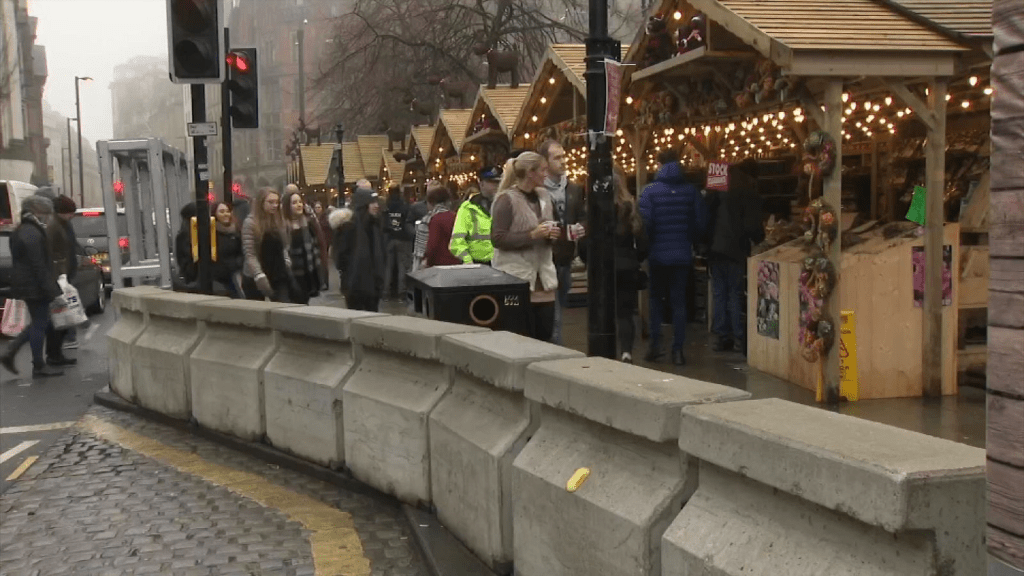
Berlin’s traditional Christmas markets reflect city’s growing diversity – The smells of mulled wine, roasted almonds and hot bratwurst are wafting through the air across the German capital again, as the city’s more than 100 Christmas markets are opening their doors this week. But the annual tradition that Germans have cherished since the Middle Ages — and successfully exported to much of the Western world — has become a pretty diverse affair, at least in Berlin.
Hmmm. That’s a tough one.

What can stop the rise of populism in Germany? How about taking care of the problem you created? You know, like the voters have been demanding you to do for nearly ten years now? Until the migrant madness ends, this “populism” you fear won’t.
What can stop the rise of populism in Germany and elsewhere?
Populist parties are on the rise in Germany as they are all over the world. What can open societies do to protect democracy?
“We have to realize that party democracy is losing structure and strength. Party democracy is changing into a movement democracy, which is much more volatile.”
“Lieber ein Ende mit Schrecken als ein Schrecken ohne Ende.”

“Better to have an end with fright than fright without end.”
Migrants say Germany’s ‘welcome culture’ has soured as far-right parties rise – On Sunday, voters in the eastern German state of Brandenburg will vote for a new regional parliament. The anti-migrant far-right Alternative for Germany, or AfD, could win the most votes. On 1 September the AfD won a major German election for the first time, coming first in the eastern state of Thuringia. In Brandenburg polls show the AfD leading with 28%.
To undermine support for the AfD, Chancellor Olaf Scholz’s left wing-led government on Monday introduced checks for migrants on all of Germany’s borders. He also wants to increase deportations of people whose application for asylum is unsuccessful. Opposition conservatives meanwhile want the borders closed to asylum seekers altogether.
That means spot checks or spot controls.
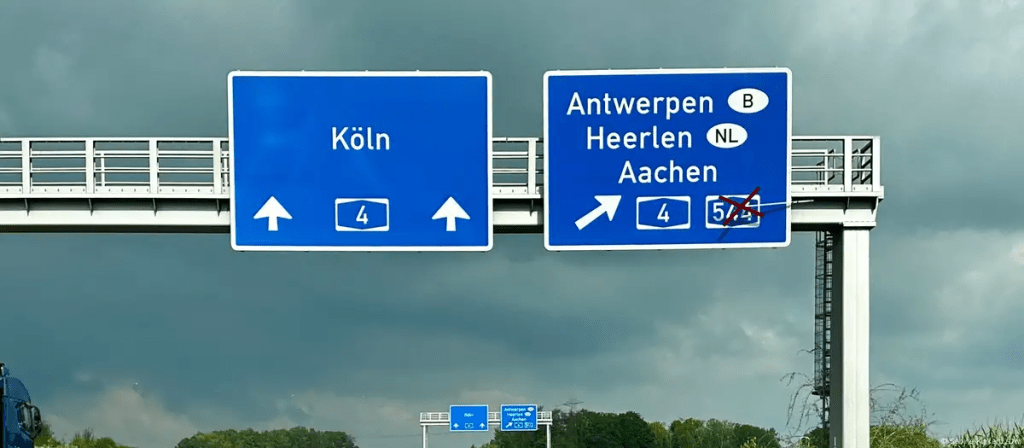
German police reintroduce spot controls at all borders – Germany is reintroducing border checks at all its borders for at least six months. The aim is to help restrict migration.
Checks are being temporarily reintroduced at Germany’s borders with France, Belgium, Luxembourg, the Netherlands and Denmark. They are due to run until March 15, 2025. Such controls have already become part of daily life at the borders with Poland, the Czech Republic, Austria and Switzerland.
Temporarily? We’ll see about that.
That stands for Landesamt für Flüchtlingsangelegenheiten Berlin. And that stands for Berlin’s State Office for Refugee Affairs.

And it’s a been a LAF a minute over at the LAF these days, having now run out of room to house the growing number of refugees.
Berlin plans new mass accommodation for refugees – Immigration has become a hot-button issue in Germany. Refugee accommodation centers in Berlin are full to overflowing, but there’s a desperate lack of housing. Now, authorities are coming up with bright ideas…
Over 30,000 refugees in Berlin are living in accommodation facilities run by the LAF. Many have already had their asylum claims approved but are stuck in state-run facilities because they can’t find affordable accommodation on the capital’s fiercely competitive real estate market.
And it shows.

Germany steps up controls at borders in response to ‘irregular migration’ – New regulations come into force next week following spate of suspected Islamist attacks.
Germany’s interior minister has announced that controls at all of the country’s land borders are to be stepped up in an attempt to confront what it called “irregular migration” after a recent spate of suspected Islamist attacks.
The new regulations are due to start next Monday and to be in place for an initial six months, before being reviewed, Nancy Faeser (SPD) said in a statement.
The move comes after Alternative für Deutschland (AfD), campaigning heavily against migration, this month became the first far-right political party since the Nazi era to win a state election in Germany. It comes ahead of a second round of emergency talks on migration policy due to be held on Tuesday in Berlin between the coalition government, opposition parties and federal states.
Help, help me Rwanda.

Help me Rwanda yeah. It’s time for them to depart!
Germany: Migration commissioner proposes Rwanda deportations – Joachim Stamp accused Russia and Belarus of encouraging migration to the EU as part of their “hybrid warfare.” These migrants should be sent to a third country such as Rwanda, he suggested.
Only different.

Whereas with the 80-20 Rule (aka Pareto Principle) 80% of a company’s revenue is generated by 20% of its customers, when it comes to German elections, 80% of voters are very conservative regarding certain issues (“irregular” migration, for instance) but are ruled by 20% of those who aren’t.
German government reeling after state election defeats – The results of state elections in Saxony and Thuringia are disastrous for the parties that make up Germany’s coalition government. What will be the nationwide consequences from the regional votes?
 Observing Hermann