Germans Just Love The ECB’s New Bond-Buying Program

Not.

Which brings us to our next topic: The latest greatest German angst survey. A new study by R+V Versicherung (insurance) has just found out what Germans loved to be scared of most these days: The climbing cost of living (63 percent of those asked).

Außer den “Standard-Ängsten”, die die R+V Versicherung seit zwanzig Jahren bei 2500 Deutschen abfragt, stehen alljährlich auch aktuelle Themen zur Debatte.

Germans Still Scared Of The Internetz

Actually, it’s only the older, digital immigrant kind of Germans who are still scared of the Veb. You know, around 85 to 90 percent of the population?

And these are the folks who want politicians to introduce ever more stringent anti-Internet legislation (more is more here) and get all hysterical about data privacy for data that nobody’s interested in and ran Google Street View out of town and would never think of ever putting their faces (or anything else) on Facebook, provided they could even find the dad dern thing, and think that flash mobs are real mobsters with machine guns and stuff like that and on and on and on. And, oh yeah, these are also the folks who vote here. So there we have it. Old dogs, nix tricks. Tricks are for kids.

Sogenannte Digital Outsiders hält die Angst, die Kontrolle über ihre persönliche Daten zu verlieren, davon ab, überhaupt online zu gehen. Sie fürchten zudem, mit einem versehentlichen falschen Tastendruck das Internet zu löschen.

Crisis, Doomsday And The End Of The World As We Know It

I don’t usually tend to panic when reading newspapers, but when German journalists start writing articles critical of the media’s “eternal ramblings about doomsday,” I get very nervous indeed. This is news, in other words, primarily because this isn’t news to me.

Evelyn Finger’s main concern here is the German obsession with “the” Krise (crisis) in general (crises plural) and the latest so-called Krise der Demokratie (crisis of Democracy) in particular.

“In the meantime (it started out long ago with “the oil crisis,” she believes) we have become all too accustomed to terms like education crisis, energy crisis, climate crisis and, most recently, financial crisis, debt crisis and euro crisis. We have all hoped that these crises would not prove to become any more threatening than they already are, especially since our linguistic capacity to express more crisis seems to have been exhausted: World financial crisis! But a new threatening term has been spooking the debates as of late: A crisis of Democracy. Is there really such a crisis or is the chatter about it the real problem?”

We all know the answer to that question, of course. She rightly finds this obsessive German Angslust (passion for fear) ridiculous and has no trouble exposing it for what it is; mindless, self-indulgent, neurotic nonsense. But I do wish she would have had the decency to have warned me first. I don’t like stumbling accross articles like this in German newspapers, articles that make sense by expressing something we used to call “common sense.” If I had wanted to read articles like that I wouldn’t have bought a German newspaper in the first place.

But thanks anyway, Evelyn. You may have shaken me up a bit, but I really do hope you have a pleasant week.

Das Wort Krise hatte seinen Schrecken schon fast verloren. Es klang in den letzten Monaten auch bei dramatischer Nachrichtenlage etwas schwach und durch häufigen Gebrauch abgenutzt.

It’s Us Against Them

Us as in US, I mean.

German authorities are trying to limit what the American tech companies can do, but the Silicon Valley giants are fighting back (the key word is American here, folks).

Give the Germans what they want, I say. But what DO they want, anyway (this is one of my favorite German schizophrenia thangs).

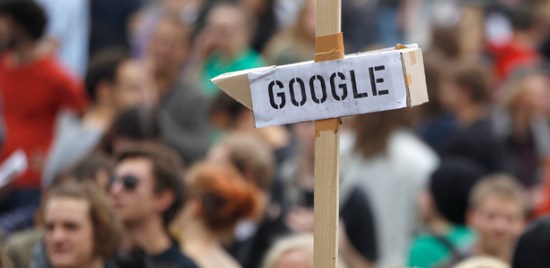
It’s worth noting that Facebook and Google are actually quite popular in the country — the BBC reported in September that “a quarter of the German population are active Facebook users and Google has 95% of the country’s search market.”

Always Look On The Bright Side Of Life

First the good news: Germans are no more depressive than they used to be.

The bad news is that they are now no longer expected to keep their depressions to themselves and are being asked to come out of their closets to tell everybody about it.

The numbers are shocking or something. Fear industry experts at the Foundation for German Depression Assistance say that there are four million depressed people in Germany, two-thirds of them being women. Just like the rest of us, their lives are filled with angst, emptiness and desperation. But unlike others, these folks are much easier to manipulate (by organizations like the Foundation of German Depression Assistance, for instance) and can and will be made to come public with their ailments, real or imaginary, thus “breaking a taboo” and further increasing their number and the throng of psychotherapeutically challenged pilgrims to organizations like, well, take a guess.

The development is in fact so dramatic that comedian Harald Schmidt has been asked to get involved as a sponsor. And anybody who wasn’t depressed before attending a conference moderated by this guy will be by the time he leaves.

Gee. All of this gives German depression assistance a whole new meaning or something.

Vier Millionen Depressive in Deutschland – das kann nicht nur am Fernsehprogramm liegen.

Fukushima Goes Broadway

Sort of. Remember Fukushima? That Japanese Super-GAU (nuclear worst case scenario) that, well, never happened? You know, the one after that earthquake in Japan that managed to shut down 8 nuclear power plants in Germany (and could you imagine having to explain that to a visitor here from outer space?)?

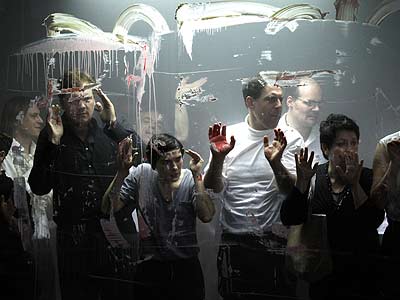
Well, the German intellectually correct caste is bound and determined never to forget (one of their favorite pastimes) and that is why they are now making even more theater about the Fukushima Theater (Theater machen means kicking up a fuss here) by bringing out a worst case scenario theater piece addressing this epoch-making event. It’s called “Kein Licht” meaning No Light. And no, it is not a musical.

Needless to say, this is German highbrow theater vom Feinsten (at its best). And it starts with the title, I find. It’s so ambiguous or something. Although, on the other hand, what else could they call it other than No Light? The freakin’ power plant just got turned off (the loss of light connected with such an action being a logical consequence German nuclear energy opponants have not yet managed to properly address).

But screw the title, the main thing is that this production creates “an atmosphere of total anxiety.” I mean, why else whould a German theater-goer go and see it otherwise? You know, it’s a production with lots of darkness and water and slippery mud and rubber boots and all the other stuff that happens right after a nuclear catastrophe in Japan that never took place. And nudity too, I assume. All German highbrow theater pieces have naked people in them at one point. That’s just what they do here. Although you might think that with the play being called No Light nudity might not have the desired effect, which is supposed to be loud yawning, as far as I can tell.

And the message? Some Künstler say it is an attack upon the media and other fear industrialists (see the Greens & Co.) who are willing to exploit the suffering of others and create panic to increase their sales and thus make a lot of money and/or influence. You know, it’s a critique on those who misuse a serious issue like this to scare others for their own self-aggrandizement and profit. So make sure to buy your tickets early.

Es ist ein Schwall von Texten, die meist in keinem Zusammenhang stehen.

I Can’t Look Away

Nor blink anymore. Remember the old days when addiction had to do with actual addiction? I mean, with an actual substance? No, I guess you don’t.

Anyways, a new fear industry report tells us that some 560,000 Germans are now “addicted” to the Internet. How shocking or something.

Addiction here means that these poor lamentable victims can no longer stop surfing on their own (that’s why they – and we – need the fear industry, see?). Like the helpless zombies that they are, these addicts live day and night (mostly night) in a so-called “virtual world” because it is there and only there that they can find fulfillment and recognition (albeit virtual fulfillment and virtual recognition).

And their addiction is in fact so way bad out of control that many of these victims (and I really want to stress the word victims here) no longer go to school, university or, gulp, even work (even when they have work, which most probably don’t, and which can also be very addictive, by the way, the work, I mean).

Doesn’t anybody out there care? Other than me (not)?

And doesn’t anybody out there other than me break out in loud laughter when reading ridiculous nonsense like this? Hello? Does anybody read me? Or am I lost in my “virtual world” again? Uh oh. The sun’s coming up.

Das seien etwa ein Prozent der 14- bis 64-Jährigen, sagte die Drogenbeauftragte der Bundesregierung.

More Angst Underway

In a shocking new study or something, psychologist expert types have just discovered that up to 17 percent of German young people between the ages of 14 and 20 are currently suffering from the what is now to become the dreaded mass illness ailment sickness known as “social phobia” (formarly known as adolescence). No one has bothered to tell them about it yet, either.

These chronic sufferers, especially the girl ones, regularly avoid situations in which they must meet people they don’t know and do things that they don’t want to do. But there is good news, researchers say. This scourge of mankind (teenkind?) can be treated successfully. By finally growing up already.

“Die gute Nachricht ist, dass soziale Phobien erfolgreich behandelt werden können.”

Is it Newspeak or Newsspeak?

The Fukushima worst case scenario has now actually happened, in Germany. And the Fukushima worst case scenario is that the Fukushima worst case scenario never happened. Sometimes the truth raises it’s ugly and pointy little head, even here. Only for a second or two, but still.
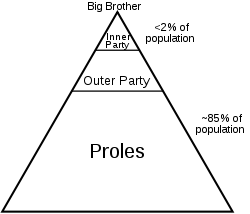
I read the news today, oh boy. And not that any of you out there really care or anything, but I discovered that even journalists with the best of politically correct intentions can screw up from time to time. In this case it was in a Zeit article entitled Stress und Strahlung (Stress and Radiation) by Hans Schuh*. It was about how, well, something called “psychosocial stress” resulting from the Fukushima incident will now be producing more victims than the radiation did (I think he meant in Japan because psychosocial stress victims have been dropping like flies here in Germany for months now).

Like duh, Hans. Something has to produce victims when the “Super-GAU” everyone was banking on never materialized, right?

My favorite line in the article: In hindsight it has been revealed that with regard to one aspect of the accident’s occurance the world community (he actually means Germany here, of course) was taken in by an error: The “worst case scenario in the fuel cooling basin” never took place.

I’ve got to know, folks: How on earth did this ever get past the Brain Police?

I know how. “The people” will automatically understand that the worst case scenario took place anyway, sort of, irgendwie. They have long been aware of the fact that their reality must be made to comply with your/our ideologically motivated fear agenda, so it ain’t no big thing, this one little slip-up. This type of thing only makes Newspeak stronger, I think, although I can’t claim to be fluent in it yet myself.

Im Rückblick offenbart sich auch, dass die Weltgemeinde in Bezug auf das Unfallgeschehen zumindest in einem Punkt einem Irrtum aufgessen ist: Der “GAU im Abklingbecken”, der global Schlagzeilen machte fand gar nicht statt.”

* You won’t be finding this article online for some reason. I guess it’s not fit for the masses just yet.

News Alert! Here’s the article after all. They publish these online a little later, I guess.