Debacle, Disaster, Fiasco…

Just a reminder here again: “There is no free lunch.” Honest.
Lunch

Government intervention at its best (again). Germany’s deliberate attempt to make its energy greener using price guarantees and mandatory quotas for green energy IS NOT WORKING.

Try and remember: The whole idea was to make renewable energy more competitive and, therefore, in the end, cheaper. Well this attempt is so not working right now that German consumers pay higher prices now than ever before and German industry is soon to follow. And this, even though there is actually an oversupply of power. In essence, an energy bubble has been created because Germany’s renewable energy producers get a guaranteed minimum price for what they produce (this now includes farmers and communities and anybody else who can still get into the ponzi scheme).

Imagine you have various consumers going to a grocery store. Some of them want to buy a bottle of beer for 1 USD. Others would like to buy a bottle of champagne for 30 USD. In normal life people would just pay 1 USD for the beer and bubble-lovers would pay 30 USD for champagne. The German energy market is different. People who want the champagne pay 2 USD for it and those who want beer have to pay 2 USD. It’s a good deal for the champagne drinkers, getting subsidized by the beer buyers.

…Perhaps the least fair part of the whole scheme is how these prices disproportionately impact low-income households, who are forced to subsidize green energy for richer families to support politicians’ green energy visions.
Whoopee! The Electricity Prices Are Going Up Again!

Seven percent in the coming year! For starters.

Strom

Hot dog. And all because of the The German Renewable Energy Act.

And this act kind of goes like this: Every kilowatt-hour that is generated from renewable energy facilities receives a fixed feed-in tariff. Renewable energy plant operators receive a 20 year, technology specific, guaranteed payment for their produced electricity. Anyone who produces renewable energy can now sell his ‘product’ for a 20-year fixed price.

And who pays this tariff? You guessed it.

Die EEG-Umlage steigt im kommenden Jahr voraussichtlich um einen Cent je Kilowattstunde.

Green Logic

This is how you save the world (from Climate Change).

Energy

German consumers already pay the highest electricity prices in Europe. So it follows, then, that the prices Germans pay for electricity need to be increased.

That is why a turnaround must be introduced – the infamous Energiewende or “energy turnaround” – with which, for instance, a renewable energy surcharge is levied that increases every consumer’s electricity bill from 5.3 cents today to between 6.2 and 6.5 cents per kilowatt hour — a 20-percent price hike. For starters, of course.

You see, this way everybody is happy because every single one of us then feels painfully, on a day-to-day basis, just how much he or she is pulling his or her own CO2 weight, all for the good of mankind, not to mention Planet Earth. And Mother Nature too, of course. Whoever she is.

In the near future, an average three-person household will spend about €90 a month for electricity. That’s about twice as much as in 2000.

Germany’s Eight Unplugged CO2-Free Atomic Reactors Have Increased Air Pollution For A Second Year In A Row

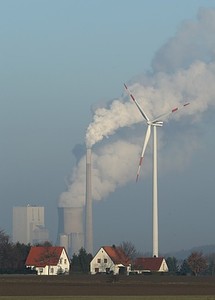
No, wait. It’s the German coal-fired power revival doing that.

Green

Green shift? Sounds more like a green shaft to me.

Coal is the most polluting fossil fuel and is blamed by scientists for contributing to global warming. Merkel opted to shut nuclear power plants after an earthquake in Japan two years ago resulted in meltdowns at reactors owned by Tokyo Electric Power Co.

“Climate protection is a key target of the government and greenhouse gases should fall, not climb.”

Alternative Reality Expensive As Hell

As part of Germany’s switch to renewables, industry has been exempt from paying higher prices associated with solar and wind energy. The European Commission, however, believes the practice distorts competition on the Continent. Huge penalties could be in store.

Bill

The costs of start-up financing for green energy and the compensation for expansion of the power grid are added to customers’ electricity bills in the form of a special tax. The entire subsidy system is supposed to come to an end when green energy becomes competitive. That, at least, is the theory.

But the reality is different. No longer can one simply describe the tax as a way to get renewable energies off the ground. Indeed, following Berlin’s decision two years ago to shelve nuclear energy and accelerate the expansion of renewables, the EEG (Renewable Energies Act) has become a giant redistribution machine.

“The fact that German electricity prices are among the highest in Europe despite relatively low wholesale prices must serve as a warning signal.”

Speaking Of Green Disasters…

“Germany’s Green Energy Disaster: A Cautionary Tale For World Leaders”

Green

“The costs of our energy reform and restructuring of energy provision could amount to around one trillion euros by the end of the 2030s.”

More Green Energy Jobs

More jobs lost to green energy, I mean.

Offshore

Worlee-Chemie GmbH, a family-owned company that has produced resins in the city of Hamburg for almost a century, is trying to escape the spiraling cost of Germany’s shift to renewable energy.

A 47 percent increase on Jan. 1 in the fees grid operators set to fund wind and solar investments is driving the maker of paint ingredients to Turkey, where next month it will start making a new type of hardening agent at a factory near Istanbul.

The levy will cost Worlee 465,000 euros ($620,000) this year, the equivalent of 10 full-time salaries, or one-third of the company’s tax bill. As German labor costs rise at the fastest pace in a decade, the price of weaning the country off nuclear energy by 2022 is crushing the so-called Mittelstand, the three million small and medium-sized businesses like Worlee that account for about half of gross domestic product.

Wow. Now that’s what I call government intervention in action. This German energy turnaround thing is working out practically as well as the European cap-and-trade system itself.

“It could be the proverbial straw that breaks the camel’s back. It comes on top of tax, general production costs, raw-material availability and bureaucracy, which have led to a deterioration of the investment climate in Germany.”

Big Sister Assures Germans That 47-Percent Price Hike Actually Not Such A Bad Thing If You Think About It

Not.

Worried about grassroots unrest after Germany’s electrical grid operators announced they were nearly doubling the charge consumers will pay to finance subsidies for renewable energy as Germany phases out nuclear power, Big Sister herself has reacted boldly and decisively by going into hiding and pretending as if none of this were really happening.

Long used to this tactic, worried German consumers were assured, sort of, as they will now be paying an additional 60 euros per year, “taking overall add-on power taxes up to about 185 euros.” But that’s just the start, of course.

Sheesh. Why do Germans see everthing energy turnaround-related so negatively these days? You know, like as in black? Or like as in blackouts, I should say?

“The costs for consumers and industry of the electricity price charge for renewable energy has risen to an unbearable degree.”

Phase-Out Fizzling Out

Support for Germany’s Atomausstieg (nuclear phase-out) ain’t what it used to be, it seems. And it seems to have something to do with Geld (money), or something. With reality, in other words.

According to an Emnid survey, 77 percent of German voters asked say it is very important that energy costs remain affordable while only 53 percent care if the nuclear phase-out succeeds or not.

Welcome back to the real world, volks, I mean folks. Hey, you are here in Germany after all. And there is a clearly discernable pattern here. Once the first wave of hysteria is over, it always goes back to es darf eben nichts kosten (OK, but only as long as it doesn’t cost anything).

Für sie ermittelte Emnid auch, dass zwei Drittel der Bürger maximal 50 Euro pro Jahr mehr für Strom zahlen wollen.

German Wind Offensive More Offensive Than The Rest Of Us Thought It Was

Well that didn’t take very long. Now it’s “Germany’s offshore fiasco.”

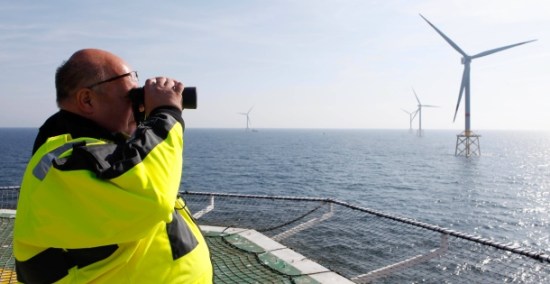
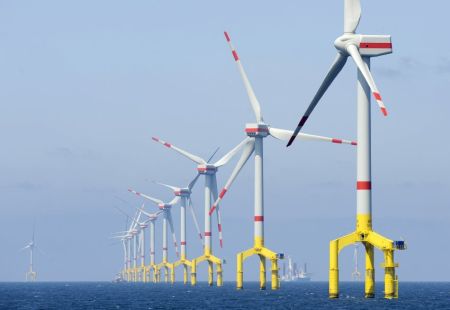
Germany wants to pepper its northern seas with offshore wind turbines as part of its ambitious energy revolution. But strict laws, technology problems and multiple delays are turning the massive enterprise into an expensive fiasco. Investors and the public are losing patience.