Electricity Prices Rising Dramatically For Some Reason

In a puzzling move that absolutely no one can explain, more than 200 German power suppliers have announced that they will be making big price hikes in the coming year. Consumers will then pay about 11 percent more on average.

Some experts speculate that the unexpected price increases could have to do with the costs associated with the increased efficiency and service currently being witnessed throughout the industry (see yesterday’s post). Others have surmised that these increased costs will be needed by the industry in the winter months to help fight global warming, or cooling in this case. Another group of experts believes that this dramatic move was prompted because Germans, already long used to paying some of the highest energy bills in Europe, just won’t notice and/or care.

Die Preissteigerungen begründen die Konzerne mit den gestiegenen Kosten für die erneuerbaren Energien.

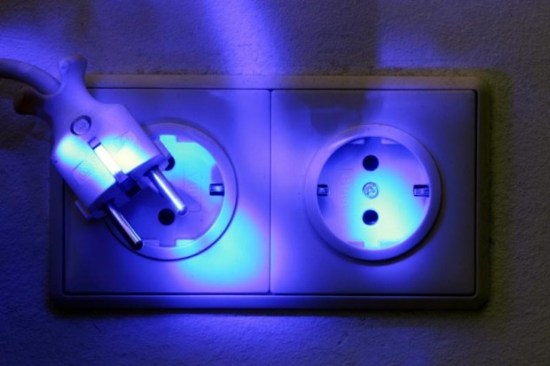
Who Needs Sandy?

Thanks to this dad gern new-fangled Energiewende (energy turnaround), the power goes out in Germany “mit ohne” (without) a damned hurricane these days.

Es ist 16:32 Uhr, für die meisten ist der Feierabend nicht mehr weit. Da zuckt in den Büros kurz das Licht. Im Stadtteil Griesheim gehen die Lampen sogar ganz aus. Zeitumstellung. Es ist dunkel. Rund um die Innenstadt bricht mitten in der Rush Hour der Verkehr zusammen. Die Ampeln tun – zumindest nördlich des Mains – ihren Dienst nicht mehr. S- und Straßenbahnen bleiben auf offener Strecke stehen. In den U-Bahnen geht die Notbeleuchtung an.

Phase-Out Fizzling Out

Support for Germany’s Atomausstieg (nuclear phase-out) ain’t what it used to be, it seems. And it seems to have something to do with Geld (money), or something. With reality, in other words.

According to an Emnid survey, 77 percent of German voters asked say it is very important that energy costs remain affordable while only 53 percent care if the nuclear phase-out succeeds or not.

Welcome back to the real world, volks, I mean folks. Hey, you are here in Germany after all. And there is a clearly discernable pattern here. Once the first wave of hysteria is over, it always goes back to es darf eben nichts kosten (OK, but only as long as it doesn’t cost anything).

Für sie ermittelte Emnid auch, dass zwei Drittel der Bürger maximal 50 Euro pro Jahr mehr für Strom zahlen wollen.

No One Can Explain German Power Grid Instability

But as far as I can tell, it seems to have begun sometime shortly after the Fukushima nuclear disaster in Japan.

Sudden fluctuations in Germany’s power grid are causing major damage to a number of industrial companies. While many of them have responded by getting their own power generators and regulators to help minimize the risks, they warn that companies might be forced to leave if the government doesn’t deal with the issues fast…

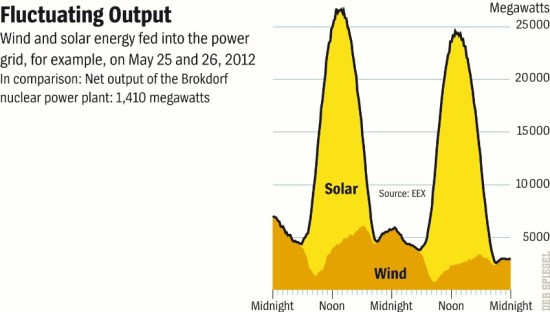
The problem is that wind and solar farms just don’t deliver the same amount of continuous electricity compared with nuclear and gas-fired power plants. To match traditional energy sources, grid operators must be able to exactly predict how strong the wind will blow or the sun will shine.

“Every company — from small businesses to companies listed on the DAX — are buying one (APC emergency power generators) from us.” 

Germany Confused About Japan’s “Retreat” From A Nuclear-Free Future

And here we thought that Germans were good at math.

Until Fukushima, Japan satisfied about 30 percent of its electricity demands with nuclear power, while renewable energy made up about 10 percent of the power supply. If one leaves out hydroelectric power, renewables hardly make up more than 1 percent.

“Japan needs a vision.”

German Ecological Energy Turnaround Working!

As long as power plants that burn fossil fuels remain in operation, that is.

The Federal Network Agency warns that if ecologically questionable coal-fired power stations do not stay in operation, the German power grid will crash. Especially in Southern German “assured capacities” are missing.

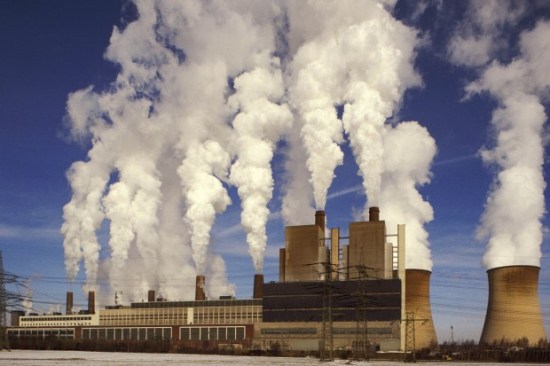
Power stations old as dirt (and at least as dirty), ready to be shut down due to the high environmental pollution they cause, will have to remain in operation.

Details, details. The main thing is that Germany’s ideologically-fired power elite stay in power long enough to keep that visionary progress of theirs a comin’.

Die ökologische Energiewende in Deutschland scheint ohne umweltschädliche fossile Kraftwerke nicht zu funktionieren.

Unterdeckungen

That’s German for deficient coverage. And German readers might be reading that word a lot in the weeks to come, at least when it comes to the electricity supply in Germany.

„We have been observing for weeks now that something with the system just doesn’t seem to be right,” one market expert said.

And in a letter from Germany’s Federal Network Agency to the power traders it deals with, it makes clear its concern about the rather volitile situation going on at the moment and has even warned of the collapse of the German power network. It almost happened on Febuary 6, already, they wrote, as “substantial undercoverage continuing over several hours” nearly brought the system to its knees.

Hmmm. Last year at this time, during one of the coldest winters ever, there wasn’t any problem with the German electricity supply at all. What on earth could have possibly happened since then and now to have caused this disturbing situation?

Nach dem Reuters vorliegenden Schreiben stand das Stromnetz in den vergangenen Tagen mehrfach vor dem Kollaps.

Not One, Not Two…

But three films about Fukushima are being shown this year at the Berlinale.

That was to be expected, I guess. Especially now since Fukushima hysteria has all but disappeared from the Bildfläche (screen), even here in Germany.

It’s hard to keep people scared for months on end, now matter how important you think your agenda is. They just get tired and want to move on with their lives. The latest media stunt I just barely heard about had a lot of potential, for a few minutes, but then it rolled over and died, too.

I am looking forward to the big one-year anniversary media terror show bombardment to be held here in Germany next month, of course. But what are they going to be able to scare us with then? The German nation threatening to shut down all it’s nuclear power plants? Been there, done that. It makes you wonder sometimes why they even take the trouble to keep on agitating at us like they do. Now that the war is over and all, I mean. There’s just no place else to agitate at the moment, I guess (thanks for nothing, “Occupy Movement”). It must be hard being progressive sometimes. Much less all the time.

The 11-day film festival, which prides itself on its generally edgier and more politically-overt line-up over other film showcases, was perhaps a fitting backdrop for the documentaries.

As The Energy Turnaround Turns

Now that the German Energiewende (energy turnaround) is here, tens of thousands of new green jobs have been created. Well, not quite yet actually. But it won’t be long now.


After all, once Berlin decided to permanently switch off the country’s eight oldest nuclear reactors and close the remaining ones still online by 2022, everyone here was absolutely ecstatic (at least those who didn’t work in the energy sector were). Sometimes you just have to give the people what they want, you know? And now they’ve got it. What they wanted, I mean

The same day the Energiewende was announced saw the first case in Germany of a solar panel manufacturer (Solon) announcing it was going into liquidation, threatening the loss of some 500 jobs. Then you had EON, Germany’s biggest power supplier, deciding to cut up to 11,000 jobs worldwide while its rival RWE shed 8,000. Then you had Solar Millennium. Then you had, oh I forget which one (there have been so many recently), solar something or something.

Hey, what’s a little job loss when it comes to the common green good (rhymes with Robin Hood)? These jobs are coming, people, sooner or later or maybe not even at all because, well, not even green jobs grow on trees.

Optimistic predictions that Germany’s decision to turn its back on nuclear energy will lead to the creation of hundreds of thousands of jobs in the renewable energy sector have met with scepticism.

We’ll Import Power From Anywhere

Even from Austria, if need be. And need there be.

“Missing power lines” are the cause behind the missing energy being missed in Southern Germany these days, we are told. That’s why Austria is being asked to help big buddy Germany out with a little “emergency energy,” pretty please.

But Austrians do this gladly, I think, because they know that if those missing German power lines weren’t missing than those missing power lines would be transporting tons of wonderful wind energy from the high German north to those energy-hungry factories in the south (and beyond to Austria?) where it’s missing at the moment, the energy. Like I said. Or so the theory.

The missing German nuclear power plants that were shut off after Fukushima (that’s in Japan) aren’t being missed by anybody here, though. Forget about them. It’s not the missing German nuclear power plants. It’s the missing power lines that are missing, I mean messing everything up around here.

Die Bundesnetzagentur hatte vor langfristigen Engpässen bei der Stromversorgung gewarnt. Die Versorgungssicherheit bleibe durch den Atomausstieg für eine Reihe von Jahren angespannt.