Debacle, Disaster, Fiasco…

Just a reminder here again: “There is no free lunch.” Honest.
Lunch

Government intervention at its best (again). Germany’s deliberate attempt to make its energy greener using price guarantees and mandatory quotas for green energy IS NOT WORKING.

Try and remember: The whole idea was to make renewable energy more competitive and, therefore, in the end, cheaper. Well this attempt is so not working right now that German consumers pay higher prices now than ever before and German industry is soon to follow. And this, even though there is actually an oversupply of power. In essence, an energy bubble has been created because Germany’s renewable energy producers get a guaranteed minimum price for what they produce (this now includes farmers and communities and anybody else who can still get into the ponzi scheme).

Imagine you have various consumers going to a grocery store. Some of them want to buy a bottle of beer for 1 USD. Others would like to buy a bottle of champagne for 30 USD. In normal life people would just pay 1 USD for the beer and bubble-lovers would pay 30 USD for champagne. The German energy market is different. People who want the champagne pay 2 USD for it and those who want beer have to pay 2 USD. It’s a good deal for the champagne drinkers, getting subsidized by the beer buyers.

…Perhaps the least fair part of the whole scheme is how these prices disproportionately impact low-income households, who are forced to subsidize green energy for richer families to support politicians’ green energy visions.
Whoopee! The Electricity Prices Are Going Up Again!

Seven percent in the coming year! For starters.

Strom

Hot dog. And all because of the The German Renewable Energy Act.

And this act kind of goes like this: Every kilowatt-hour that is generated from renewable energy facilities receives a fixed feed-in tariff. Renewable energy plant operators receive a 20 year, technology specific, guaranteed payment for their produced electricity. Anyone who produces renewable energy can now sell his ‘product’ for a 20-year fixed price.

And who pays this tariff? You guessed it.

Die EEG-Umlage steigt im kommenden Jahr voraussichtlich um einen Cent je Kilowattstunde.

Alternative Reality Expensive As Hell

As part of Germany’s switch to renewables, industry has been exempt from paying higher prices associated with solar and wind energy. The European Commission, however, believes the practice distorts competition on the Continent. Huge penalties could be in store.

Bill

The costs of start-up financing for green energy and the compensation for expansion of the power grid are added to customers’ electricity bills in the form of a special tax. The entire subsidy system is supposed to come to an end when green energy becomes competitive. That, at least, is the theory.

But the reality is different. No longer can one simply describe the tax as a way to get renewable energies off the ground. Indeed, following Berlin’s decision two years ago to shelve nuclear energy and accelerate the expansion of renewables, the EEG (Renewable Energies Act) has become a giant redistribution machine.

“The fact that German electricity prices are among the highest in Europe despite relatively low wholesale prices must serve as a warning signal.”

Alternative Energy Available In US-Amerika

Soaring German energy costs in the wake of the country’s transition to renewable energy have seen more and more firms thinking abut relocating their operations. The US looks like a sound alternative, associations claim.

Energy

And this even though everybody (everybody Green or SPD) knows that fracking is EVIL.

“If we don’t get on top of the country’s energy transition to renewables and are not able to rein in energy costs in the process, German industry’s competitiveness stands to suffer.”

Where’s The Money?

Germany’s Federal Minister for the Environment, Peter Altmaier, will now be shutting down 14 German climate protection programs due to cost conerns, not that anyone here who can do any arithmetic will take much notice or much less care.

Climate Change

Funding for something called Elektromobilität (electromobility) will be cut first, soon to be followed by funding cuts for Stromspeichern (energy storage technology) with the other cuts soon to follow. Billions of a vital natural resource are missing, it seems (they call them “euros” here), this because European CO2 emmission rights certificate trading just ain’t bringing in the cash it’s supposed to do.

Do I detect pattern here? Why is it that the so-called real world is always getting in the way of those way cool dream world plans that so many folks out there want to make come true so really, really, really bad? Who is behind this, anyway? It just has to be a conspiracy (again).

Demnach sollten die Projekte ursprünglich aus dem Energie- und Klimafonds der Bundesregierung finanziert werden. Dort klaffe jedoch eine Milliardenlücke, weil der europäische CO2-Zertifikatehandel nicht genug Geld in die Kasse spüle.

Speaking Of Green Disasters…

“Germany’s Green Energy Disaster: A Cautionary Tale For World Leaders”

Green

“The costs of our energy reform and restructuring of energy provision could amount to around one trillion euros by the end of the 2030s.”

The Green Shirts vs. The Environment

Guess who’s going to win?

Green

One would assume that ecology and the Energiewende, Germany’s plans to phase out nuclear energy and increase its reliance on renewable sources, were natural allies. But in reality, the two goals have been coming into greater and greater conflict…

Since the party’s founding in 1980, it has championed a nuclear phaseout and fought for clean energy. But now that this phaseout is underway, the Greens are realizing a large part of their dream — the utopian idea of a society operating on “good” power — is vanishing into thin air. Green energy, they have found, comes at an enormous cost. And the environment will also pay a price if things keep going as they have been.

“We should overcome the temptation to sacrifice environmental protection for the sake of fighting climate change. Preserving a stable natural environment is just as important.”

Big Sister Assures Germans That 47-Percent Price Hike Actually Not Such A Bad Thing If You Think About It

Not.

Worried about grassroots unrest after Germany’s electrical grid operators announced they were nearly doubling the charge consumers will pay to finance subsidies for renewable energy as Germany phases out nuclear power, Big Sister herself has reacted boldly and decisively by going into hiding and pretending as if none of this were really happening.

Long used to this tactic, worried German consumers were assured, sort of, as they will now be paying an additional 60 euros per year, “taking overall add-on power taxes up to about 185 euros.” But that’s just the start, of course.

Sheesh. Why do Germans see everthing energy turnaround-related so negatively these days? You know, like as in black? Or like as in blackouts, I should say?

“The costs for consumers and industry of the electricity price charge for renewable energy has risen to an unbearable degree.”

What Are 20,000 Jobs?

If they are being offered for the sake of Germany’s beloved Energiewende (energy turnaround), I mean (and if you’re not one of the 20,000, of course)?

There is a certain logic here. I think. First you phase out German nuclear power plants because of the Fukushima disaster in Japan (I still haven’t figured out this part yet), then you phase out thousands of Japanese jobs due to the loses incurred by the energy companies due to this hasty (as in immediate) phase-out.

Oops, sorry. I just took a closer look at the article. Those are German jobs that are about to be phased-out, of course. Duh. Look folks, I’m not a German energy turnaround expert here you know. Forgive me for the confusion. Technically, it’s not even mine. I’m just trying to pass it on as best I can.

Branche verliert durch Atomausstieg Geld – Eine Reihe von Studien hatte in früheren Jahren bereist festgestellt, dass der Netto-Effekt der Ökostrom-Subventionen auf dem Arbeitsmarkt bestenfalls Null ist.

German Wind Offensive More Offensive Than The Rest Of Us Thought It Was

Well that didn’t take very long. Now it’s “Germany’s offshore fiasco.”

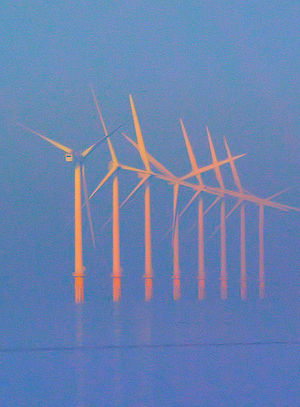
Germany wants to pepper its northern seas with offshore wind turbines as part of its ambitious energy revolution. But strict laws, technology problems and multiple delays are turning the massive enterprise into an expensive fiasco. Investors and the public are losing patience.