Big Sister Assures Germans That 47-Percent Price Hike Actually Not Such A Bad Thing If You Think About It

Not.

Worried about grassroots unrest after Germany’s electrical grid operators announced they were nearly doubling the charge consumers will pay to finance subsidies for renewable energy as Germany phases out nuclear power, Big Sister herself has reacted boldly and decisively by going into hiding and pretending as if none of this were really happening.

Long used to this tactic, worried German consumers were assured, sort of, as they will now be paying an additional 60 euros per year, “taking overall add-on power taxes up to about 185 euros.” But that’s just the start, of course.

Sheesh. Why do Germans see everthing energy turnaround-related so negatively these days? You know, like as in black? Or like as in blackouts, I should say?

“The costs for consumers and industry of the electricity price charge for renewable energy has risen to an unbearable degree.”
Phase-Out Fizzling Out

Support for Germany’s Atomausstieg (nuclear phase-out) ain’t what it used to be, it seems. And it seems to have something to do with Geld (money), or something. With reality, in other words.

According to an Emnid survey, 77 percent of German voters asked say it is very important that energy costs remain affordable while only 53 percent care if the nuclear phase-out succeeds or not.

Welcome back to the real world, volks, I mean folks. Hey, you are here in Germany after all. And there is a clearly discernable pattern here. Once the first wave of hysteria is over, it always goes back to es darf eben nichts kosten (OK, but only as long as it doesn’t cost anything).

Für sie ermittelte Emnid auch, dass zwei Drittel der Bürger maximal 50 Euro pro Jahr mehr für Strom zahlen wollen.

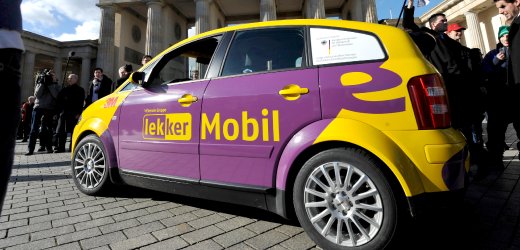
Electric Cars Have Already Reached A Whopping 0.01 Percent Of All Registered Cars In Germany

That’s some, uh, 4,600 vehicles. At this rate, the German government’s plan to have 1 million electric cars on the road by 2020 will be reached easily.

Or maybe not. Because those pesky German consumers still haven’t got the message and think that these babies are too expensive and don’t have a long enough range to make them attractive as, you know, as cars.

So that’s why the German government, flexible as it is, has now said that their goal of 1 million electric cars by 2020 (set last year) has now become a goal of 600,000 electric cars by 2020. I can’t wait to see what next year’s goal for 2020 will be like.

Damn. I’m impressed. This German Energiewende (energy turnaround) is getting easier and easier to reach all the time.

“If we don’t create incentives, then the whole thing is going to fail,” the Green party said in a statement.

What Are 20,000 Jobs?

If they are being offered for the sake of Germany’s beloved Energiewende (energy turnaround), I mean (and if you’re not one of the 20,000, of course)?

There is a certain logic here. I think. First you phase out German nuclear power plants because of the Fukushima disaster in Japan (I still haven’t figured out this part yet), then you phase out thousands of Japanese jobs due to the loses incurred by the energy companies due to this hasty (as in immediate) phase-out.

Oops, sorry. I just took a closer look at the article. Those are German jobs that are about to be phased-out, of course. Duh. Look folks, I’m not a German energy turnaround expert here you know. Forgive me for the confusion. Technically, it’s not even mine. I’m just trying to pass it on as best I can.

Branche verliert durch Atomausstieg Geld – Eine Reihe von Studien hatte in früheren Jahren bereist festgestellt, dass der Netto-Effekt der Ökostrom-Subventionen auf dem Arbeitsmarkt bestenfalls Null ist.

German Wind Offensive More Offensive Than The Rest Of Us Thought It Was

Well that didn’t take very long. Now it’s “Germany’s offshore fiasco.”

Germany wants to pepper its northern seas with offshore wind turbines as part of its ambitious energy revolution. But strict laws, technology problems and multiple delays are turning the massive enterprise into an expensive fiasco. Investors and the public are losing patience.

Grid Your Teeth

And just keep on paying. Or how about grid and bare it?

Germany’s power grid hasn’t kept up with the explosion of new alternative energy sources — particularly the offshore windparks being built in the Baltic Sea and the North Sea off the country’s north coast. Many of those projects are at a standstill, with no way to deliver the power they generate to the mainland.

On Wednesday Merkel’s cabinet hopes to agree on a stop-gap measure to compensate power companies for losses accrued as a result of the delays, but again it will be German consumers who will ultimately suffer.

“The primary reason for the problem lies in the ‘third path’ policymakers have chosen to lead us into the renewable future. There is neither a centrally planned economy to steer the energy system nor are the rules of the market economy allowed to regulate the system according to the laws of supply and demand. Instead, a model of ‘decentralized planned economy’ is being pursued. Municipalities, states, the federal government and the European Union are all creating plans independent of each other and of those affected. There is no coordination…. The result is a fair amount of chaos with policymakers struggling to keep up. Everyone is aware that the situation cannot continue if the renewable energy revolution is to be a success. As such, the question is whether we want to move from where we are today in the direction of a centrally planned economic model or rather in the direction of market economy principles.”

No One Can Explain German Power Grid Instability

But as far as I can tell, it seems to have begun sometime shortly after the Fukushima nuclear disaster in Japan.

Sudden fluctuations in Germany’s power grid are causing major damage to a number of industrial companies. While many of them have responded by getting their own power generators and regulators to help minimize the risks, they warn that companies might be forced to leave if the government doesn’t deal with the issues fast…

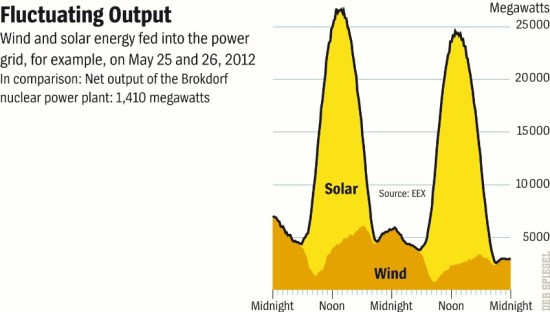
The problem is that wind and solar farms just don’t deliver the same amount of continuous electricity compared with nuclear and gas-fired power plants. To match traditional energy sources, grid operators must be able to exactly predict how strong the wind will blow or the sun will shine.

“Every company — from small businesses to companies listed on the DAX — are buying one (APC emergency power generators) from us.” 

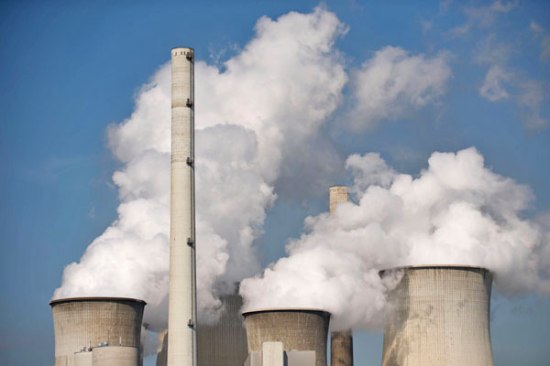
World’s Largest Brown Coal Power Plant Inaugurated In Germany To Help Save Environment

This German energy turnaround stuff can get really complicated, I find.

But as far as I can tell, dirty energy is clean energy here, too. As long as it’s German-made, that is.

“Dieser Neubau ist ein herausragender Beitrag zum Gelingen der Energiewende.” 

Clean Power Cleaning Us Out

The German textile industry, among others, is mad as hell and isn’t going to take it anymore. Not when it comes to having to pay billions into the governments way cool Ökoenergie-Förderung (clean energy surcharge = tax).

That is why three companies now plan to challenge this surcharge subsidizing renewable energy in court.

More good government in action again, I guess. Energy companies have to pay the price for electricity generated through renewable technologies, and transfer the extra cost on to their customers. While energy-intensive industries like aluminum or steel are free from the surcharge, most of the textile industry has to pay.

“You cannot get an energy turnaround for free.”

Germany Confused About Japan’s “Retreat” From A Nuclear-Free Future

And here we thought that Germans were good at math.

Until Fukushima, Japan satisfied about 30 percent of its electricity demands with nuclear power, while renewable energy made up about 10 percent of the power supply. If one leaves out hydroelectric power, renewables hardly make up more than 1 percent.

“Japan needs a vision.”