Too Much Sunshine Here

Too much sunshine here? You know how everybody always likes to bitch and moan about the weather all the time? Well they do over here (when not bitching and moaning about the climate).

And they do so with good reason, too. The summers in Germany are often, like this summer, “suboptimal.”

But that doesn’t mean you don’t have to shoot for a little variety now and then when it comes to the weather bitches and moans (bitches and moaners?). The latest spin is that the first half of this year was the sunniest yet on record. And this too is a bad thing, I think.

This means, uh, I don’t know what it means (does the weather ever mean anything?). Or is this climate again already we’re talking about here (climate is meaningful, I think, right?)?

No, this just means that you can bitch and moan all the more about the current crappy weather because you’re being reminded about how much sunnier it was just a few weeks/months ago.

Seit 120 Jahren hat es nur ein heißeres erstes Halbjahr gegeben, so der Deutsche Wetterdienst. Er warnt zugleich vor künftigen Wetterextremen durch den Klimawandel.

Naked Germans Put On Endangered Species List, Finally

It’s not as easy being a German naturalist as it used to be. Due to weight issues, more and more clothing has to be taken off or something and that’s become a real pain in the sunburned behind.

And then there are the demographics. Immigrants from Turkey and Arabic countries aren’t interested in “social nudity,” for some strange reason.

Nude sunbathing has a long tradition in Germany. The Free Body Culture (FKK) movement was founded in the early 20th century and succeeded in taking much of the smut and embarrassment out of nudity.

Heul doch!

“He who bids and heuls away, may live to bid another day.”

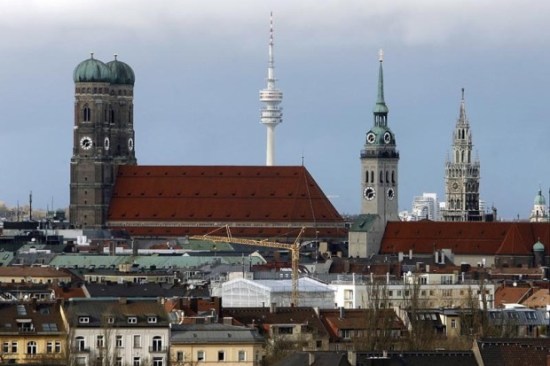
Thousands of people jeered in Munich when the International Olympic Committee’s decision to select Pyeongchang of South Korea over the German city as the host of the 2018 Winter Olympics was announced on Wednesday.

Heul doch , Heul doch!
wenn du damit fertig bist dan bitte geh doch
was,was,was,was wilst du noch?

Stress and the City

A shocking new study has come to the completely unexpected conclusion that German city dwellers are more “stressed-out” than their country bumpkin counterparts.

Researchers at the Zentralinstitut für seelische Gesundheit (too stressful to translate) found that a certain ganglion of the limbic system adjoining the temporal lobe of the German city brain involved in emotions of fear and aggression (the amygdala) was more fearful and aggressive than your every day German hick’s amygdala is, itself already much more fearful and aggressive than other human amygalas anywhere else in the world you can possibly think of.

“Who would have thought that?” one researcher asked another researcher, brutally shoving him aside in impatient disdain to confront the next one. “I grew up in Berlin and we’re not at all aggressive. That’s a myth. Or it’s just a show. Or do you think you’re big enough to tell me you think that we are?”

Städter erkranken häufiger an Depressionen, Angststörungen, Schizophrenie.

Germans Meant “Work Harder”

Down south (in battling the Greek debt crisis, for instance). Not longer. A study based on OECD and Eurostat figures has determined that Germans work less annually than their no good and lazy Southern European neighbors.

The study indicates that “a German’s average annual work duration (1,390 hours) was substantially lower than for a Greek (2,119), an Italian (1,773) a Portuguese (1,719) and a Spaniard (1,654).”

But at least for that the Germans work more intensely, right? Not according to that study, they don’t.

But at least they mean well, or something?

“Germany’s productivity per head remains close to the average of southern European countries. Its hourly productivity rate is above average but not better than France or Greece,”

This New-Fangled EBOOK Nonsense Ain’t Never Gonna Happen Here

Not in Germany it ain’t. No way. It’s, uh, I dunno. It’s just plain wrong. It’s too American or something.

Let Amazon & Co. sell all the damned ebooks they want to over yonder (currently 105 ebooks for every 100 printed at Amazon), we’re sticking to tradition and our traditional fixed book prices (this protects our culture somehow) and the unfair taxation and the measly 0.5 percent ebook sales of total volume of books sold in Germany (sure we only got around to introducing the Kindle here just a few weeks back, but still).

Remember this: Germans don’t read ebooks.

And remember this too: Television had no future (radio pioneer Mary Somerville) and the world only needed five computers at most (IBM president Thomas J. Watson).

Verlage und Buchhandlungen in Deutschland sind zögerlich, weil die Investitionen hoch und die Gewinnspannen niedrig sind und es außerdem mal wieder Streit um die Mehrwertsteuer gibt: Während gedruckte Bücher einem ermäßigten Satz von sieben Prozent unterliegen, sind es für E-Books 19. Und bis das ausdiskutiert ist, wird vermutlich auch Amazon.de mehr E-Books als Bücher verkaufen. Denn in Deutschland wurde der Kindle ja erst vor vier Wochen eingeführt.

Hire Learning

This gives sex education a whole new meaning. A new survey shows that one in three university students in Berlin would consider sex work as a means to finance their education (which is basically free here, by the way, but that’s another dirty story).

And although no official numbers are out on this yet, I will have to assume that the other two out of three Berlin students would just prefer to watch (the lazy bums).

According to the study, about 4 percent of the 3,200 Berlin students surveyed said they had already done some form of sex work, which was defined as including prostitution, erotic dancing and Internet shows.

What’s Mine Is Mine

And what’s yours we probably don’t even want to talk about.

German households have never had as much money at their disposal as they do now = Germans have never been as rich as they are now. Private financial assets are now valued at 5000 billion euros here (is that more than a bazillion?).

Like I always say:

A mark, a yen, a buck, or a pound
A buck or a pound
A buck or a pound
Is all that makes the world go around

Vermehrt wurde das Vermögen vor allem in Form von Bankeinlagen und Bargeld.

Blind Me With Science

Please.

It shouldn’t be a surprise that 300 scientists “from various areas of expertise” have written a letter to Angie Merkel requesting that Germany shut down Germany’s risky nuclear reactors (the entire industry) as soon as possible. What surprises me is when I occasionally bump into a German scientist who isn’t prepared to jump off the cliff with everybody else. They are, needless to say, very few and very far between.

Here’s what physicist Christoph Barthe (a climate change guy) has to say about German nuclear power in an opinion piece called Despite Fukushima (page 15, Die Zeit No. 14, 31 March 2011):

Felix Dachel maintains in his response to “In Praise of the Movement” (Zeit Nr. 13) that the majority of Germans were already against nuclear energy before Fukushima. This is incorrect. An Allensbach survey from March, 2010 revealed that 44% of those asked said that, “all things considered,” they were for the further use of nuclear power, 37% were against it. A survey taken by TNS Emnid in February 2010 revealed that 60% of Germans asked were for the continued use of nuclear energy once the question of the final disposal of nuclear waste gets cleared up, 37% were against it.

Now a lot of nonsense is being spread around in the public concerning this question of the final disposal of nuclear waste. The unresolved waste disposal issue is certainly an effective public appeal argument for the anti-nuclear movement, but it is completely inappropriate as an excuse to phase-out nuclear power. The amount of highly radioactive waste is extremely small: Three-thousandth of a gram per kilowatt hour in Germany. There are more than enough suitable rock layers available which have been stable for countless millions of years and which we can expect with good conscience to remain that way for a few more million years to come. That is simple geologic knowledge. In contrast to that, greenhouse gases continue to be pumped into the atmosphere with foreseeable catastrophic effects that the same anti-nuclear activists warn us about.

It is the same thing when you compare the risks of climate change with the risks of nuclear energy, a technology that has been, despite 30 years of resistance to it, the most climate compatible energy source yet developed. If you compare the very slight risk of radioactive pollution with the very real danger caused by the continued unabated pollution of the atmosphere through greenhouse gases, generation after generation, then it must be clear that the question of risk speaks in favor of nuclear energy and not against it—despite Fukushima.