Because Germany is definitely suffering from that.
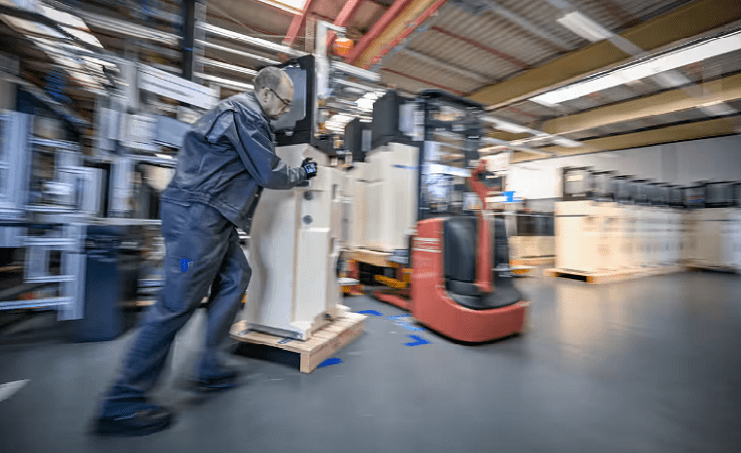
Is Germany’s great economy sinking into ‘slowcession’? Key data this week will offer a hint as to whether the eurozone’s powerhouse can shake off recent stagnation.
Engine of the eurozone, industrial powerhouse, export world champion – just some of the ways Germany’s economy has been described over the years.
However, recent figures have indicated that the good times have come to an end, with Europe’s largest economy stuck in recession.
Real cars. And with that, the fun for Germany has only just begun.
What if Germany stopped making cars? Imagine Volkswagen goes the way of Nokia.
“The future of the vw brand is at stake.” When Thomas Schäfer, the mass-market marque’s newish boss, gave a presentation to his management team in early July, he did not sugarcoat its problems. High costs, falling demand, growing competition—the list goes on. “The roof is on fire,” he warned, echoing one of the most noted alarm calls in recent business history—from Stephen Elop, who in 2011 compared his company to a “burning platform” shortly after taking the helm at Nokia, then the world’s largest maker of mobile phones…
Germany expected to be only major economy not to grow this year – According to the latest figures from the International Monetary Fund, Germany’s GDP is forecast to drop 0.3% this year while other countries continue to grow.
The German economy is still failing to grow, figures showed on Friday, as the country that should be the industrial powerhouse for all of Europe struggles with high energy prices, rising borrowing costs and a lagging rebound from key trading partner China…
In Germany, the economy has been buffeted by several challenges. Above all, its long-term dependence on Russian natural gas to fuel industry backfired when the invasion of Ukraine led to the loss of most of Moscow’s supply and to higher costs for energy-intensive industries such as metals, glass, cars and fertilizer.
By destroying our country’s main pillar of industry.
And thus setting an example for the rest of the world. Of what not to do. Glad we could help. We’re the Greens.
Germany’s auto industry: suppliers’ confidence waning – German car manufacturers and suppliers have been financing the development of new e-car models with profits from the combustion engine business. But this is being cut back more and more. And many fear for their jobs.
Although originally shooting for at least ten, Germany’s Greens must now sheepishly admit that the best they can offer the country is five tough years of economic stagnation.
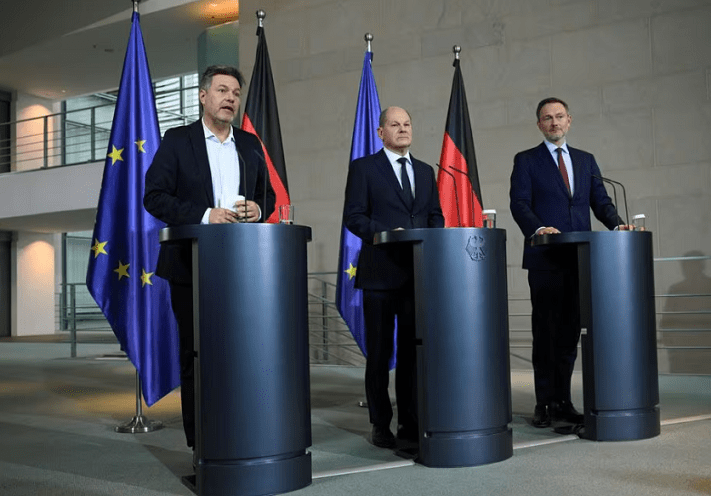
Germany faces 5 tough years, economy minister warns – Berlin should borrow money to subsidize energy for companies or risk losing its industry, Robert Habeck.
Germany faces five difficult years of green industrial transition that “will put a burden” on people, Economy Minister Robert Habeck warned — while urging his government to approve fresh subsidies to safeguard the country’s industrial base.
Tesla is lapping German automakers in the global EV race – even in Germany.
Germany’s automakers announced bold plans the last several years to shift to electric cars and challenge Tesla Inc.’s dominance. Instead, they’re only falling further behind.
Tesla delivered 889,015 cars in the first half of this year, more electric vehicles than Volkswagen AG, BMW AG, Mercedes-Benz Group AG and Porsche AG sold combined.
How on Earth did this get through the German Media Brain Police Censorship Office?
German food banks in crisis – Inflation and an influx of refugees have put growing pressure on food banks. Will the German state step into the breach?
But why do food banks exist in a country like Germany in the first place? Can the German state step in to explain that?
German food banks are there to help people living in poverty, namely those who have less than 60% of the median net income at their disposal. In Germany, going by this definition, around 13 million people are considered to live below the poverty line.
But to be willing to actually use them ourselves? Nein, danke!
German Defense Companies Could Be Europe’s Arsenal of Democracy – But for the Bundeswehr to fight will take a culture shift, not just weapons orders.
More than a decade ago, the German government made the deliberate decision to kill the ability of the Bundeswehr, Germany’s military, to fight a conventional land war in Europe and strip it of the equipment, manpower, and resources to do so. In 1990, as the Cold War was ending, the then-West German Bundeswehr alone was still able to field 215 combat battalions in a high state of readiness. Today, Germany has around 34 battalions, and the word “combat” is a bit of a misnomer. They are at such a low state of military readiness that when the 10th Tank Division conducted an exercise late last year, its entire deployed fleet of 18 Puma infantry fighting vehicles broke down…
It’s more like a Vollbremsung. That’s German for full braking or emergency stop.
Germany’s highest court just cancelled the Green’s latest rush-rush trick, I mean plan to save the planet at German taxpayers’ expense.
Germany’s Green Slowdown – While voters may still broadly support net zero goals, they’re not necessarily on board with the escalating costs of the transition.
… Today, it’s the Greens’ proposed ban on new gas boilers in homes that’s causing trouble. Against a backdrop of sliding poll ratings, the party’s partners in the coalition forced a dilution of the plan last month in a package that also included a massive road-building program.
In another blow to the policy — dubbed Habeck’s Heating Hammer by the opposition — Germany’s constitutional court has made a highly unusual intervention in the legislative process and ordered the government to give parliament more time to scrutinize the plan.