Forget that one, right? Get a job with a German armaments firm instead.
That’s the only industry booming over here at the moment.
German Shipbuilder TKMS Reports Rise in Sales, Earnings Fueled by Europe’s Defense Spending – Results are first since spinning off from Thyssenkrupp and its Frankfurt IPO.
Germany news: Google plans data center in Hesse – Tech giant Google intends to build a data center just south of Germany’s finance capital Frankfurt am Main. This project is part of Google’s plans to invest €5.5 billion ($6.4 billion) in Germany.
In this case down from “700% more expensive in the United States than in the rest of the world.”
Trump Strikes Deal With German Merck on Tariffs, IVF Costs – President Donald Trump announced a deal with Germany’s Merck KGaA to cut the price of its fertility medicines in exchange for relief from threatened tariffs, a step toward fulfilling his campaign promise of making IVF less expensive and more widely available in the US…
The discount will slash more than $2,000 from the cost of treatment, said Centers for Medicare & Medicaid Services Administrator Mehmet Oz.
Now that everything in Gaza has been decided by someone else.
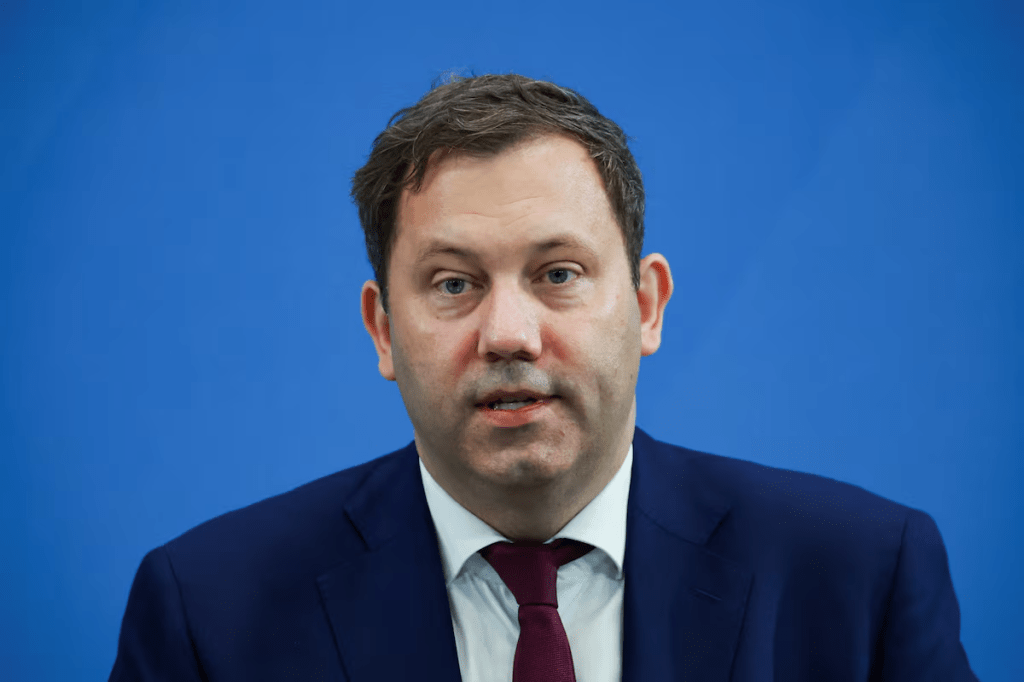
German deputy leader signals lifting curbs of arms exports to Israel – Germany’s Vice Chancellor Lars Klingbeil on Sunday signalled his government would lift restrictions on supplying weapons to Israel that were announced in August as a rebuke to Israel’s expanding military operations in Gaza.
The remarks by Klingbeil to German broadcaster ARD on Sunday evening suggested a policy shift following the Gaza peace plan, with a ceasefire holding between Israel and Hamas for a third day ahead of a peace summit in Egypt on Monday.
German industrial output posts biggest decline in more than three years – German industrial output fell much further than expected in August, pushed down by a sharp decrease in car production as frontloaded demand ahead of U.S. tariffs dried up.
Industrial production fell by 4.3% compared with the previous month, the federal statistics office said on Wednesday, the biggest fall since March 2022, just after Russia’s invasion of Ukraine. Analysts polled by Reuters had predicted a 1.0% fall.
If you want to properly deregulate, create a new deregulation bureaucracy first. We don’t want anybody to get fired or anything.
Germany’s new deregulation chief vows to be more subtle than Elon Musk – State modernisation minister Karsten Wildberger promises to bring about digital age in country clinging to fax machines.
Germany was billed as Europe’s growth driver. Now economists are saying: Not so fast – Huge investment pledges and major fiscal changes had bolstered hopes that Germany could give the euro zone economy a much-needed boost, but economists are starting to question if — and when — that will happen.
“The actual spending is slower than many of the more excitable pundits had expected. In Germany, it takes time to spend money.”
China bumps Germany off the top 10 list of most innovative nations – China moved into the top 10 of the United Nations’ annual ranking of most innovative countries for the first time Tuesday, replacing Europe’s largest economy, Germany, as firms in Beijing invest heavily in research and development.
As long as you can say you have the highest energy costs in Europe?
Or is it the highest energy costs in the world? I forget. Go, Greens!
Germany could see power supply gap in 2030, regulator says – Germany’s Federal Network Agency on Wednesday warned that rare electricity shortfalls could occur as early as 2030 if the country’s energy transition stalls, though supply is otherwise expected to remain secure through 2035.
The Security of Supply Report, approved by the federal cabinet on Wednesday, highlights the risks should renewable expansion slow, new gas-fired power plants fail to materialize, and electricity demand not become sufficiently flexible.
German car industry sheds 51,500 jobs in a year – The dip equates to almost 7% of the total workforce in the German auto sector. Faltering exports to China and the US play a role, as new tariffs raise barriers to entry in both these core markets.
“The US and China are currently the cause of major concerns.”





 Observing Hermann