Berlin clubs struggle as drink sales dry up and costs rise – Berlin’s clubs are still drawing crowds, but shorter nights, fewer alcohol sales and rising costs have changed their business model. Door fees, rather than bar takings, are increasingly their real financial lifeline.
Berlin’s world-famous club scene has remained in high demand, but venues are increasingly struggling to turn packed dancefloors into sustainable businesses.
Germany news: Industry hemorrhaging 15,000 jobs a month – Industry boss Tanja Gönner says the situation is critical but offers opportunity.
The head of the Federation of German Industries (BDI) says the country has become less competitive and called on politicians and business leaders to usher in a course correction.
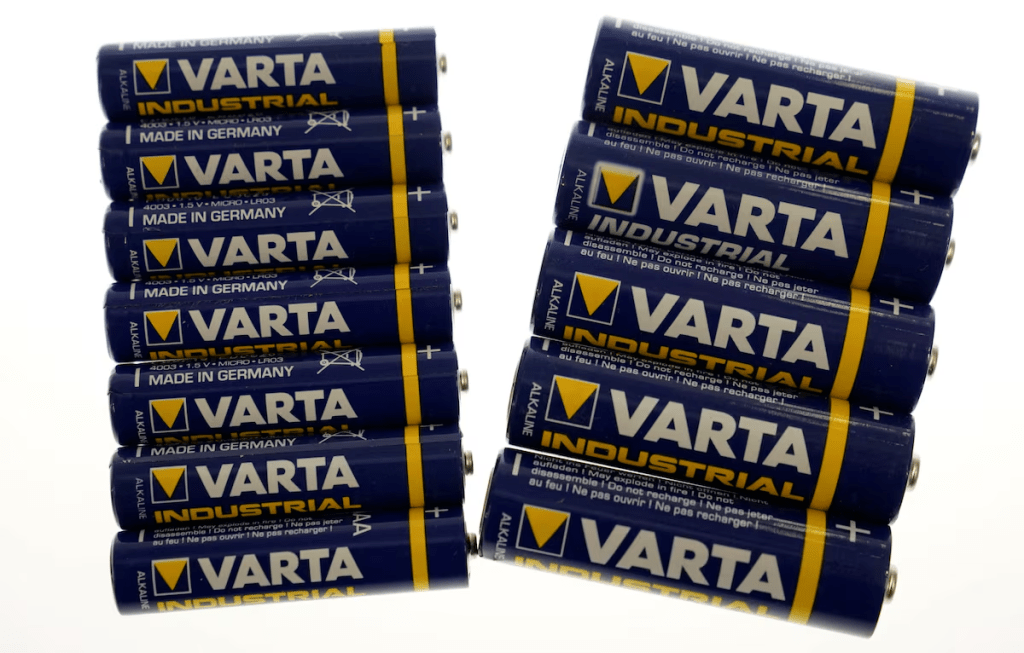
German battery maker Varta files insolvency applications – German battery manufacturer Varta has filed four insolvency applications, a spokesperson for the Stuttgart district court said on Friday, marking another setback for the company.
Reuters reported on Thursday that Varta planned to file for insolvency after its shareholders sports car maker Porsche AG and Austrian investor Michael Tojner declined to provide additional funding to the struggling company.
Varta now faces a potential breakup: Key creditors, including Deutsche Bank, intend to take over the profitable household battery business, while Tojner has expressed interest in the micro-battery division.
Varta lost its key customer in the spring: Apple plans to source the rechargeable “CoinPower” button cells for its AirPods headphones from China in the future.
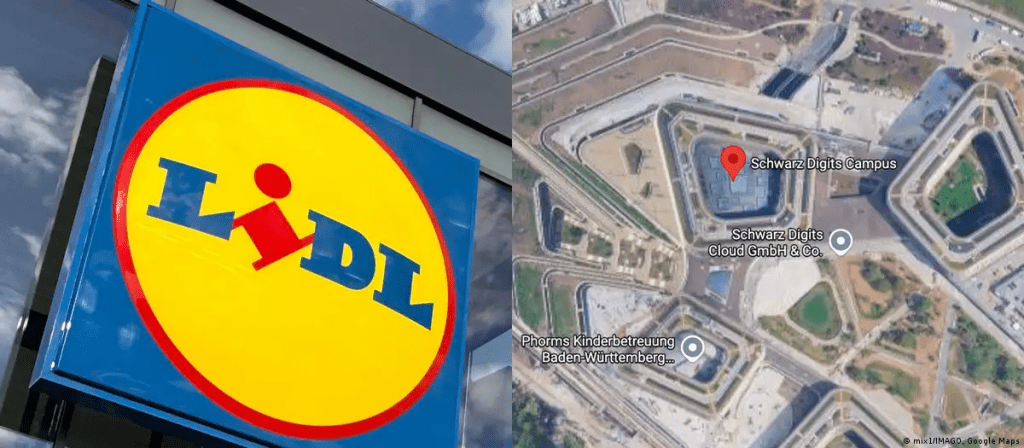
Germany’s richest man takes on Big Tech – Supermarket billionaire Dieter Schwarz is investing billions in his cloud company, Schwarz Digits, to rival Google, Microsoft and Amazon.
When Bernd Wagner walks through his new company’s headquarters, he can barely contain his enthusiasm. He starts rattling off figures like “seven times as much steel as was used to build the Eiffel Tower” or “cables stretching all the way to Naples…”
There are none in Germany, in case you didn’t know. Germans are very religious. Hardy, har, har.
But wait! Suddenly. In the year 2026…
Debate Over Expanding Sunday Store Hours – Following libraries and bakeries, the retail sector now also wants to fight for the right to open stores on Sundays. It has received support from the Bundestag’s Economic Committee. Churches and labor unions view the initiative critically.
Following the government’s announcement that it would extend Sunday opening hours for bakeries and pastry shops, the discussion about general store opening hours on weekends is now gaining momentum: The Bundestag’s Economic Committee has called for a significant relaxation of the current ban on Sunday openings…
The great German own goal – In economics, as in football, they’ve lost their edge.
Can it be a coincidence? For three World Cups in a row, Germany has failed to make it to the last 16. For the 16 previous tournaments — from 1954 until 2014 — it never failed to reach the quarter finals. You can be unlucky once, or even twice, but three times? Especially when we see a similar pattern in the Euros, this failure can’t be explained away by the glorious randomness of football.
The year of the 2018 World Cup also marked a turning point for the German economy. Until then, it was considered one the most successful in the world, a reputation it had enjoyed almost without interruption since the Second World War. I spent a lot of time back then warning that Germany’s strategy was not sustainable — even if it superficially seemed to work. From 1945 to 2018, after all, Germany was Europe’s manufacturing powerhouse. The last eight years, though, have been marked by deindustrialisation, price spikes, and persistent economic disappointment…
U.S. Launches Trade Investigation Against Germany Over Drug Prices – Washington accuses Berlin of underpaying for innovative drugs. If the investigation yields corresponding results, punitive tariffs could even be imposed.
The U.S. has launched a trade investigation against Germany regarding drug pricing. According to several media reports, Washington intends to examine whether innovative drugs are systematically underpaid on the German market, causing U.S. patients to bear a comparatively high share of research and development costs.
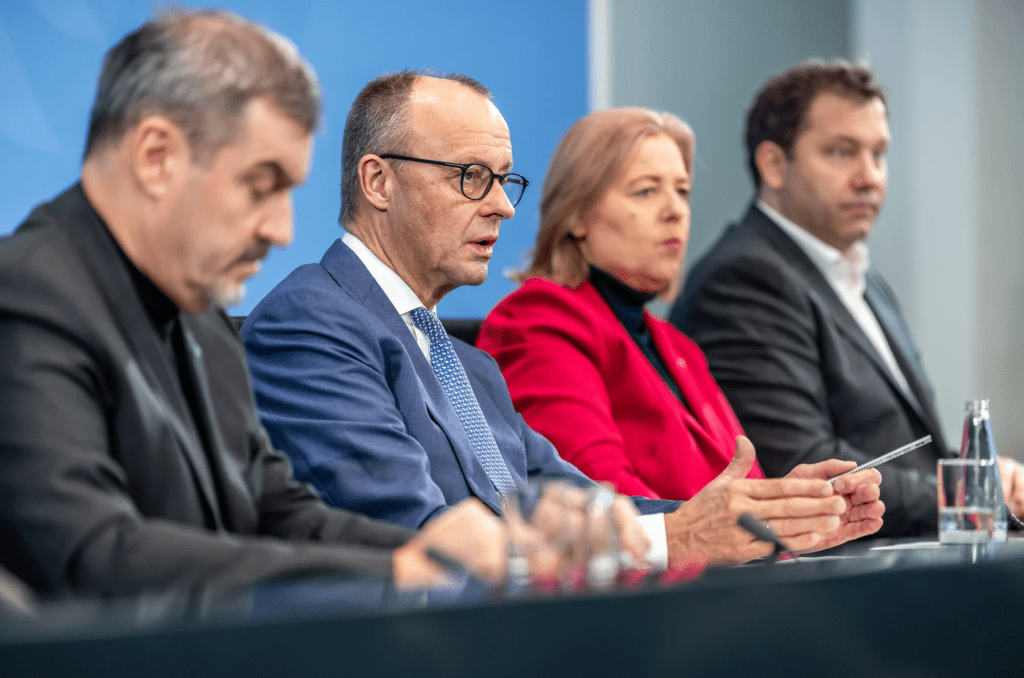
Chancellor Friedrich Merz (CDU) has already ruled out a “big bang” of reforms out of consideration for the SPD and a frightened public. However, the verbal de-escalation ahead of the coalition committee meeting should not obscure the extent of the need for action and, above all, who must take the initiative to help Germany emerge from the economic crisis: the SPD, led by Labor and Social Affairs Minister Bärbel Bas, as well as the labor unions. But it won’t work without the cooperation of CSU leader Markus Söder, who is at times very much a social democrat.
“But don’t even think of trying an itty-bitty reform with us!”
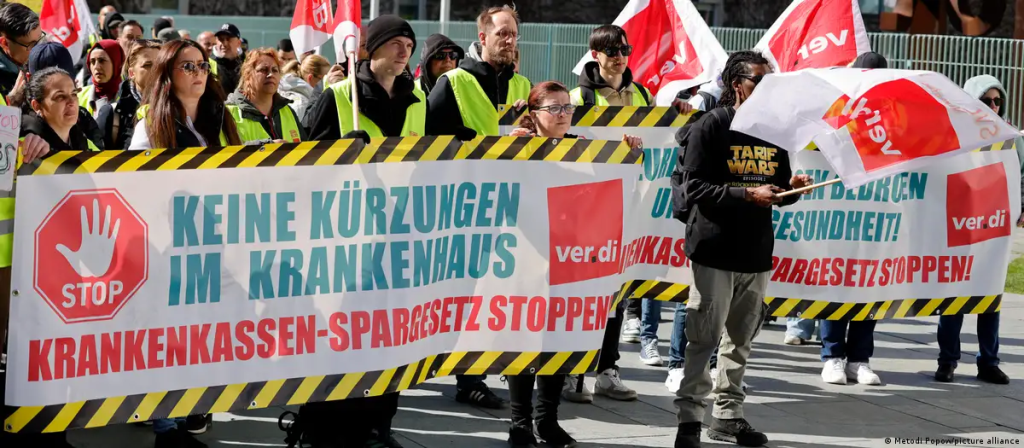
Healthcare staff protest plan for major cuts – Medical staff in Germany are protesting about cost-saving plans that ministers says are necessary to stop spiraling costs.
German service union Verdi is organizing protests against a round of cuts announced by the German government. The plan is aimed at reducing the burden on health insurance providers that could mean higher contributions.
Germany’s China problem – and why de-risking hasn’t worked.
Dan Wang of Eurasia Group discusses the paradox of Europe’s current trade strategy, noting that Germany’s efforts to “de-risk” over the past years have actually deepened its reliance on China’s supply chain.