Wiggle, wiggle, wiggle…

Let’s watch them squirm.

We… must… spend… more… money we don’t have! There just has to be a way around this debt brake!

Germany freezes spending as budget crisis deepens – As Germany’s financial woes grow more acute, there are growing calls to suspend the country’s damned debt brake.

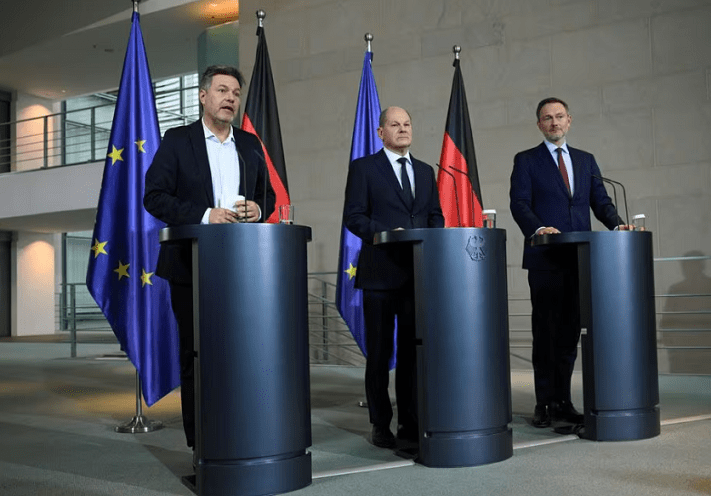
Germany’s finance ministry has imposed a spending freeze on all federal ministries, deepening a budget crisis that has rocked the ruling coalition since a bombshell ruling by the country’s top court last week.

The finance ministry decision, which halts most new spending authorizations, followed a ruling by the constitutional court last week that blew a €60 billion hole in the government’s coffers.

Po’ Folks

That face you make when you can’t spend as much of other people’s money as you’d planned.

German court deals 60 billion euro budget blow to Scholz government – The German government froze major spending pledges focused on green initiatives and industry support on Wednesday after a constitutional court ruling on unused pandemic emergency funds blew a 60 billion euro ($65 billion) hole in its finances.

The decision threw into disarray budget negotiations taking place this week within Chancellor Olaf Scholz’s three-way ruling coalition, whose popularity has slumped as Europe’s biggest economy teeters close to another recession.

German of the day: Zusammenbruch

That means collapse.

German homebuilding collapse threatens wider economic damage – Once-thriving residential construction industry has slumped, posing drag on EU’s largest economy.

Across Germany, homebuilders are facing such a sharp reversal in their fortunes that the downturn in residential construction is threatening to have broader repercussions across Europe’s largest economy.

Many have declared themselves insolvent, dampening Chancellor Olaf Scholz’s target of building 400,000 new homes a year to tackle a housing affordability crisis in several of the country’s largest cities.

We Germans work the fewest hours

That’s why we desperately need a four-day work week.

To, uh, increase the hours worked each week? I don’t get it.

Germans work fewer hours over their lifetime than their European neighbours – In comparison to their European neighbours, people in Germany work fewer hours throughout their lifetime, a new study has revealed, but there is still a big appetite for a four-day week in the federal republic.

Germans work an average of 52.662 hours throughout their lives.

A new study from the Roman Herzog Institute has laid out the working habits of people in European countries. In comparison to their neighbours, Germans are on the clock for fewer hours throughout their lives, clocking in an estimated 52.662 hours of work, which means 39,3 years of their lives are solely occupied by work.

Human robots don’t cut it in Germany anymore

They’re just not as, well, robotic as their parents and grandparents used to be.

It’s time to replace them with the real thing.

As baby boomers retire, German businesses turn to robots – At machine parts producer S&D Blech, the head of the grinding unit is retiring. With Germany’s acute labour shortage leaving few candidates to take on the skilled but dirty and hazardous manual work, the company will replace him with a robot.

Other small and medium-sized companies are also turning to automation as the gradual exit from the workplace of Germany’s post-war “baby boom” generation tightens the labour squeeze.

Largest housing price drop in 2000 years?

Damn. That’s a big drop.

Oh. Since the year 2000. But still.

German housing prices show sharpest drop since 2000 year over year, statistics office says – German housing prices fell by the most since records began in the second quarter as high interest rates and rising materials costs took their toll on the property market in Europe’s largest economy, government data showed on Friday.

Residential property prices fell by 9.9% year-on-year, the steepest decline since the start of data collection in 2000, the federal statistics office said. Prices fell by 1.5% on the quarter, with steeper declines in larger cities than in more sparsely populated areas.

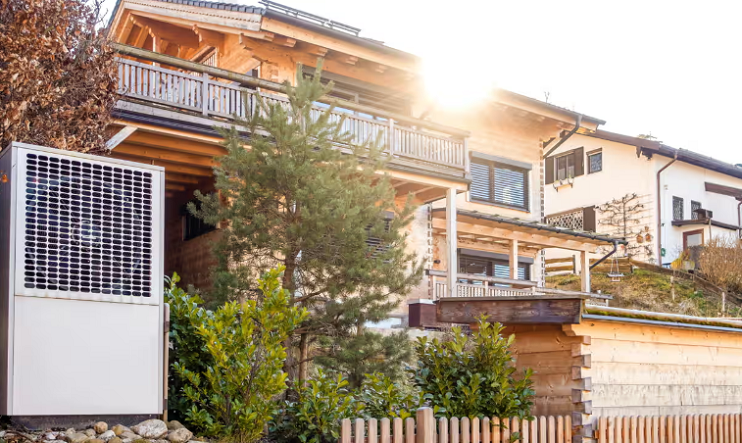
Green Germany looks more black to me

Black as night when you turn off the light.

The Green obsession with doing without is in full nighttime bloom.

Germany passes law to make energy savings compulsory – Germany’s lower house of parliament on Thursday passed a bill to make saving energy compulsory in all economic sectors, a move intended to help fight climate change and curb use of imported fossil fuels.

The Energy Efficiency Act, introduced by the Greens-led economy ministry, includes regulation for energy savings in public buildings, industry and fast-growing data centres across Germany, with the goal of a 26.5% cut by 2030 from 2008.

Spurred by fears that persistently low Russian gas supplies could lead to shortages, the German government introduced some initial energy-saving measures last year, including banning heating for private swimming pools and encouraging people to work from home.

Don’t cry for me, Argentina

Actually, go ahead.

Go ahead and cry for me, Argentina. We can cry together, if you want.

Germany Joins Argentina as Only G-20 Member Facing GDP Drop – Germany faces the only contraction in any Group of 20 economy aside from Argentina this year, according to the OECD, which cut its outlook through 2024.

The euro-zone country will suffer a 0.2% drop in gross domestic product in 2023 — down from a previous projection for stagnation, the Paris-based organization said in new forecasts published Tuesday. It will then grow only 0.9% in 2024, down from 1.3% anticipated in June.

What happened?

The Greens happened.

Now it’s US-Amerika‘s turn (some call it The Banana Republic).

Germany went from envy of the world to the worst-performing major developed economy. What happened?

For most of this century, Germany racked up one economic success after another, dominating global markets for high-end products like luxury cars and industrial machinery, selling so much to the rest of the world that half the economy ran on exports.

Jobs were plentiful, the government’s financial coffers grew as other European countries drowned in debt, and books were written about what other countries could learn from Germany.

No longer. Now, Germany is the world’s worst-performing major developed economy, with both the International Monetary Fund and European Union expecting it to shrink this year.

Revive Germany by strangling it?

What a novel idea!

Let’s give it a try.

Scholz’s Dream of Climate Revolution to Revive Germany Is Dying – Chancellor’s ambition for economic miracle is floundering.

Coalition is reeling from months of infighting over green plan…

Another big brake on growth and investment is energy costs. Although lower than last year’s records, gas and power prices are still between two to three times the level compared with before the war in Ukraine.