Category Archives: Hi-tech
Big Sister Assures Germans That 47-Percent Price Hike Actually Not Such A Bad Thing If You Think About It
Not.

Worried about grassroots unrest after Germany’s electrical grid operators announced they were nearly doubling the charge consumers will pay to finance subsidies for renewable energy as Germany phases out nuclear power, Big Sister herself has reacted boldly and decisively by going into hiding and pretending as if none of this were really happening.
Long used to this tactic, worried German consumers were assured, sort of, as they will now be paying an additional 60 euros per year, “taking overall add-on power taxes up to about 185 euros.” But that’s just the start, of course.
Sheesh. Why do Germans see everthing energy turnaround-related so negatively these days? You know, like as in black? Or like as in blackouts, I should say?
“The costs for consumers and industry of the electricity price charge for renewable energy has risen to an unbearable degree.”
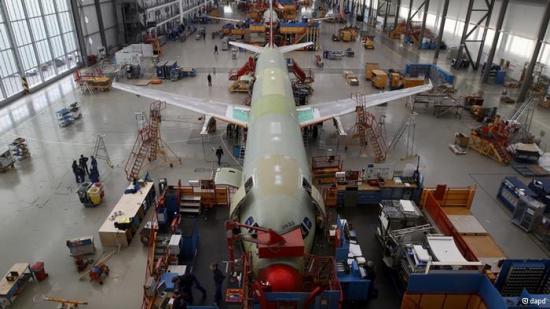
BEA-EADS-RIP
Massive political resistance or pure economic theory? Or both?
“From an economic perspective, this should of course be avoided. Pure economic theory would say that the state should stay out of it and leave the market alone.”
“The massive political resistance was ultimately too great to overcome.”
Electric Cars Have Already Reached A Whopping 0.01 Percent Of All Registered Cars In Germany
That’s some, uh, 4,600 vehicles. At this rate, the German government’s plan to have 1 million electric cars on the road by 2020 will be reached easily.
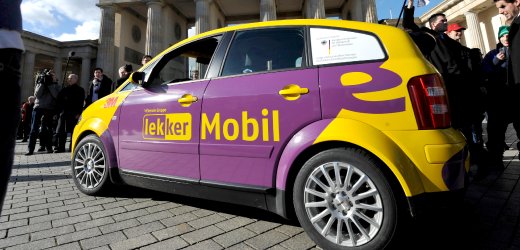
Or maybe not. Because those pesky German consumers still haven’t got the message and think that these babies are too expensive and don’t have a long enough range to make them attractive as, you know, as cars.
So that’s why the German government, flexible as it is, has now said that their goal of 1 million electric cars by 2020 (set last year) has now become a goal of 600,000 electric cars by 2020. I can’t wait to see what next year’s goal for 2020 will be like.
Damn. I’m impressed. This German Energiewende (energy turnaround) is getting easier and easier to reach all the time.
“If we don’t create incentives, then the whole thing is going to fail,” the Green party said in a statement.
Make Embargo Not War
And make a killing with illegal nuclear technology exports to Iran in the process.

Here’s German pacifism at its finest: Nuclear technology for Germany? Have you gone mad!? German nuclear technology exports for Iran? Let’s talk.
Recent arrests suggest that Germany remains a hub for sales of prohibited supplies to Iran that are being used in Iran’s nuclear program. Illegal exports are undermining Chancellor Angela Merkel, who has pursued an embargo policy in order to prevent a possible war in the Middle East.
“Germany will do everything that it can to ensure that trade with Iran will not simply seek out new routes.”
European Subsidies Not Enough For Airbus
Now they need American ones, too.
Brussels on Thursday sought WTO approval for trade sanctions against Washington worth $12 billion a year.
“On the one side we have $90 billion (70 billion euros) of illegal financing of Airbus by the EU and on the other side we have $3.0-$4.0 billion for Boeing.”
EADS-BAE SSA OK?
BAE Systems has warned it will walk away from its proposed €35bn tie-up with EADS if the deal waters down its special relationship with the Pentagon.
This SSA, specifies that BAE’s senior leadership in the US is made up of Americans, among other things, and has allowed the UK’s biggest defence company to work on many lucrative US national security projects.
“The [US] military would rather have a BAE than a combined BAE-EADS. BAE has been very successful in managing its US relationship. EADS is not in the same bucket, and a combined EADS-BAE is going to be treated a lot more like EADS than BAE.”
Internet Making Germans Dumber
It’s called “Digitale Demenz” (Digital Dementia) or something.

“Avoid digital media,” one smart German is warning his countrymen. “As shown here many times over, they truly do make us fat, dumb, aggressive, lonely, sick and unhappy.”
Nice try, buddy. But what you’ve failed to consider here (being a German yourelf), is that Germans don’t need any help from anybody or anything at any time when it comes to being aggressive, lonely, sick and unhappy. They’re naturals at it. As for the Internet making them fat and dumb, well, OK. If you say so.
The strange thing though is that everywhere else on Planet Earth it appears as if the Internet is actually making us smarter. Whatever. I guess maybe that’s how it is with Deutsche Sonderwege (German separate paths), it’s the exception that always proves the rule.
Such findings refute the claims of those who warn that humanity is getting dumber. We’re “amusing ourselves to death,” American media theorist and critic Neil Postman argued in a 1985 book of the same name. Postman blamed television for a decline in cognitive skills. Since then, however, the average IQ in the US has risen by nearly 10 points.
What Are 20,000 Jobs?
If they are being offered for the sake of Germany’s beloved Energiewende (energy turnaround), I mean (and if you’re not one of the 20,000, of course)?

There is a certain logic here. I think. First you phase out German nuclear power plants because of the Fukushima disaster in Japan (I still haven’t figured out this part yet), then you phase out thousands of Japanese jobs due to the loses incurred by the energy companies due to this hasty (as in immediate) phase-out.
Oops, sorry. I just took a closer look at the article. Those are German jobs that are about to be phased-out, of course. Duh. Look folks, I’m not a German energy turnaround expert here you know. Forgive me for the confusion. Technically, it’s not even mine. I’m just trying to pass it on as best I can.
Branche verliert durch Atomausstieg Geld – Eine Reihe von Studien hatte in früheren Jahren bereist festgestellt, dass der Netto-Effekt der Ökostrom-Subventionen auf dem Arbeitsmarkt bestenfalls Null ist.
This German Woman Right Here Knows Practically Nothing About Computers

And German men want to keep it that way. You know, so they can help them and stuff? Again and again and again?
The latest Bitkom survey has found out that only half of all German women have halfway sort of somewhat decent computer skill knowledge. And the other half are real turkeys (especially the younger ones). So let’s keep it that way.
Selbst beim Anschließen von Druckern und beim Versenden von Emails scheitern sie.

