The only problem with policies to ban these is that CO2 isn’t a pollutant.
Politicians are “driven by ideology, not facts?” No kidding. If only we could develop a car that runs on ideology. The world would never run out of fuel.
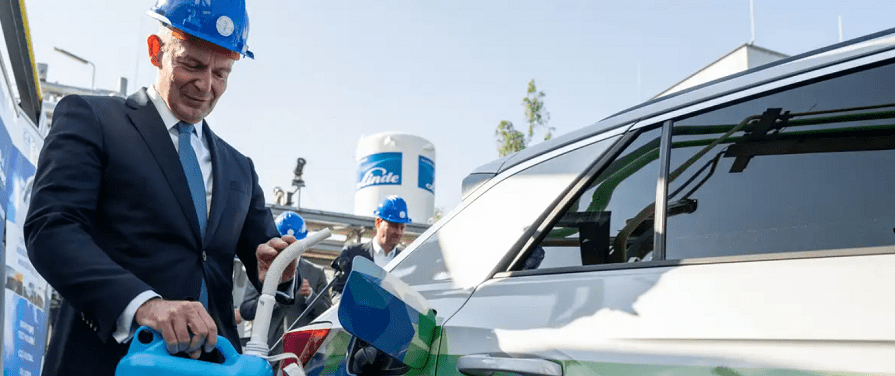
German firm to sue EU over ban on polluting cars.
E-fuel maker Lühmann says the plan to phase out diesel and petrol cars across the European Union by 2035 is “driven by ideology, not facts.” The company wants to ramp up sales of greener synthetic fuels.
The weather is not your fault. The climate (weather over time) is not your fault either. Yes, the climate is changing. It is changing because it has never not changed. But no, the “pollutant” CO2, anthropogenic or otherwise, is not driving this change. It is driving plant growth. The narrative you are being led to believe is false. The causes for climate change are all natural. Natural, although not yet fully understood.
How do we know this? We know this because of the historical records our ancestors have left behind and the physical evidence Nature gives us from the vast, pre-industrial past. What we are experiencing has all happened before, only usually much worse. This is why we don’t need to worry about slowing down or stopping the changes we have been conditioned to fret about. These changes can’t be stopped and we can’t “save the planet” because it doesn’t need to be saved. We only need to worry about how we can best adapt to these changes, something humankind has been doing for countless millennia already.
But, huh? How could the rest of the world have reached a different consensus if CO2 isn’t a threat? Because consensus is a political, not a scientific term and those who profit from it also control public opinion. “They” are the aggregate of the professions, groups, institutions and industries that profits financially or in any other way from the CO2 narrative. And they manipulate the public very effectively by exploiting at least three well-known human weaknesses. The first is fear. Fear is easily planted and maintained in the minds of the dis-, mis- and uninformed. Those who plant it know that short of any real and present danger, we humans will find something to worry about ourselves. We look for things to fear, in other words, and our false narrative beneficiaries are here to help us find them. The second is our need to conform. Being firmly rooted in social hierarchies and strongly influenced by group dynamics, we have a primal need to belong. This need is so great that we are willing to deny our own reason to avoid the ban of social outcast. The third weakness is our anthropocentrism. We innately feel that human beings are the center of the universe and are somehow in control of Nature. We are neither, of course, and this leads to hubris, narcissism, ruinous decision-making and ultimate failure. We lack humility, in other words.
Humility is a good thing, however. And this book is an exercise in humility. It aims to offer those who feel uncomfortable with the arrogant CO2 Climate Crisis consensus of our age a chance to step back and doubt. It is a modest collection of well-documented facts and logical observations (most taken from the books listed in the bibliography) that will hopefully help you choose to refuse. Choose to refuse the bias and the hard sell. Refuse the fear mongering. Refuse the indoctrination and the religious fervor.
Remember that only the individual thinks. Only the individual reasons. You don’t have to take part in this mob psychology – or mass delusion, mass hysteria, mass psychogenic illness, mass formation psychosis, etc., if you prefer calling it that. This is what is currently plaguing our planet, not CO2. Just say no and step away. To choose isn’t hard to do. So, without much ado, may the skepticism be with you.
Only Kryptonite (also green) can stop him – otherwise known as the real world.
Germany set to miss net zero by 2045 target as climate efforts falter – German goals to cut greenhouse emissions by 65% by 2030 are likely to be missed, meaning a longer-term net zero by a 2045 target is also in doubt, reports by government climate advisers and the Federal Environment Agency (UBA) show.
The European Union has sought to be a climate leader and Germany has set itself more ambitious targets than the bloc as a whole, but in many countries politics and the economic crisis have pushed the climate crisis down the agenda.
Now it’s much too wet, wet, wet! All it does is rain in Germany these days. But don’t worry, because you’re still allowed to worry. Ask any climate activist. In both cases “the Climate Crisis” is to blame. It’s science. I mean, pseudoscience.
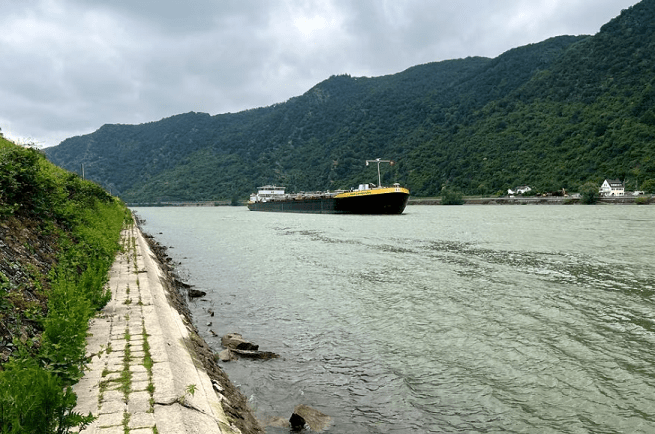
Rhine river levels in Germany back to normal after rain – Heavy rain has raised water on the river Rhine in Germany to levels allowing cargo vessels to sail fully loaded, data from German inland waterways agency WSA said on Wednesday.
Data from the WSA’s website Pegelonline showed that the last shallow sectors of the river around Cologne had now reached levels generally permitting full vessel loads.
Dry weather in June meant the river became too shallow for vessels to sail fully loaded and ship operators imposed surcharges on freight rates to compensate for vessels sailing partly empty, increasing costs for cargo owners.
Although originally shooting for at least ten, Germany’s Greens must now sheepishly admit that the best they can offer the country is five tough years of economic stagnation.
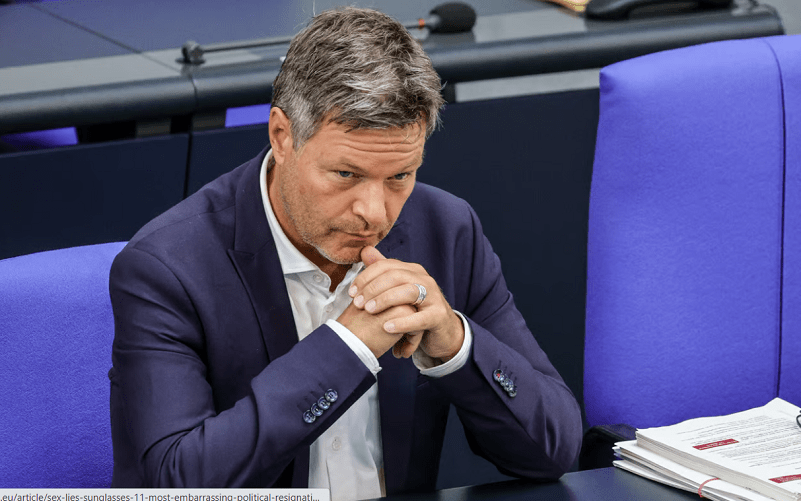
Germany faces 5 tough years, economy minister warns – Berlin should borrow money to subsidize energy for companies or risk losing its industry, Robert Habeck.
Germany faces five difficult years of green industrial transition that “will put a burden” on people, Economy Minister Robert Habeck warned — while urging his government to approve fresh subsidies to safeguard the country’s industrial base.
Do you mean green like in pink unicorns or like in red herrings?
I see. As in both.
How Germany’s Hydrogen Boom Stalled – Green hydrogen has the potential to heat millions of homes and keep German industry humming. So far, though, a lack of the environmentally friendly gas and the infrastructure needed to transport it have prevented its wide-scale use.
Welcome to the sobering hydrogen reality. While Germany hopes that it will soon be able to run basement gas heating systems on hydrogen, steel manufacturers are converting their production to the green gas at a cost of billions and energy companies are planning new power plants that will generate electricity from hydrogen, almost everything needed to make the climate-neutral dreams a reality in the near future is still lacking. The environmentally friendly hydrogen is missing, as are the pipeline networks to carry it across the country, not to mention reliable business models.
Most Germans ready to make sacrifices for planet — survey – Germans said they were prepared to cut their heat use and fly less to help tackle climate change. But most are reluctant to give up meat and their cars, according to a YouGov poll.
Two-thirds of Germans are willing to make a personal sacrifice to protect the planet against climate change, a new survey published Sunday suggested.
The YouGov survey on behalf of Welt am Sonntag newspaper also found 43% were willing to fly less often, while 40% were prepared to use less heat.
The participants, however, said they were reluctant to accept curbs on what they could eat. Less than a third (27%) said they were prepared to change their diet.
You know, like the one Berliners are voting on today; to make Berlin “climate-neutral” by 2030? I think they should hold one on free beer and ponies for everybody too. That’s more realistic.
Berlin votes on climate neutrality by 2030 – Berliners will go to the polls yet again on Sunday to vote in a referendum to make the German capital climate neutral 15 years earlier than planned. Critics deride the proposal as too costly and completely unrealistic.
(just like the Czech Republic). We’ll supply you with gas now too.
France starts sending natural gas directly to Germany – Technical adjustments were necessary as the single pipeline between the two countries was originally intended only to deliver gas (from Russia) from Germany to France.
If you haven’t noticed, Germany’s Green doesn’t stink.
Fun fact for you CO2 fans out there: The Germans generate 10 tons of CO2 per capita per year (some call it the “Carbon Footprint”), the nuclear-friendly French only do 6.
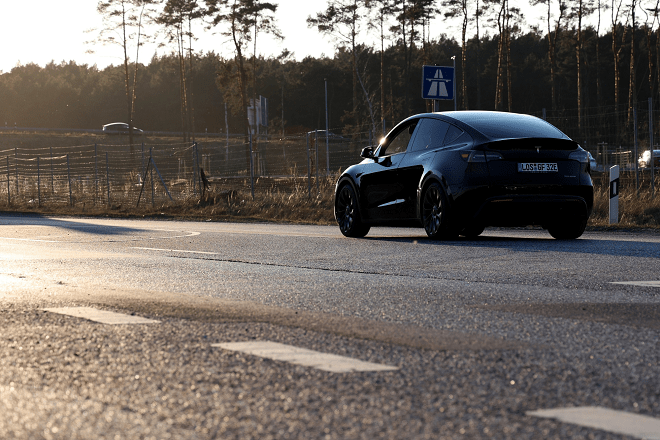
Tesla Hit by German Suit Over Car Surveillance, Carbon Footprint – German Consumer Group VZBV files action in Berlin court. Case argues drives using device may violate data rules
Tesla Inc. was hit by a lawsuit in Germany over potential privacy concerns linked to its car surveillance cameras and claims that buying its vehicles helps cut CO2 emissions.




 Observing Hermann