Mutually Assured Disillusionment

And here you thought that the Germans could bitch and moan about Europe.
Moan

And boy can they ever. But the reigning Weltmeister of Whining is now suddenly getting some unexpected stiff competition from France, of all places (with Spain, Italy and Greece picking up speed in the griping department, too).

“No European country is becoming more dispirited and disillusioned (with Europe) faster than France,” according to a Pew Research Center report, released in Brussels and Washington. “The French are negative about the economy, with 91 percent saying it is doing badly, up 10 percentage points from 2012.”

France’s malaise with the European Union’s outlook is more similar to sentiment in Spain, Italy and Greece than it is to the mood in Germany, which is the only EU nation of eight surveyed where at least half the public backed giving more power to Brussels to deal with the economic crisis.

So let’s get with it already, Germany. This race ain’t near over with. We (as in you) can do this. When the going gets tough, the tough get moaning.

“Deutsche leben mental auf ihrem eigenen Kontinent.”

Sure Is Cold In Here

Cold

The issues at stake are not trivial ones. At the core of the Franco-German conflict is no less a matter than the question of how Europe can shake off the current crisis. Merkel is convinced this can only be achieved by implementing reforms — austerity, liberalization of the labor market and restructuring of social welfare systems.

But Hollande is unwilling to let Germany impose its model on France. He fears the European recession will only worsen if Berlin succeeds in implementing its austerity plans.

Even in the euro crisis, Germany is reluctant to be seen as sole leader. It badly needs a French economic revival to have a plausible partner at the top again.

“This is why, ultimately, it does not matter whether they like each other—that has not been the case for years.”

Germany Honestly Not Seeking Hegemony In Europe I Swear

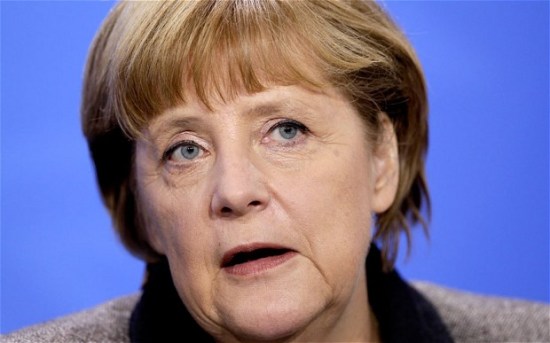
German Chancellor Angela Merkel rejected again today claims that her country was seeking hegemony in the European Union.

Hegemony

“We already are the largest economy in Europe,” she might have said. “Like, by a long shot. So why on earth would we want to do that? All we want to do is just keep exercising our predominant influence over all those other namby-pamby nations around us and with time, through peaceful terms and non-aggression, achieve world, I mean, total European domination.”

“Germany has a sometimes complicated role,” she actually said. “Because we are the largest economy – we are not the richest, but we are the largest. Therefore Germany will only act together with the others – hegemony is totally foreign to me.”

Springtime For Merkel And Germany

In the end, the Cypriots swallowed the bitter medicine. Facing national humiliation and a bleak future many complain their small nation has been forced to succumb to the will of a larger, merciless power – Germany.

Cyprus

And the Germans also have a clear and consistent analysis of the problem. They believe that fiscal profligacy or faulty business models lie at the heart of the crisis – and the solution is austerity, allied to structural reform. There are many who argue that this prescription is dangerous. But the anti-austerians have failed to come up with a set of alternative policies that is coherent enough to turn the intellectual tide.

…This Germanophobia is unfair. Behind all the shouting and the wrangling, German taxpayers will once again be funding the biggest single share of yet another eurozone bailout.

The Worst Is Over

Or something.

Growth

For much of the financial crisis that started in 2007, Germany remained strong and held the envy of modern economies around the world.

In 2010, the industrious country known for its fiscal discipline had GDP growth of 4.2%, followed by respectable 3% GDP growth in 2011.

Unfortunately, for Germans and the world, there are increasing signs the German economy is being marred by the global crisis. In 2012, GDP growth was a meager 0.7%. More significantly, GDP actually contracted by 0.5% in the fourth quarter.

Währung – Deutschland: Devisen: Euro gibt nach – IWF prognostiziert auch für 2013 Rezession im Euroraum

Euro Crisis Is Over Or Something

So have a Happy New Year already.

Germany’s finance minister says the worst of euro area’s debt crisis appears to be over after three years of worries over Greece and other members of the group of 17 European Union countries that use the single currency.

Meanwhile…

Austerity in action.

Berlin’s mantra about spending cuts in the eurozone is bringing unemployment and spreading hopelessness across Europe.

So take your pick, it’s both.

“I think we have the worst behind us.”


Merkozy This Is Not

How about Hollmerk?

The two capitals (Berlin and Paris) always begin from very different positions, whether there is a socialist or conservative administration in Paris.

The concern in Berlin is over what is seen as the absence of a clear strategy on eurozone reform from the new French government. There is a deep suspicion that France is happy to have a weaker euro, higher inflation, and a looser monetary policy than Germany.

Mr Hollande’s refusal to incorporate the recent “fiscal compact” into the French constitution is one reason that Germany is now pushing for every country to sign a bilateral budget “contract” with the European Commission, that can be enforced by a powerful budget commissar… But Paris regards Ms Merkel as being overly focused on building deeper European political integration in a way that ignores deep-seated reticence in France reflected in the 2005 referendum defeat of the then-planned EU constitution. 

The Symptoms Of The Times

Withdrawal, I am told, can refer to any sort of separation, but is most commonly used to describe the group of symptoms that occurs upon the abrupt discontinuation/separation or a decrease in dosage of the intake of medications and recreational drugs.

In order to experience the symptoms of withdrawal, one must have first developed a physical/mental dependence (often referred to as chemical dependency).

„Notenbankfinanzierung kann süchtig machen.“

Friedman’s Prophecy

I don’t believe in prophets. I’m very skeptical when it comes to economists of all flavors, too.

But when looking around at what’s going on here in Europe these days and considering how even the Spiegel itself now warns us about investors preparing for the euro collapse, I can’t help but wonder if Milton Friedman didn’t have a functioning crystal ball after all.

“There is no historical precedent for such an arrangement (the euro). It involves each country’s giving up power over its internal monetary policy to an entity not under its political control. Such a system has economic advantages and disadvantages, but I believe that its real Achilles heel will prove to be political; that a system under which the political and currency boundaries do not match is bound to prove unstable.”

The End With Horror

No horror here. Or terror, if you prefer. How does that German proverb go? Lieber ein Ende mit Schrecken als ein Schrecken ohne Ende?

That is, better an end with horror than a horror without end. And that’s where we’re at with Greece now, finally.

German Vice Chancellor Philipp Roesler said he’s “very skeptical” that European leaders will be able to rescue Greece and the prospect of the country’s exit from the euro had “lost its terror.”

Get it over with already, people, and move on.