How about German Soul made in Berlin Schöneberg?
“Die deutsche Seele ist vor allem vielfach, verschiedenen Ursprungs, mehr zusammen- und übereinandergesetzt als wirklich gebaut: das liegt an ihrer Herkunft.”
How about German Soul made in Berlin Schöneberg?
“Die deutsche Seele ist vor allem vielfach, verschiedenen Ursprungs, mehr zusammen- und übereinandergesetzt als wirklich gebaut: das liegt an ihrer Herkunft.”
A little German never hurt anybody. I’m too lazy to translate this, in other words (Thea Dorn’s interesting observations about “The German Soul” this week in Die Zeit):
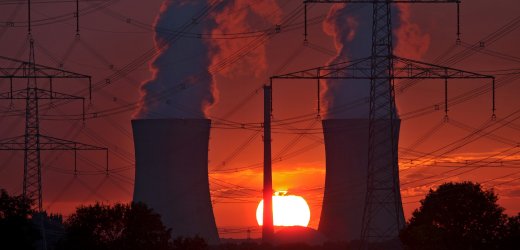
Wir Deutschen selbst sind die einzigen, die notorisch nicht wahrhaben wollen, wie viele unserer Ängste samt der daraus resultierenden Verhaltensweisen von einer typisch deutschen Mentalität zeugen: Jedem Briten ist klar, dass es sich beim “Waldsterben”, das die Gemüter in den achziger Jahren erschütterte, um einen urdeutschen Spleen gehandelt hat. Kein Franzose versteht, mit welch plötzlicher Radikalität unser Land den Ausstieg aus der Atomkraft vollziehen will. Die Amerikaner waren perplex, als Deutschland unlängst sein Ja zum militärischen Libyen-Einsatz verweigerte. Wir selbst und die Welt würden uns besser verstehen, wüssten wir noch, dass ein deutsches Universal-Lexikon bereits im Jahre 1747 wortreich den “jetzigen Verfall der Wälder in Deutschland” beklagte und Martin Luther mit dessen noch älterer Befürchtung zitierte, dass es Deutschland “vor dem jüngsten Tage” an “wildem Holze” mangeln werde. Dass die im Vergleich zu anderen Völkern überstark empfundene Angst vor einer atomaren Verseuchung aufs Engste mit der deutschen Reinheitssehnsucht zusammenhängt, der schon immer jede Verunreinigung, die sich nicht mit Schrubber und Seife bekämpfen lässt, ein Albtraum war. Dass der vermeintlich neue deutsche Pazifismus seinen größten lyrischen Ausdruck bereits 1779 fand, als Matthias Claudius dichtete: “‘s ist Krieg! ‘s ist Krieg! O Gottes Engel wehre, / Und rede Du darein! / ‘s ist leider Krieg! – und ich begehre / Nicht schuld daran zu sein!” Nur weil wir all dies vergessen haben, können wir heute unsere uralten Ängste als Fortschrittssignale ausgeben.
But only from behind. It’s another one of those German schizoid personality disorder things.
When history dictates humility, and modesty proves so profitable, reticence endures.
Germans tell the pollsters they fear for their money—and then add that they like both Europe and the euro. They sense that it is cheaper to throw up firewalls than to pay for the devastation of the blaze. They bridle at rewarding the vices of the “Club Med” countries. But their real horror is to be left alone in Europe once more.
It’s getting ugly here, folks. Ugly and angry (and that makes everybody happy here).
“We’ve had enough!” Germany’s Bildzeitung readers read. “We’re spending hundreds of billions of euros to save the Greeks and now a referendum there should make clear whether they want to be saved at all. Now we want our own referendum: no more billions for the Greeks, Greece out of the euro!”
Place your vote here: “Yes, keep throwing money at them!” or “No, not another cent for bankrupt Greece, take the euro away!”
Die renommierte FAZ fragte gestern, „warum eigentlich die Griechen darüber abstimmen dürfen, ob sie gerettet werden wollen, nicht aber die Deutschen, ob sie und ihre Kinder für solche Zwecke Bürgschaften in Milliardenhöhe schultern möchten“.
German politicians everywhere were shocked at Greek prime minister George Papandreou’s shocking decision yesterday to call a referendum on the latest greatest financial rescue package just put together by EU bureaucrats after marathon summit talks held in Brussels.
“One can’t help but think that the Greeks should be more grateful to selfless Europeans like ourselves who are only trying to help,” said one distraught Berliner politician. “Everybody knows that if you’re dumb enough to actually ask the people what they think about our grand European rescue visions they are very likely to speak their minds.”
A poll at the weekend showed nearly 60 percent of Greeks had a negative or partly negative view of the rescue.
Circular commitments lead to a Ponzi economy.
If the ECB announces that it is willing to lend, in unlimited amounts, to peripheral governments and to the European financial stability facility then the immediate crisis is at once “solved”. But at what cost?
If governments stand behind banks and banks stand behind governments and the central bank lends freely to both and also underwrites financial markets, then financial asset prices become completely detached from economic reality.
This is government regulation in action, folks. Nationalize the banks? You betcha. State-owned banks are clearly the way to go.
“Germany is €55bn richer than it previously thought because of an accounting error at state-owned bank Hypo Real Estate Holding.” You see? The government really can make money out of nothing (and the chicks for free).
To be fair though, what’s 55 billion euros these days? And this mistake could have happened to anybody: “Collateral for derivatives wasn’t netted between the asset and liability side.” In other words, a government expert mixed up the + with the -.
The finance spokesman didn’t directly comment on the accounting error.
This just in from Hamburg: The US has entered a second Gilded Age, but one in which hedge fund managers have replaced oil barons — and it is killing the American Dream.
And not even the 99 percent (nor Triumph, their Insult Comic Dog) can do anything about it.
Here are a few of the article’s more fascinating, never-yet-revealed-before mysteries behind America’s unsolved perpetual decline and fall:
“We are the 99 percent” is a development that has shaken the world’s most powerful nation to its core (and here I thought it had been the subway line underneath our street).
Inequality in America is greater than it has been in almost a century (wow, I had no idea that inequality was that much worse now than it had been back in 1911, had you?).
Wealth disparity is greater in the US than in Tunisia or Egypt (but our disparity has a much longer democratic tradition or something).
The major economic expansion under President Ronald Reagan benefited only a few, and the problem only grew worse under George W. Bush (but those Clinton and Obama years really rocked though/still rock, don’t they?).
Although the productivity of the US economy has increased considerably since the beginning of the millennium (despite everything having grown worse under George W. Bush?) , most Americans haven’t benefited from it.
The United States has developed into a winner-take-all economy (can they take all our debts with them while they’re at it?).
The extreme deregulation of today’s financial and economic system makes it impossible for individuals’ self-serving behavior to ultimately contribute to the prosperity of society as a whole (that Adam Smith was like such a dolt).
Differences between rich and poor are tolerated as long as the rags-to-riches story of the dishwasher-turned-millionaire remains theoretically possible (so if it stays practically possible toleration time is over or what?).
“In the first Gilded Age, the streets were flooded with protest movements.” Manhattan hasn’t yet quite reached that point.
Has America become an oligarchy!?!
But somebody has to do it.
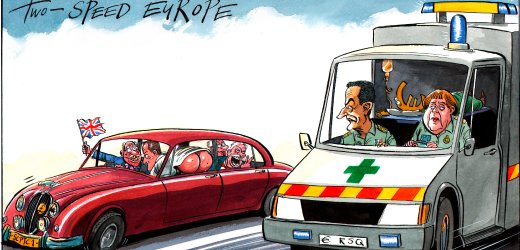
It wasn’t all that long ago that Germany knew how important it was in Europe but kept its mouth shut about it (while pulling the strings behind France’s back). Those days of semi-credible falsche Bescheidenheit (false modesty) are over, sort of. Now they continue to refuse to lead openly, but still pull the strings. Only France isn’t standing there anymore.
As shown once again during yesterday’s latest “rescue” of Europe, Germany makes the decisions while France still holds the press conferences, but the absurdity of this show is starting to lose a lot of its regular viewers. This formula has jumped the shark, in other words.
But as long as major contradictions keep on coming, everybody here in Germany is happy. You remember, don’t you? Germany fled into the EU to protect itself from itself (there was something about World War II a few years ago). Now it dominates Europe through its sheer economic power anyway, but still psychologically/socially/institutionally traumatized (and loving it), refuses to openly take the role history has assigned it. It prefers instead to publically turn its back on Europe (nobody on the street in Germany truly undestands or much cares about Europe) and concentrate instead on more important things at home like solar energy, local elections and not hurting coalition partners’ feelings.
In other words, Germany may clearly call all the shots now, but it still refuses to lead. Which is kind of clever, if you think about it. When everything ends up going tango uniform later, it wasn’t Germany’s fault.
Mit politischer Macht verhält es sich wie mit Millionen von Euro auf dem Konto: Man spricht nicht darüber.
Germany has announced 31 military base closures and the significant scaling back of 90 others as part of a major overhaul of the country’s armed forces which everybody here knows will never be used in any real combat situations anyway.
“Cuts or not, the German military must remain able to not deploy in an entire range of situations,” one high-ranking, unnamed Bundeswehr official said.
“This includes in particular missions in dangerous armed conflicts as well as high-intensity combat missions our government will regularly forbid us to participate in.”
When asked if these cuts might have a negative effect upon German defense industry firms involved in the extremely lucrative production of systems like the Eurofighter combat jet, the A400M military transport plane and the Leopard 2 and Puma tanks, to name just a very few, the official reassured all who cared to listen that the German military will do all in its power to seek other options to extend the orders for such weapons and will most certainly continue to order more of the same in the future.
“Our function as alibi army for the German defense and weapons export industry will continue to be our number one priority,” the official said, clicking his heels loudly or something.
The elimination of the draft will require making a career in the military more attractive in a country where part of the population is skeptical of military interventions. Germany didn’t support the international campaign in Libya.