German of the day: Gestrandet

That means stranded. You know, like your govenment after a few of your wacky Green policies?

Or like your govenment plane that won’t fly any more?

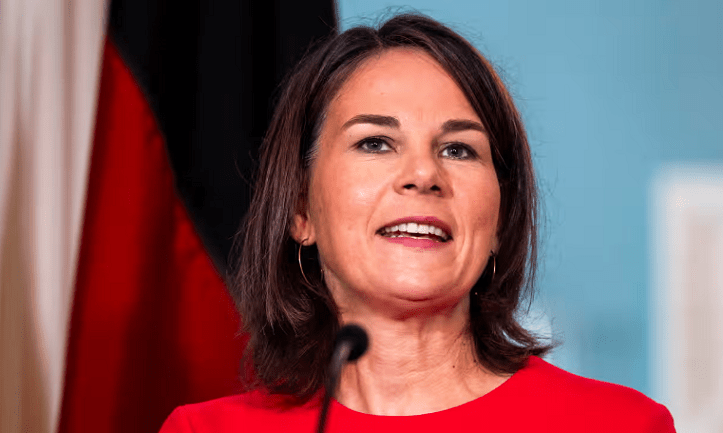
Some call her Annalena of Arabia.

Breakdown on government jet – Baerbock stranded in Abu Dhabi. There is a mechanical problem with the plane carrying the foreign minister – shortly after a stopover it had to land again. The Foreign Office reports that the trip will be continued in the evening.

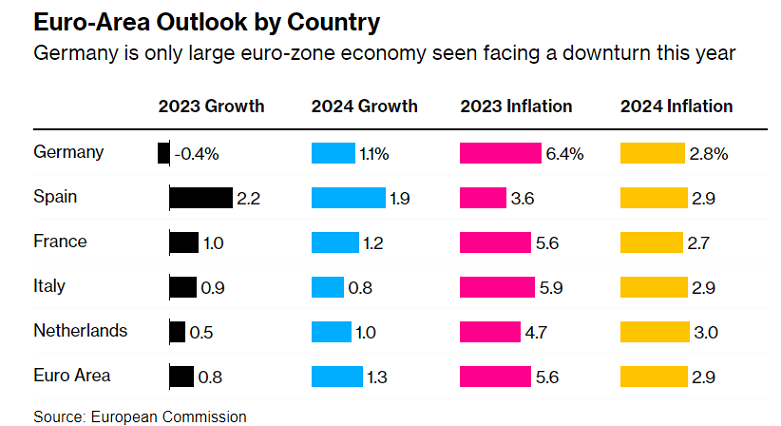
Russia’s Economy Growing More Than Germany’s

Which isn’t hard to do. Germany’s economy isn’t growing at all.

Let’s call it the German Green New Deal.

Germany expected to be only major economy not to grow this year – According to the latest figures from the International Monetary Fund, Germany’s GDP is forecast to drop 0.3% this year while other countries continue to grow.

The German economy is still failing to grow, figures showed on Friday, as the country that should be the industrial powerhouse for all of Europe struggles with high energy prices, rising borrowing costs and a lagging rebound from key trading partner China…

In Germany, the economy has been buffeted by several challenges. Above all, its long-term dependence on Russian natural gas to fuel industry backfired when the invasion of Ukraine led to the loss of most of Moscow’s supply and to higher costs for energy-intensive industries such as metals, glass, cars and fertilizer.

Let’s save the planet!

By destroying our country’s main pillar of industry.

And thus setting an example for the rest of the world. Of what not to do. Glad we could help. We’re the Greens.

Germany’s auto industry: suppliers’ confidence waning – German car manufacturers and suppliers have been financing the development of new e-car models with profits from the combustion engine business. But this is being cut back more and more. And many fear for their jobs.

The best we can offer you is five

Although originally shooting for at least ten, Germany’s Greens must now sheepishly admit that the best they can offer the country is five tough years of economic stagnation.

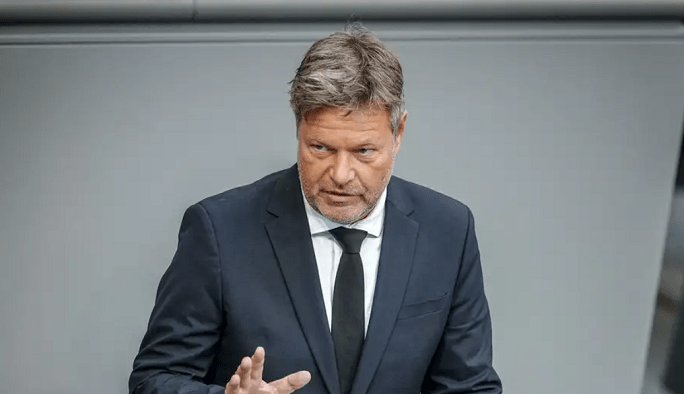
Germany faces 5 tough years, economy minister warns – Berlin should borrow money to subsidize energy for companies or risk losing its industry, Robert Habeck.

Germany faces five difficult years of green industrial transition that “will put a burden” on people, Economy Minister Robert Habeck warned — while urging his government to approve fresh subsidies to safeguard the country’s industrial base.

But we’re just trying to make Germany greener!

By dumping our trash in Polish landfills.

It’s kind of like how we got rid of nuclear energy here. We shut down all our nuclear power plants and then import nuclear power generated in France. If only the rest of the world would follow our example… But they can’t. For some reason. The hell if we know why.

Poland threatens to sue Germany over dumped waste – The Polish government says it may be forced to take Germany to court over waste, some of it toxic, being transported and stored in unauthorized landfills.

It’s not a slowdown…

It’s more like a Vollbremsung. That’s German for full braking or emergency stop.

Germany’s highest court just cancelled the Green’s latest rush-rush trick, I mean plan to save the planet at German taxpayers’ expense.

Germany’s Green Slowdown – While voters may still broadly support net zero goals, they’re not necessarily on board with the escalating costs of the transition.

… Today, it’s the Greens’ proposed ban on new gas boilers in homes that’s causing trouble. Against a backdrop of sliding poll ratings, the party’s partners in the coalition forced a dilution of the plan last month in a package that also included a massive road-building program.

In another blow to the policy — dubbed Habeck’s Heating Hammer by the opposition — Germany’s constitutional court has made a highly unusual intervention in the legislative process and ordered the government to give parliament more time to scrutinize the plan.

Save The Planet

Leave the country.

It’s the only Green thing to do.

German energy prices are so high they’re driving companies to relocate, industry body says…

In May, the German government revealed plans to set aside around 4 billion euros ($4.4 billion) each year to subsidize electricity prices for energy-intensive industries, in an attempt to shield businesses from high electricity prices.

“A lot of family-owned companies … have very operational plans to relocate.”

German Of The Day: Deprimiert

That means depressed.

German bosses are depressed – And dissatisfied with the government.

We are at a dangerous point,” worries Arndt Kirchhoff, boss of the employers’ association in North Rhine-Westphalia and one of three brothers who run Kirchhoff, a maker of car components. Germany recently slipped into a technical recession. Many companies are investing abroad rather than at home. Chinese consumers are importing less after the lifting of pandemic restrictions than German manufacturers had been hoping. And Ukraine’s counter-offensive against Russian invaders is injecting uncertainty into Germany’s backyard.

Englisch Of The Day: Green Around The Gills

Definition: Looking as if you are going to be sick.

Like Blair but faster: how Germans grew sick of the Greens.

How? Let me count the ways… Nah. That would take too long. All you need to know is that the German Greens always do this. It’s a ritual, sort of. Whenever they reach the point where they actually have some power and are allowed to do something, they shoot themselves in the foot. In this particular case, the straw that broke the camel’s back is forcing, from on high, real Germans living in their real German world to pay a fortune to install heat pumps so Germany can save the world, I mean planet, once again.

German Of The Day: Einbrechen

That means to collapse.

You know. Like how Germany’s export numbers to China have collapsed?

Big drop in German exports to China raises fears over EU’s economic powerhouse – Decrease in demand from Asia’s largest economy sparks concern over how Berlin can fix industrial malaise.

A double-digit drop in German exports to China has rattled Europe’s biggest economy, triggering debate over why its vast manufacturing sector has fallen behind rivals benefiting from a rebound in Chinese demand.

The 11.3 per cent drop in German exports to China in the first four months of the year, compared with the same period a year ago, highlights a unique set of challenges for Europe’s industrial powerhouse, economists say. Carmakers are losing market share in China, chemical producers and other energy-intensive companies are reeling from high power prices, and the euro’s appreciation against the dollar has made German goods less competitive.