Monthly Archives: November 2013

I’ll Bash Germany With The Best Of Them
But… How is it that its critics blame Germany for the high unemployment, declining living standards, and riots to their South?

If this were a football game, the referee should call unnecessary roughness for piling on Germany. The American Left led by Paul Krugman (The Harm Germany Does and Those Depressing Germans) excoriates Germany for forcing austerity on the rest of Europe. The U.S. Treasury – and others – (no newcomer to spending) demands that miserly Germany spend more to pull the PIIGS (Portugal, Italy, Ireland, Greece and Spain) out of their economic doldrums…
I interpret the liberals’ German bashing as having an entirely different motivation – their inherent dislike of economic success… In the liberal mind set, success must be equally shared. If one person, company, or country is better off, it must be at the expense of those who are less well off. We need to even things out in their zero-sum world.
PS: And I’m going to go even further out on the limb tonight defending Germany by predicting that they will finally – after 19 encounters? – beat Italy.
Hysteria Is A Good Thing
NSA hysteria, I mean. If you are a German IT service provider looking to cash in on it, that is.

“Hosted in Germany” is big marketing medicine in Germany these days, or at least that’s what many German IT companies are hoping. The question is just how long the hysteria can be kept going at a fevered pitch in order to get the bigger bucks, I mean euros, these German data centers will now be demanding.
Then, of course, there are still those plans for the coming of the dawn of the birth of the age of the German Internetz, sort of. What will they think of next?
Das IT-Unternehmen Bechtle sieht seine Chance in sicheren Plattformen für Daten und in Software „made in Germany.“
Germany To Be Punished For Europe Not Having Enough Germanys
The EU now too is concerned that Germany’s current account surplus “is harming the wider European economy” and is openly considering punishing the naughty economic powerhouse.
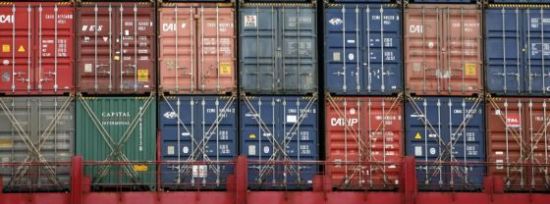
Germany is relying too much on exports, eurozone officials are grumbling, while not doing enough to create demand at home. And although these officials maintain that “our problem will never be German competitiveness, but whether Germany, Europe’s economic powerhouse, could do more to rebalance Europe’s economy,” their problem has always been German competitiveness and knowing that Germany, Europe’s economic powerhouse, cannot do more to rebalance Europe’s economy.
“Europe needs more Germanys,” in other words, and it’s up to Germany to now, uh, create them.
Deutschland kann dem Rest Europas nicht Regeln vorschreiben und sich selbst nicht daran halten.
PS: “It’s GOOD to be the export king.”
A Scrooge Issue?
Or is it more of a squanderer one?

I don’t know what troubles me more here; a Germany that spends too little for Christmas or the weakest European economies that spend too much.
With almost 28 percent unemployment and a lingering recession that’s wiped out one-fourth of their country’s economic output, it makes sense that Greek consumers plan to trim their Christmas spending by 12.8 percent this year. What’s more surprising is that the average Greek budget for holiday gifts, food, and drink is €451 ($608)—more than the €399 average in Germany, the country that has borne much of the cost of a Greek bailout.
Residents of Ireland, another bailed-out economy, plan to outspend the Germans more than two to one this Christmas, with an average €894 budget. In Spain, where unemployment is at 26 percent, consumers expect to spend an average €567. In recession-hobbled Italy, meanwhile, the figure is €477.
“Differences between countries’ spending habits are linked to the culture of the countries.”
At Least It Didn’t Happen To The Muslims Or The Jews
This is nothing to get cross about or anything, I guess, but the OSCE reports that there were 414 cases of anti-Christian abuse and attacks in Germany last year.

The offences included acts of violence, church desecration and theft.
Zu den erfassten Delikten zählen Gewalttaten, Kirchenschändungen und Diebstahl.
CO2 Is Bad, Right?
Germany has produced 2 percent more CO2 than it did the previous year, 20 million tons more. Oh yeah, and there had been an increase in CO2 production the year before that, too.
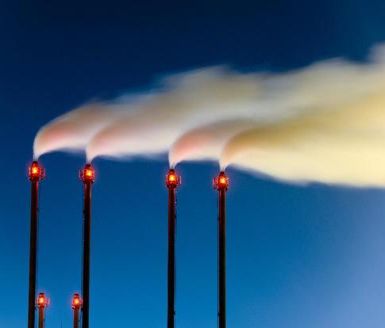
Uh, I thought that this Energiewende (energy turnaround) thing was supposed to reduce these emissions. I mean, after turning off all of the German nuclear power plants and all, CO2 emissions just had to have dropped, right? I was never very good at science, though, much less at rocket science. This Scheiße is clearly way too complicated for me.
“Nach ersten überschlägigen Schätzungen dürften sich die energiebedingten CO2-Emissionen in Deutschland um etwa 20 Millionen Tonnen oder um reichlich zwei Prozent erhöhen.”
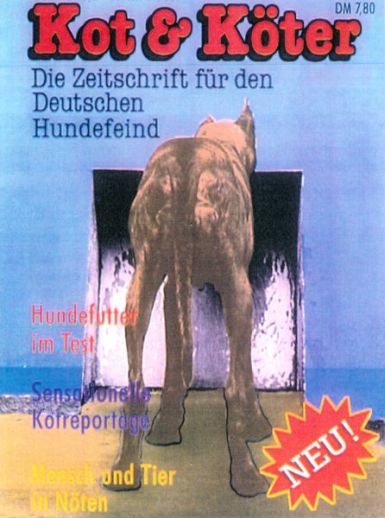
PS: Speaking of Scheiße, it turns out, to my amazement, that there actually are Germans who don’t like dogs. There seems to be a new anti-dog movement in the making that is being spearheaded by a magazine called Kot und Köter (Crap and Muts). I guess this had to happen sooner or later. And Kot causes CO2 emissions too, right?
Miss T.

Bottle In Front Of Me Better Than Frontal Lobotomy
Or better than psychotherapy, for that matter. Or at least that’s what one German health official has said. A bottle of warm beer can be more effective.

But the Brain Police are now vigorously reminding us (as in you) that one is not permitted to say stuff like that so now this guy’s in real hot water. Or warm beer, I guess.
“A psychotherapist is not needed next to every citizen. Sometimes a beer is enough.”
Debacle, Disaster, Fiasco…
Just a reminder here again: “There is no free lunch.” Honest.
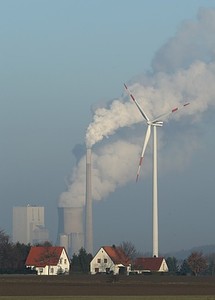
Government intervention at its best (again). Germany’s deliberate attempt to make its energy greener using price guarantees and mandatory quotas for green energy IS NOT WORKING.
Try and remember: The whole idea was to make renewable energy more competitive and, therefore, in the end, cheaper. Well this attempt is so not working right now that German consumers pay higher prices now than ever before and German industry is soon to follow. And this, even though there is actually an oversupply of power. In essence, an energy bubble has been created because Germany’s renewable energy producers get a guaranteed minimum price for what they produce (this now includes farmers and communities and anybody else who can still get into the ponzi scheme).
Imagine you have various consumers going to a grocery store. Some of them want to buy a bottle of beer for 1 USD. Others would like to buy a bottle of champagne for 30 USD. In normal life people would just pay 1 USD for the beer and bubble-lovers would pay 30 USD for champagne. The German energy market is different. People who want the champagne pay 2 USD for it and those who want beer have to pay 2 USD. It’s a good deal for the champagne drinkers, getting subsidized by the beer buyers.
…Perhaps the least fair part of the whole scheme is how these prices disproportionately impact low-income households, who are forced to subsidize green energy for richer families to support politicians’ green energy visions.
 Observing Hermann