German of the day: Märchenwald

That means fairytale forest.
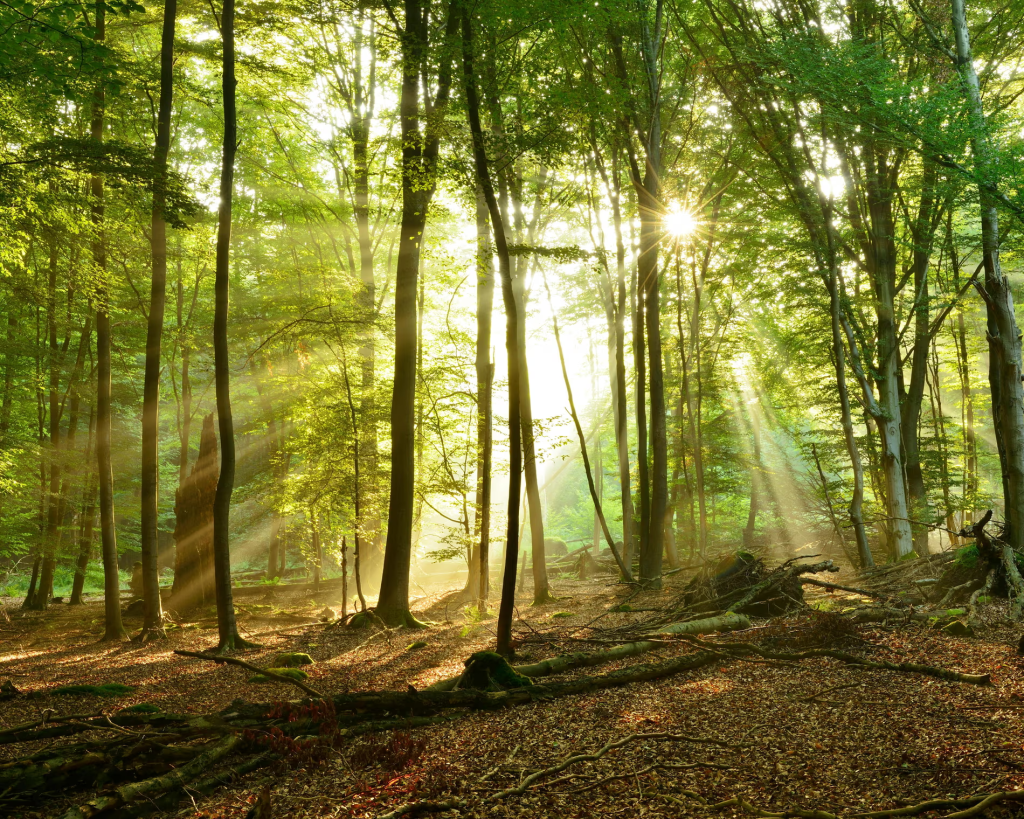
You know, the German Brothers Grimm kind. The kind Germans these days level for wind parks.

Plan for windfarm in German ‘fairytale forest’ stokes green energy culture war – Far right accused of misinformation over turbines at Reinhardswald, which has left local people divided.

Deep in the woods that inspired the Brothers Grimm, past the tower from which Rapunzel threw down her hair and the castle in which Sleeping Beauty slumbered, lies a construction site that the far right has declared a crime against national soil and identity.

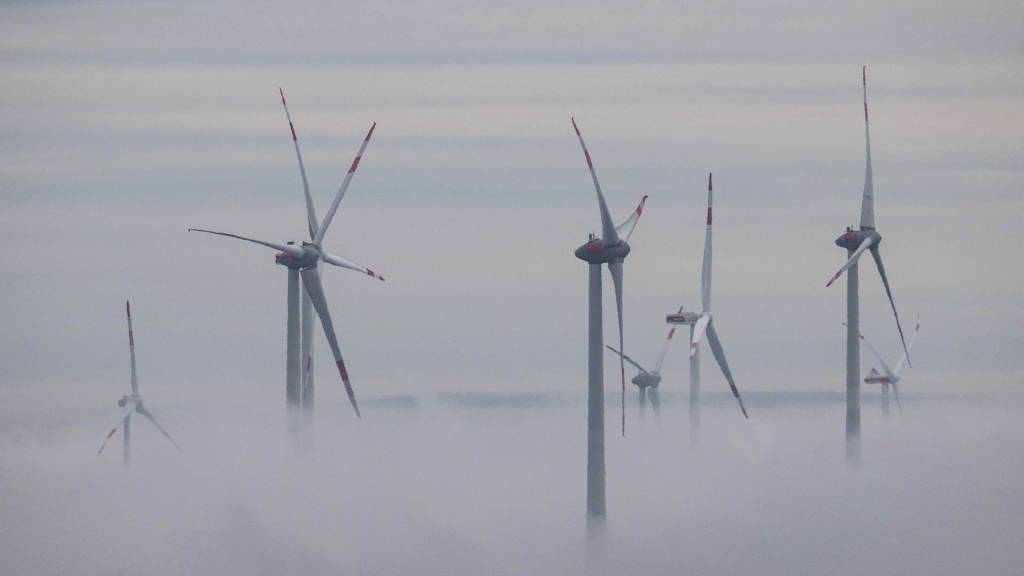
In this quiet corner of Germany’s “fairytale forest”, workers are clearing land and building access roads to erect 18 wind turbines.

Clean and lean

Very, very, lean.

But at least it’s clean. Whatever that should mean.

Clean energy sources generated the smallest amount of Germany’s electricity in over a decade so far in 2025, dealing a blow to the energy transition momentum of Europe’s largest economy.

Electricity generation from clean power sources totalled just under 80 terawatt hours (TWh) during the first four months of the year, according to data from energy think tank Ember.

That clean energy volume is down 16% from the same months in 2024 and is the lowest for that period since at least 2015.

German of the day: Trittbrettfahrerei

That means free-riding.

After solomnly commemorating the end of World War II 80 years ago…

German politicians solomnly commemorated the end of 80 years of free-riding on defense spending.

It was emotional.

Newly elected German Chancellor Friedrich Merz joined a wreath-laying ceremony in Berlin. The Bundestag also held its own remembrance service.

German of the day: Verdeckte Tyrannei

That means covert tyranny.

Following the classification of the AfD as “verified right-wing extremist” by the Federal Office for the Protection of the Constitution, US Secretary of State Rubio has described the classification as “covert tyranny,” while US Vice President Vance even draws historical comparisons.

Both US Secretary of State Marco Rubio and US Vice President J.D. Vance have criticized the new classification of the AfD by the Federal Office for the Protection of the Constitution with vigorous words. The Federal Foreign Office responded to the X-word battle and countered: “That’s democracy.”

Germany just gave its spy agency new powers to surveil the opposition. That’s not democracy — it’s tyranny. What is truly extremist is not the popular AfD, but rather the establishment’s deadly open border immigration policies that the AfD opposes.”

You blew it, Germany

Because your wind energy blows.

When the Wind Didn’t Blow in Germany – A years-long renewables push leaves the economy hostage to the weather.

Germany has invested so many hundreds of billions of euros in its green energy transition over the years that no one can tally the precise amount. Yet the share of wind and solar power in the country’s energy mix in the first quarter of this year managed to fall—by a lot. There’s a lesson for the U.S. here.

It’s not because we have the highest energy costs in the world…

Or the shortest number of hours (days) worked in any industrialized country. Or the most restrictive bureaucracy of any G7 nation. Or even that we continue to miss the boat when it comes to embracing new technological developments. To name just a few.

No. Germany’s economy continues to fail (for the third year now) because of Donald Trump.

Germany sees zero growth in 2025, blames Trump tariffs – Germany was the only G7 economy that failed to grow for the last two years, and is on track for a third year without growth in 2025.

The German government cut its economic growth forecast to zero citing the impact of US President Donald Trump’s trade policies .

“There is above all one reason for this, namely Donald Trump’s trade policy and the effects of the trade policy on Germany,” outgoing Economy Minister Robert Habeck said.

Thought Crime and Punishment

Watch your step in Germany.

The British news magazine “Economist”, which is read by decision-makers worldwide, sounds the alarm: in Germany, freedom of opinion is increasingly under threat – from laws, court judgments and a way of dealing with criticism that raises questions in a liberal democracy.

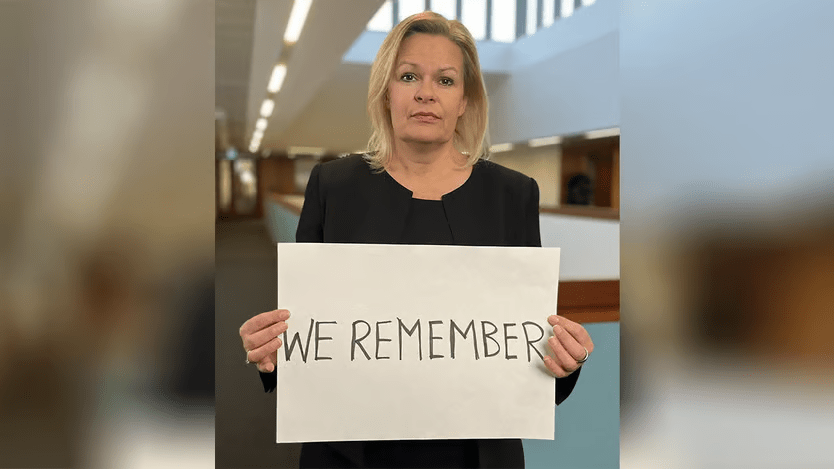
The report focuses on the case of journalist David Bendels. The editor-in-chief of the right-wing populist “Deutschland-Kurier” had published a manipulated photo of Federal Minister of the Interior Nancy Faeser holding a sign saying “I hate freedom of expression.” The Economist notes: “Such images are commonplace on social media.” However, Faeser filed a criminal complaint – and a court sentenced Bendels to a seven-month suspended sentence, a heavy fine and an apology.

German of the day: Redefreiheit war gestern

That means free speech was yesterday.

The threat to free speech in Germany – One of the freest countries in the world takes a hammer to its own reputation.

Freedom of expression jeopardized by coalition agreement?

A paragraph in the coalition agreement is now causing new concern online about the right to freedom of expression. “The future black-red coalition does not respect freedom,” according to the Neue Zürcher Zeitung. According to Cicero magazine, the potential new government is “alienated” from the “responsible citizen” and Die Welt warns of a new “kind of truth law.”

“Reducing bureaucracy will be one of our top priorities!”

This is why we are going to create a new ‘super–high-tech ministry’ for research, technology, and aerospace.

Germany to create ‘super–high-tech ministry’ for research, technology, and aerospace – New governing coalition also plans to woo scientists from abroad and make it easier for universities to collaborate with the military on defense research.

The announcement is one of several nods to science in the 144-page agreement, unveiled on 9 April following weeks of negotiations between the center-right Christian Democrats (CDU) and its sister party, the Christian Social Union in Bavaria (CSU)—who together won the most seats in February’s federal elections—and the center-left Social Democrats. The agreement is expected to be formally approved by the three parties by early May, paving the way for CDU leader Friedrich Merz to be elected chancellor.