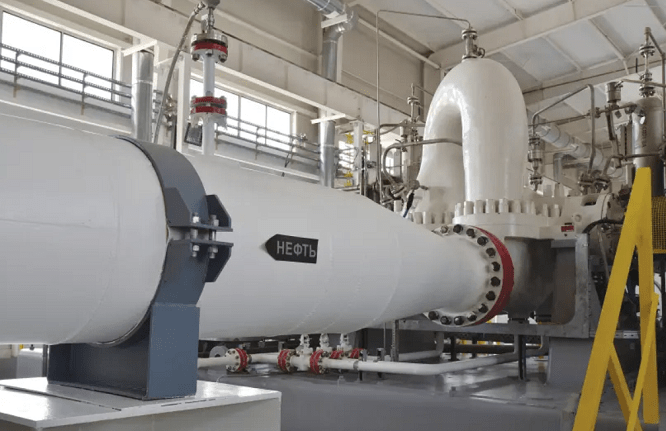
German regulator hints at gas rationing priorities, Funke reports – Germany’s energy regulator has listed priority areas that would have protected access to power if there are severe gas shortfalls this winter, ranging from households and hospitals to pharmaceuticals companies and paper producers.
That means state support or government assistence. And that means, of course, taxpayer money.
And this is ususally needed, as in this case, after the state and/or government burning the taxpayer money got the company that needs it into this situation in the first place (see “renewable energy”).
Germany in bailout talks with Uniper amid gas crisis – Germany’s Uniper (UN01.DE) is in talks about a possible government bailout as the financial fallout from dwindling supplies of Russian gas reverberates across Europe, sending shares in the energy company sliding.
Ukraine war: Germans fear the end of prosperity – The war in Ukraine and inflation have Germans concerned about their standard of living. Those who have the least are likely to suffer the most…
Inflation is running at nearly 8%, compared to the same time last year, according to Germany’s Federal Statistics Office. Consumer energy and food prices are up more than 38% and 11%, respectively.
That means ban. The only thing the German Green party does well. And they do it with vehemence. And constantly.
Germany to support EU plans for 2035 ban on new fossil-fuel cars, says environment minister – Germany plans to vote in support of a European Union package that would effectively ban the sale of new cars with combustion engines from 2035, said the environment minister on Tuesday.
“If the package includes what the Commission suggested, banning cars that emit carbon dioxide from 2035, then we will vote in support,” Environment Minister Steffi Lemke told broadcaster ZDF.
Finance Minister Christian Lindner (FDP) said at an event hosted by Germany’s BDI industry association last week that the German government would not agree to the plan.
On June 26, 1948, the largest humanitarian operation in history began, later known as The Berlin Airlift, which prevented West Berlin from capitulating to the Soviet blockade.
When the wartime alliance between the Western Allies and the Soviet Union ended and friendly relations turned hostile, the question of whether the western occupation zones of Berlin would remain under Western Allied control or whether the city would be absorbed into Soviet-controlled East Germany led to the first crisis of the Cold War.
And Joe’s misbehaving again. Put him on a leash or something.
G7 Leaders Meet in Germany – Germany welcomes the leaders of the G-7 wealthy democracies Sunday.
The summit for the leaders of Britain, Canada, France, Germany, Italy, Japan, and the United States is being held in a castle in the Bavarian Alps…
“The summit must send not only the message that NATO and the G-7 are more united than ever,” German Chancellor Olaf Scholz told German parliament recently, “but also that the democracies of the world stand together against [Russian President Vladimir] Putin’s imperialism just as they do in the fight against hunger and poverty.”
Ministry denies Germany set to declare Phase 2 of emergency gas plan.
This economic minister belongs to a political party (the Greens) that won’t even consider the possibility – under Germany’s present catastrophic, self-inflicted energy situation – of extending the lives of Germany’s three remaining nuclear power plants past the end of this year. Thank goodness this has nothing to do with ideology and ideologues. He’s just from the government and he’s here to help.
Germany declared the first phase of the emergency plan on March 30, calling for crisis team meetings of energy suppliers, operators and government authorities to assess the energy security situation for Europe’s biggest economy.
In the second alert phase, the market would still be expected to handle the disruption without government market intervention.
The other kids were jumping off the bridge. What, me worry?
Russia’s invasion of Ukraine has not only revealed the willful ignorance of German politicians, businesspeople, and voters to Vladimir Putin’s regime, it has cast a dark backwards shadow over the tenure of former chancellor Angela Merkel.
Merkel’s lack of regrets illustrates the fallacies of Germany’s Russia policy – Russia’s war of annihilation against Ukraine and the unhinged rhetoric of its elites raise urgent questions about the future for Europeans, for the trans-Atlantic alliance, and for global order.
For a generational cohort of German politicians, some of whom are retired and some still in power, it also raises urgent questions about the past. What could they have known, or at least predicted? What bloodshed could they have prevented?
Israel, Jews voice ‘disgust’ over antisemitic imagery at German art festival – Hateful caricatures feature at Documenta art fair, despite controversy; German culture minister urges curators to ‘draw the necessary conclusions.’
Which is a pretty hard thing to be. Unless you live in Germany. It goes like this: Turn off your nuclear energy plants and never mention that ugly n-word again (think Voldemort). Demand all coal-burning power plants be shut down ASAP too. Actually BELIEVE (not think, just believing is enough) that wind turbines and solor panels can actually power a country like Germany. While doing that, let yourself become 50% energy dependent on Russian gas and oil despite repeated warnings from your European neighbors and that awful evil US-Amerika that’s always saying mean things (or at least it used to). Then something like Ukraine comes along, get it? What’s not to like? We’re here from the German Green government and we’re here to help. We created the problem in the first place but now we’re the ones who are going to fix it. You can thank us later, voters. They’ll get re-elected, of course. You can’t make this stuff up, people. And even if you could no one would believe you.
Germany to Bring Back Old Coal Plants as Russia Cuts Gas Supply – Government to offer financing to ensure storage is increased.
Country to rely more on coal-fired power plants, minister says.