Energy crisis: Quarter of German companies ‘plan to cut jobs’ – In order to tackle rising energy prices, a quarter of German companies revealed in a new survey that they planned to cut jobs, among other cost saving measures.
Around 25 percent of German companies plan to axe jobs as a cost saving measure, according to a survey of 1,080 German firms led by the Munich-based Stiftung Familienunternehmen released on Monday.
Germany’s Continued Illusions About China and Russia – Berlin’s pursuit of economic and political ties with Beijing and Moscow has created dangerous dependencies. A change in strategy would benefit both Germany and the EU
Over the years, these two authoritarian regimes embedded themselves in the German economy and ingratiated themselves with the elites. Such developments prevented the EU from forging a coherent, critical strategy toward both Moscow and Beijing.
Thank God. The Germans are relieved. For a while there things were starting to look way too positive.
Post-Brexit-wise.
Positive trend in German exports to Britain no cause for optimism – DIHK.
German exports to Britain this year could grow for the first time since 2015, statstics office data showed, but the DIHK business association said the numbers did not mark a turn for the better, especially in light of Britain’s current turbulence.
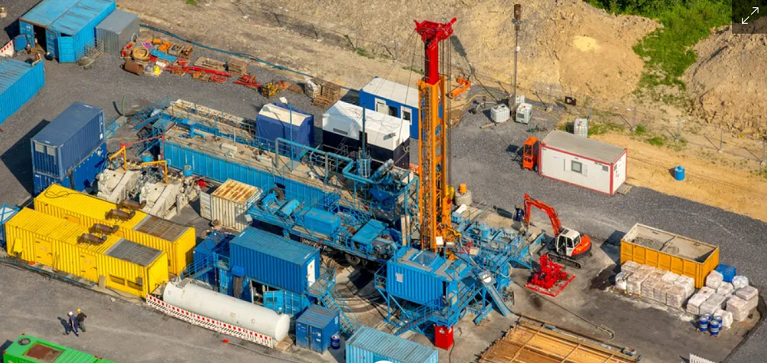
German of the day: Wir sollten Fracking ernsthaft in Erwägung ziehen. That means “We should seriously consider fracking.”
Reinhard Ploss was head of chip company Infineon, now he heads the German government’s Future Council. Here he talks about how Germany should respond to the energy crisis and why robots are the future.
Let’s turn off our remaining nuclear power plants too.
We have a reputation for being gründlich (thorough), after all.
Germany’s scramble to revamp its energy policy – Germany woke up too late to the risks of energy dependence on Russia. Moscow’s natural gas shutoff may make it one of the hardest-hit EU economies.
At a dinner at the German embassy in London on October 23, 1980, German Chancellor Helmut Schmidt shocked British Prime Minister Margaret Thatcher when he told her that West Germany relied upon the Soviet Union for 14 percent of its daily natural gas consumption. “That was very dangerous and unwise,” she said. Mr. Schmidt responded, “My dear Margaret, the Russians have always been the most reliable suppliers. They need us as much as we need them. There is no danger at all.” For nearly 40 years, the chancellor’s optimistic assessment appeared accurate, and Germany’s dependence on Russian gas only kept increasing.
(just like the Czech Republic). We’ll supply you with gas now too.
France starts sending natural gas directly to Germany – Technical adjustments were necessary as the single pipeline between the two countries was originally intended only to deliver gas (from Russia) from Germany to France.
If you haven’t noticed, Germany’s Green doesn’t stink.
Fun fact for you CO2 fans out there: The Germans generate 10 tons of CO2 per capita per year (some call it the “Carbon Footprint”), the nuclear-friendly French only do 6.
It wasn’t our fault, Mom. The other kids were jumping off the bridge too. That’s why we’ve got this recession now, see?
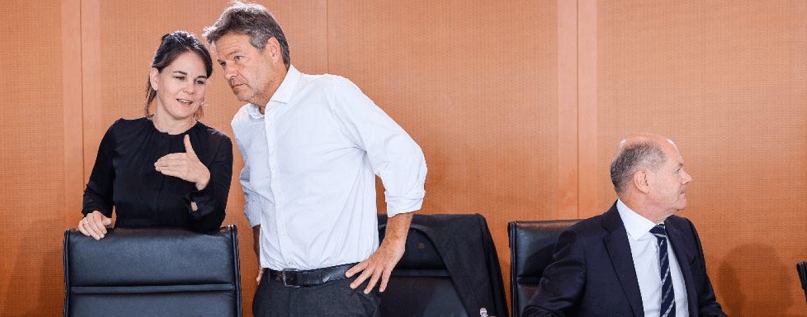
Germany blames Putin for pushing economy towards recession – Vice-chancellor Robert Habeck signals ‘substantial downturn’ in the coming quarters.
Habeck (Greens) blamed the gloomy forecast on Vladimir Putin’s attempts to use energy as a tool to destabilize Europe. Habeck said forecasts would have been worse if Berlin had not taken action to soften the blow.
Making someone question their own reality. The term may also be used to describe a person (a “gaslighter”) who presents a false narrative to another group or person, thereby leading them to doubt their perceptions and become misled, disoriented or distressed.
Berlin’s 19th Century Gas Lanterns Go Dark as Russia Cuts Fuel – The city is speeding the shutdown of traditional streetlights while citizens scramble to stay warm.
Like other cities worldwide, Berlin began installing gas lanterns along its avenues and alleyways in the early 19th century. But while the rest of the planet has long since moved on to sodium, halide, and LED, the German capital has remained stubbornly old-school, with some 23,000 gas lanterns still illuminating the city. For years the local government has sought to eliminate the gaslights in favor of more sustainable technologies, but fans of the warm glow and sculpted lampposts have managed to slow the effort. Today, Russia’s war in Ukraine is hastening the technology’s demise. “Gas is too expensive and wasteful,” says Benedikt Lux, a city legislator from the Green Party. “They should have been converted to LEDs long ago.”
Buying mood in Germany drops to all-time low – Consumer sentiment in Germany has reached an all-time low due to the high cost of living. The consumer barometer of the German Retail Association (HDE) fell for the third month in a row, reaching a value of 84.14 points in October, the association announced on Tuesday. The value had already fallen to 90.53 at the beginning of the Corona crisis in April 2020 but then temporarily rose again to more than 100.
Consumer pessimism is expected to have a “negative impact on private consumption in the coming months,” the association said.
“Whenever you find yourself on the side of the majority, it is time to pause and reflect.”
Majority of Germans confident energy supply to remain secure through winter, survey shows.
Nearly two thirds of Germans believe that power supply in Europe’s biggest economy will remain secure over autumn and winter, a survey showed on Tuesday, as Berlin scrambles to compensate for falling Russian energy imports.



 Observing Hermann