German of the day: Falsche Nostalgie

That means false nostalgia.

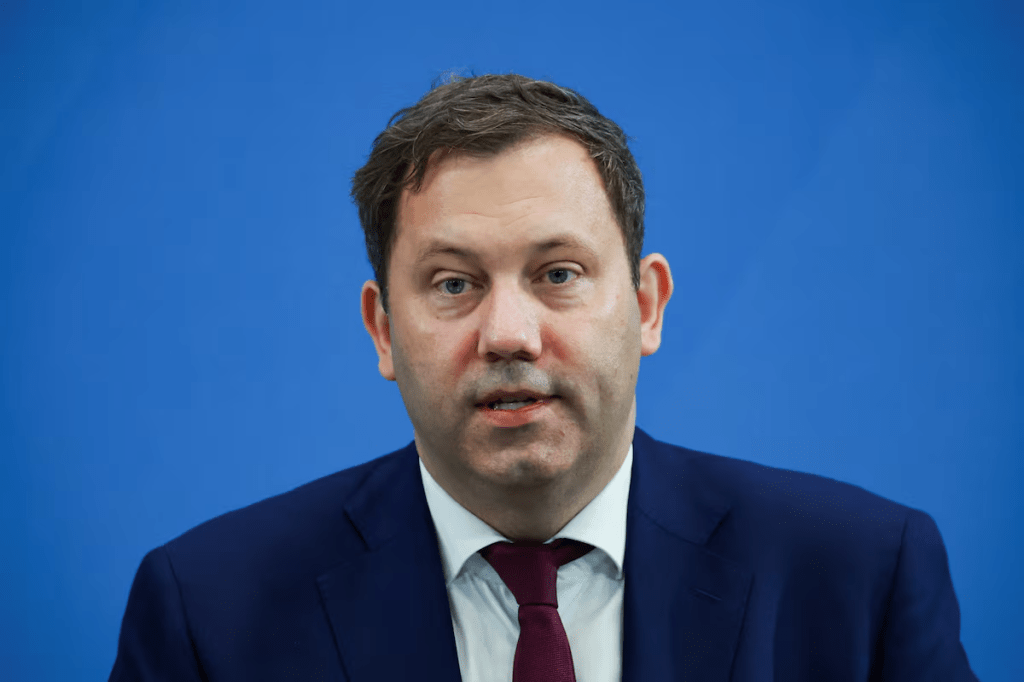
Germany’s Merz warns against ‘false nostalgia’ over US alliance – The chancellor’s comments show European leaders are girding for a future in which the transatlantic alliance is no longer the bedrock on which the continent’s defense and economy stand.

“We must face the fact that our relationship with the U.S. is changing, The U.S. is reassessing its interests — and not just since yesterday. And so we in Europe must also adjust our interests, without false nostalgia.”

Work more than 34 hours a week?

Not with us!

Does Germany need to work harder? Its government seems to think so – The average workweek in Germany last year was about 34 hours, according to Eurostat data, less than France and Greece as well as the average across the European Union, which was 36 hours. In addition, German labor productivity per hour has also been essentially flat since 2009.

A study by the Organization for Economic Co-operation and Development reports that Germans work the least among its member countries, clocking in at 1,335 hours per person per year in 2023, compared to 1,496 hours in the U.K. and 1,805 hours in the U.S.

“Why the Bundeswehr cannot shoot them down?”

Duh. Because the Bundeswehr cannot shoot them down.

They don’t have the means.

Russian spy drones over Germany: Why the Bundeswehr cannot shoot them down – Russia uses surveillance drones over eastern Germany to monitor Western arms deliveries to Ukraine. German authorities are struggling to counter these espionage activities.

Russian surveillance drones are conducting reconnaissance flights over eastern Germany to track arms shipments to Ukraine, with over 530 drone sightings recorded in the first three months of this year alone, according to Western intelligence services.

They track the ever-changing routes of European military transports to identify which weapons will soon reach Ukraine, where new war equipment will be delivered, and when new ammunition will arrive at the front.

The shocking thing is that…

It’s not really shocking anymore.

Germany suffer shock World Cup qualifying loss to Slovakia – Germany’s 2026 World Cup qualifying campaign got off to a disastrous start as they suffered a deserved 2-0 defeat to Slovakia. Furious head coach Julian Nagelsmann questioned his team’s mentality.

Germany’s journey to the 2026 World Cup in the USA, Mexico and Canada got off to the worst possible start as Julian Nagelsmann’s team suffered a deserved 2-0 defeat to Slovakia in Bratislava.

Nearly three months after the disappointment of the Nations League, Germany looked out of shape and sorts. They had never lost a World Cup qualifier away from home before tonight. History had been made, but not the kind that Nagelsmann wanted.

What’s a little power gap here and there…

As long as you can say you have the highest energy costs in Europe?

Or is it the highest energy costs in the world? I forget. Go, Greens!

Germany could see power supply gap in 2030, regulator says – Germany’s Federal Network Agency on Wednesday warned that rare electricity shortfalls could occur as early as 2030 if the country’s energy transition stalls, though supply is otherwise expected to remain secure through 2035.

The Security of Supply Report, approved by the federal cabinet on Wednesday, highlights the risks should renewable expansion slow, new gas-fired power plants fail to materialize, and electricity demand not become sufficiently flexible.

German of the day: Herbst der Reformen

That means the autumn of reform.

It’s similar to the German spring, summer and winter of reform, only here nothing gets reformed in autumn.

Germany’s Merz faces trouble over ‘autumn of reform’ – Friedrich Merz has decided that the autumn must be the season for tackling Germany’s urgent domestic problems, but that means conflict with his center-left coalition partners.

Chancellor Friedrich Merz’s “autumn of reform” could turn into a season of coalition strife as he plows ahead with his ambitious plan to reform Germany’s welfare state, while bringing in tax reforms to boost the economy.

The challenges are significant: The German economy now faces a third year without GDP growth, the welfare state and pension system are failing to keep up with demographic challenges, and the federal budget has a hole of some €172 billion ($200 billion) for 2027 to 2029.

Me, an extremist?

I’m just an extremely ugly woman in an extremely confused country.

Convicted German neo-Nazi to serve sentence in women’s prison after changing gender – The Self-Determination Act, which only came into force in November of last year, enabled Liebich to be placed in a prison aligning with their self-described gender identity.

Still “managing it…”

Not.

The influx of migrants has been out of control for ten years now and there’s no end in sight.

Germany updates: Merkel’s ‘Wir schaffen das!’ 10 years on – Today marks 10 years since Chancellor Angela Merkel said “we’ll manage it” as Germany welcomed hundreds of thousands of displaced people.

Wir schaffen das” is now “wir sind geschafft.” We’re done. Exhausted.

Of course Germans back voluntary military service

As long as they aren’t expected to volunteer themselves.

German cabinet backs voluntary military service, opening door to conscription – Compulsory military service in Germany was ended in 2011 under then-Chancellor Angela Merkel.

Chancellor Friedrich Merz has made boosting Germany’s military a priority given the threat from Russia and said “we are now back on the path to a military service army”.

He summed up his thinking earlier this year saying: “We want to be able to defend ourselves so that we don’t have to defend ourselves.”

As if nothing happened…

As if the daily knife attacks don’t bother anyone.

As if the country didn’t start falling apart the moment she opened up the floodgates.

She regrets nothing and would make the same decision again today. What else is she going to say? Disgusting.

Germany updates: Merkel reflects on 2015 refugee policy – The former chancellor believes much has been achieved since allowing hundreds of thousands of refugees into Germany.