Mixed Signals

And all of them bad.

The next German Alleingang (going it alone).

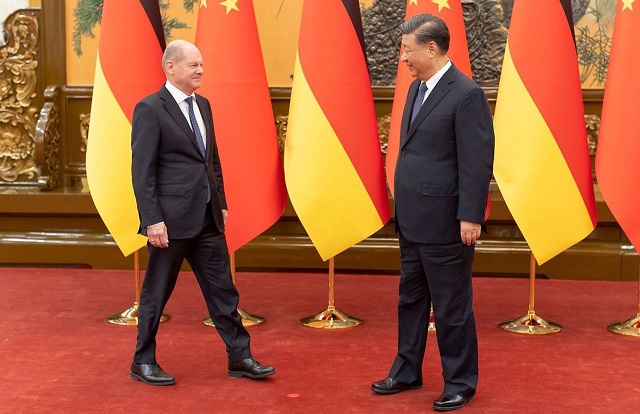
European Commissioner for Industry and the Internal Market Thierry Breton, a Frenchman, warned Scholz: “The time for naivety is over. We must be on guard.” The behaviour of the individual EU members towards China must be coordinated and not decided alone, “as China apparently prefers.” French President Emmanuel Macron suggested that he and Scholz should fly to China together at a later date to demonstrate European unity, a suggestion which Scholz ignored.

Christian Democratic Union (CDU) foreign policy expert Norbert Röttgen also attacked Scholz sharply. He accused him of damaging Germany’s foreign policy during his trip, “because it costs us our partners’ trust. It does not even strengthen our reputation with the Chinese, because they only react to strength and despise weakness.”

German Of The Day: Abhängigkeit

That means dependency.

You know, like Germany’s dependency on China? Ain’t no big deal, though. Their dependency on Russian energy worked out just fine, right?

Where would we be without China? There is hardly any other country Germany is more dependent upon than China.

Why Should We Worry About Becoming Too Dependent On China?

It worked out great with Russia, didn’t it?

Germany’s Continued Illusions About China and Russia – Berlin’s pursuit of economic and political ties with Beijing and Moscow has created dangerous dependencies. A change in strategy would benefit both Germany and the EU

Over the years, these two authoritarian regimes embedded themselves in the German economy and ingratiated themselves with the elites. Such developments prevented the EU from forging a coherent, critical strategy toward both Moscow and Beijing.

Germans Thinking About Reducing Their Dependency On China

Why on earth for? It worked great with Russia.

German economy ministry reviews measures to curb China business – Germany’s economy ministry is considering a raft of measures to make business with China less attractive as it seeks to reduce its dependency on Asia’s economic superpower, two people familiar with the matter told Reuters.

The measures could include reducing or even scrapping investment and export guarantees for China and no longer promoting trade fairs and manager training there, those people said. Loans from state lender KfW could be re-directed to projects in other Asian countries, such as Indonesia, in line with attempts to diversify trade and increase business with democracies.

German Of The Day: Ausladung

That means disinvitation.

German Academic Freedom Is Now Decided in Beijing – German universities are bowing to China on censorship.

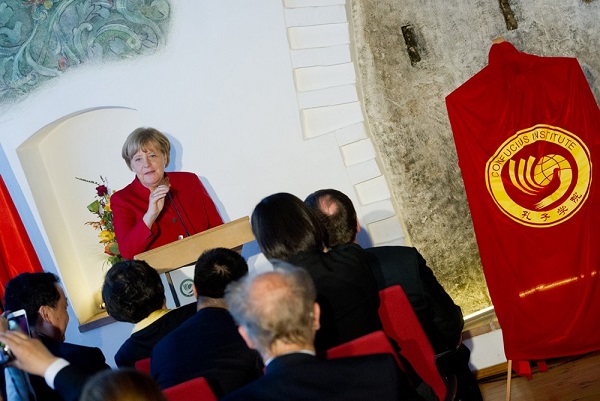
The two German journalists Stefan Aust and Adrian Geiges were disinvited from giving public talks at the German Confucius Institute about their new biography of China’s president, Xi Jinping: The Most Powerful Man in the World. The disinvitation came at the behest of the Chinese consul general in Düsseldorf. Aust told the German newspaper Die Welt that an institute staffer informed the journalists that “you cannot talk about Xi Jinping as a normal person, he is supposed to be untouchable and unmentionable now.”

This Could Mean War

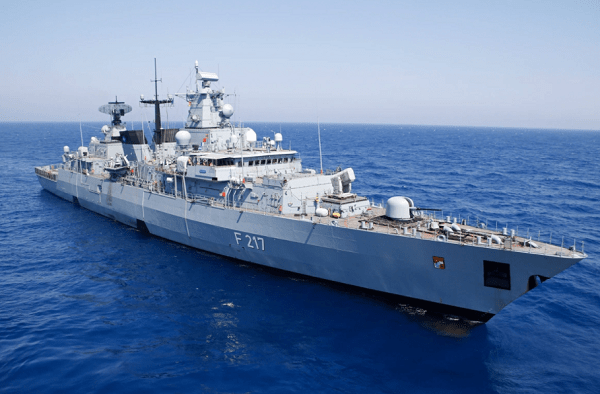
If China won’t let a German warship into one of their harbors who else is going to fix it over there? They may have to blast their way in.

China denies German warship entry into harbor, Berlin says – China has denied a German warship on a mission to the contested South China Sea entry into a harbor, a German Foreign Ministry spokesperson said on Wednesday.

The ship involved is the frigate Bayern, the spokesperson told a news briefing, but did not identify the Chinese harbor. The vessel set sail from Germany last month for a six-month mission to the South China Sea.

“China has decided that it does not want a harbor visit, and we took notice of that.”

But Who Is Going To Tow It Back?

It won’t be China. German warships usually go kaputt, you know. And the German Navy doesn’t really, well, exist.

Although if the Germans ask the Chinese really nicely…

German warship ‘Bayern’ heads to the Indo-Pacific – The German navy’s frigate “Bayern” set sail on Monday for the Indo-Pacific region, fully loaded with Berlin’s aspirations to play a small role in the geopolitical standoff between China and the West.

The first such deployment in almost 20 years is meant to uphold freedom of navigation in international waters, protect “open societies” and express support for regional partners sharing Germany’s values, Defense Minister Annegret Kramp-Karrenbauer was quoted as saying in a statement.

Electric Cars Made In Germany

Shanghai, Germany.

Tesla is expected to start European deliveries of its China-built Model Y SUVs in a few weeks.

The first vehicles will be handed over to customers in Germany in August, the German news agency dpa reported, citing an official Tesla communication.

The vehicles will be exported from Tesla’s factory in Shanghai.

Tesla originally planned to start production of the Model Y in July at its new European factory in Gruenheide near Berlin, with deliveries scheduled to begin in the third quarter, but the plant’s production start has been delayed to the end of this year or early next year.

German Of The Day: Politologe

That means political scientist.

Or in this case, Chinese spy.

A retired German political scientist has been charged with spying for China for almost a decade, using the political contacts he developed while working for a think tank, the German federal prosecutor’s office said on Tuesday.

It said the man, identified as Klaus L. according to German reporting custom, had been recruited during a lecture trip to Shanghai in 2010, almost 10 years after joining the think tank, and had regularly passed on information until November 2019, in return for money and trips to China.

Wirecard?

Sounds vaguely familiar. Very vaguely. No, come to think of it, never heard of Wirecard.

It was an innocuous question, posed shortly before midnight some nine hours into an exhausting parliamentary hearing into the Wirecard scandal. “Did you ever actually own Wirecard shares?”

MPs will want to know why Merkel lobbied for Wirecard in China when reports about suspected fraud at the company had been in the public domain for months. Scholz will be asked to explain how BaFin, the financial regulator he oversees, not only failed to uncover the Wirecard fraud but went after short-sellers and Financial Times journalists who first highlighted irregularities at the company.