Mixed Signals

And all of them bad.
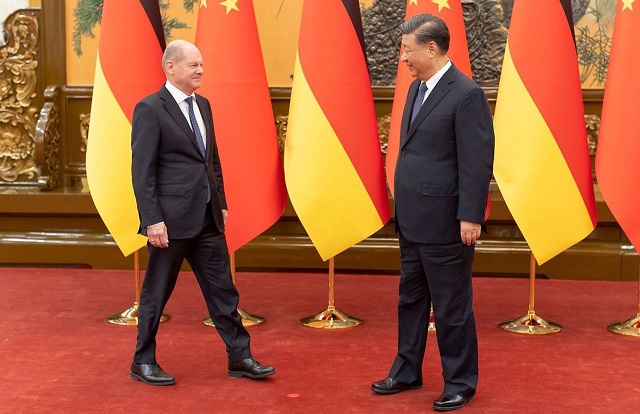
The next German Alleingang (going it alone).

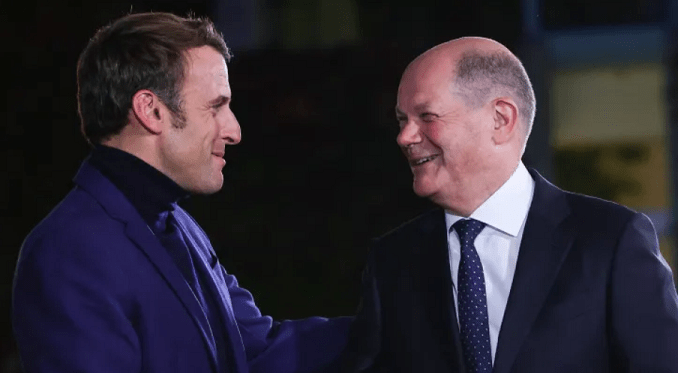
European Commissioner for Industry and the Internal Market Thierry Breton, a Frenchman, warned Scholz: “The time for naivety is over. We must be on guard.” The behaviour of the individual EU members towards China must be coordinated and not decided alone, “as China apparently prefers.” French President Emmanuel Macron suggested that he and Scholz should fly to China together at a later date to demonstrate European unity, a suggestion which Scholz ignored.

Christian Democratic Union (CDU) foreign policy expert Norbert Röttgen also attacked Scholz sharply. He accused him of damaging Germany’s foreign policy during his trip, “because it costs us our partners’ trust. It does not even strengthen our reputation with the Chinese, because they only react to strength and despise weakness.”

German Of The Day: Abhängigkeit

That means dependency.

You know, like Germany’s dependency on China? Ain’t no big deal, though. Their dependency on Russian energy worked out just fine, right?

Where would we be without China? There is hardly any other country Germany is more dependent upon than China.

German Of The Day: “Keine Deutsche Sonderwege”

That means no (more) Germany going it alone.

That’s a very popular political mantra here. You normally hear it right before Germany goes it alone again.

France and Germany’s relationship questioned as Scholz goes alone on policy – Germany has been criticized for approving a 200 billion euro ($200.2 billion) rescue package.

Fresh tensions between France and Germany are challenging their relationship at a time when their unity is critical for broader European policy in tackling the energy crisis.

The leaders of the two nations will meet in Paris on Wednesday, but this encounter almost got canceled.

Why Should We Worry About Becoming Too Dependent On China?

It worked out great with Russia, didn’t it?

Germany’s Continued Illusions About China and Russia – Berlin’s pursuit of economic and political ties with Beijing and Moscow has created dangerous dependencies. A change in strategy would benefit both Germany and the EU

Over the years, these two authoritarian regimes embedded themselves in the German economy and ingratiated themselves with the elites. Such developments prevented the EU from forging a coherent, critical strategy toward both Moscow and Beijing.

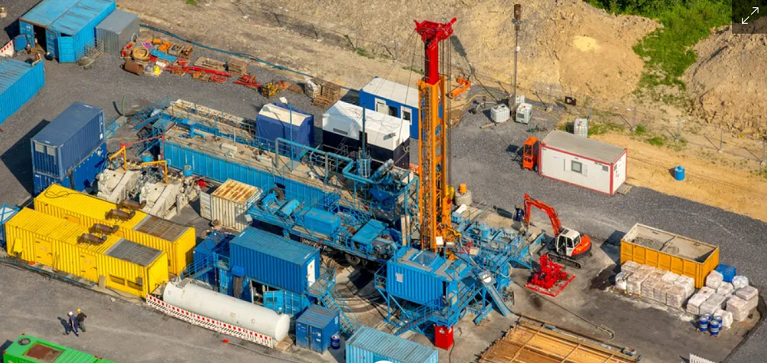
German Fracking Doesn’t Stink

Not like that yucky US-Amerikan fracking does.

German of the day: Wir sollten Fracking ernsthaft in Erwägung ziehen. That means “We should seriously consider fracking.”

Reinhard Ploss was head of chip company Infineon, now he heads the German government’s Future Council. Here he talks about how Germany should respond to the energy crisis and why robots are the future.

Now That We Face A Crippling Shortage Of Natural Gas…

Let’s turn off our remaining nuclear power plants too.

We have a reputation for being gründlich (thorough), after all.

Germany’s scramble to revamp its energy policy – Germany woke up too late to the risks of energy dependence on Russia. Moscow’s natural gas shutoff may make it one of the hardest-hit EU economies.

At a dinner at the German embassy in London on October 23, 1980, German Chancellor Helmut Schmidt shocked British Prime Minister Margaret Thatcher when he told her that West Germany relied upon the Soviet Union for 14 percent of its daily natural gas consumption. “That was very dangerous and unwise,” she said. Mr. Schmidt responded, “My dear Margaret, the Russians have always been the most reliable suppliers. They need us as much as we need them. There is no danger at all.” For nearly 40 years, the chancellor’s optimistic assessment appeared accurate, and Germany’s dependence on Russian gas only kept increasing.

Putin Forced Us To Become Energy Dependent On Him

It wasn’t our fault, Mom. The other kids were jumping off the bridge too. That’s why we’ve got this recession now, see?

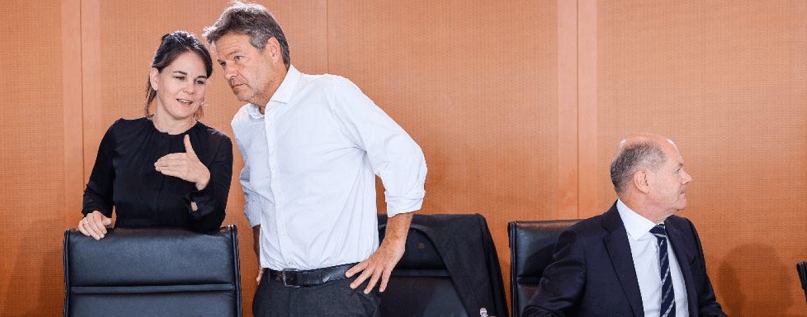
Germany blames Putin for pushing economy towards recession – Vice-chancellor Robert Habeck signals ‘substantial downturn’ in the coming quarters.

Habeck (Greens) blamed the gloomy forecast on Vladimir Putin’s attempts to use energy as a tool to destabilize Europe. Habeck said forecasts would have been worse if Berlin had not taken action to soften the blow.

“The numbers are bad.”

Gaslighting

Making someone question their own reality. The term may also be used to describe a person (a “gaslighter”) who presents a false narrative to another group or person, thereby leading them to doubt their perceptions and become misled, disoriented or distressed.

Berlin’s 19th Century Gas Lanterns Go Dark as Russia Cuts Fuel – The city is speeding the shutdown of traditional streetlights while citizens scramble to stay warm.

Like other cities worldwide, Berlin began installing gas lanterns along its avenues and alleyways in the early 19th century. But while the rest of the planet has long since moved on to sodium, halide, and LED, the German capital has remained stubbornly old-school, with some 23,000 gas lanterns still illuminating the city. For years the local government has sought to eliminate the gaslights in favor of more sustainable technologies, but fans of the warm glow and sculpted lampposts have managed to slow the effort. Today, Russia’s war in Ukraine is hastening the technology’s demise. “Gas is too expensive and wasteful,” says Benedikt Lux, a city legislator from the Green Party. “They should have been converted to LEDs long ago.”

German Of The Day: Sabotage

That means sabotage.

A lot of that going on in and around Germany these days, don’t you think?

Sabotage Hits Trains in Northern Germany, Forcing 3-Hour Halt – A train communications system in Germany was targeted by sabotage Saturday, forcing both passenger and cargo trains to halt for nearly three hours across the northwest of the country, authorities said.

“I can’t stand it, I know you planned it…”

German Energy Price Cap Already Taking Effect

Whew. Thank goodness the government intervened in time.

German of the day: Energieverbrauch. That means energy consumption. And concerned Germans just can’t seem to consume enough of it these days.

Despite the German government’s calls for savings, energy consumption by citizens in Germany has not fallen. According to the Federal Network Agency, consumption by private households and smaller commercial customers last week was almost ten percent higher than in previous years.