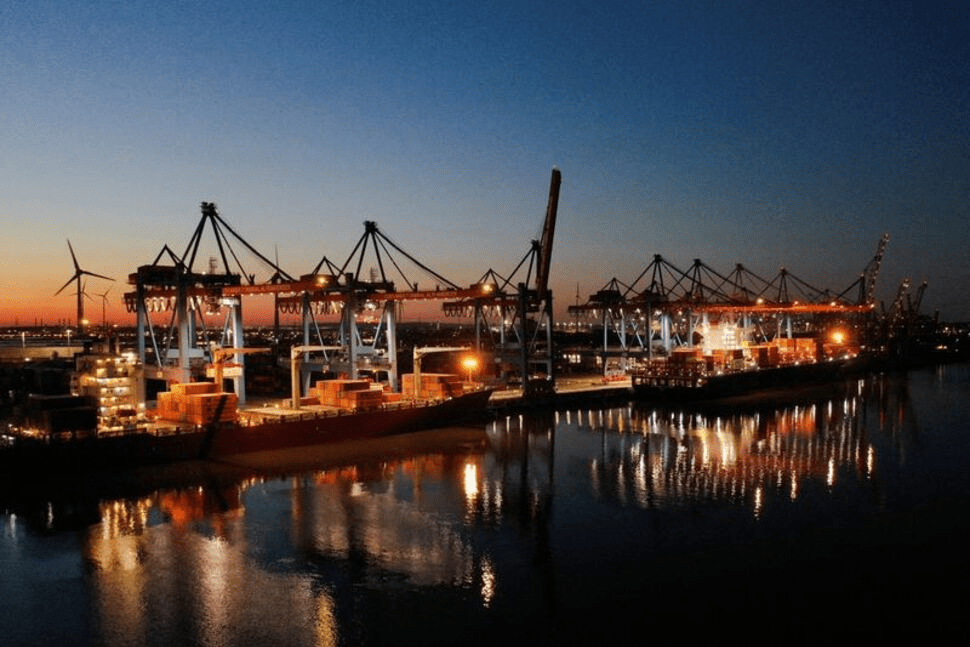
German industrial output unexpectedly falls in October – German industrial production unexpectedly fell in October, owing mainly to declines in energy production and in the automotive industry, the federal statistics office said on Friday.
Production was down by 1.0% in October from the previous month, the office said.
Germany’s loveless coalition teeters on brink of break-up – Chancellor Olaf Scholz snubs partners, fuelling speculation of early elections in spring.
Chancellor Olaf Scholz held a much-vaunted “industrial summit” on Tuesday, sitting down with business leaders and union bosses to figure out how to pull Germany out its current malaise. Pointedly left off the guest list: his own finance and economy ministers.
Robert Habeck, the economy minister, responded by unveiling plans for a multibillion-euro, debt-financed investment fund — an idea not previously discussed with cabinet colleagues — while finance minister Christian Lindner simply scheduled his own, rival business summit on the same day…
Speculation is growing in Berlin that the alliance could soon collapse, pulled apart by its own internal contradictions. Several German media outlets have even named a possible date for snap elections — March 9, more than six months ahead of schedule.
Other than that though, alles ist in Ordnung (everything’s OK).
Germany’s lost decade: How the Fortune 500 Europe giant is flirting with long-term irrelevance – There is an elephant in the room of the 2024 edition of the Fortune 500 Europe. It’s not a crisis-riddled company or scandal-hit CEO. Rather, it’s the whole German economy.
For most of the 21st century, economists and neighboring countries have looked to Germany with admiration and envy as it managed to weather economic storms with relative ease, capitalizing on trade with growing economies and expanding the power of its industrial giants in the process.
However, a shifting world order has pulled the carpet out from underneath Germany. The industrial quirks that once helped it outgrow its European peers are fast becoming a burden, and crisis after crisis has exposed a lack of planning at the top of government.
It costs over four thousand euros for a commercial aircraft to leave a German airport. In other European countries it costs as little as 500 euros. Some say this has to do with German regulation and “green kerosene” madness but I’m sure there must be a more… reasonable explanation.
Lufthansa CEO concerned more airlines will cut German routes –After airlines such as Eurowings and Ryanair have cut back their connections in Germany due to excessive fees and costs, Lufthansa CEO Carsten Spohr fears a negative impact on Germany as a place to do business.
Germany expects economy to shrink after cutting 2024 forecast – Government predicts rebound in 2025 after 0.2% decline this year.
Germany is facing its first two-year recession since the early 2000s, as the government downgraded its growth forecast for 2024, predicting a contraction of 0.2 per cent.
“The situation is not satisfactory,” Robert Habeck, economy minister, said on Wednesday.
Oh, sorry. Green energy already turned the lights off for you.
Germany in crisis: Intel and Volkswagen mull a multibillion-dollar withdrawal from the country.
For the first time in its 87-year history, Volkswagen is considering shutting down plants in Germany, where it employs around 300,000 people, as the company ramps up efforts to save €10 billion in costs…
Reuters reports that Intel will consider pausing or halting plans for its €30 billion ($33 billion) factory in the east German city of Magdeburg as the semiconductor manufacturer looks for cost savings. Germany had committed €9.9 billion ($10.9 billion) to the project when it was announced in June last year.
US tops China as Germany’s biggest trading partner – The United States overtook China as Germany’s biggest trading partner in the first half of 2024, according to preliminary German statistics office data, as Berlin’s drive to reduce dependency on Beijing takes shape amid a resilient U.S. economy.
German imports and exports to the world’s largest economy totalled around 127 billion euros ($139 billion) from January to June, while for China the figure was 122 billion euros, according to Reuters’ calculations based on the data.
Sounds just like back home in US-Amerika. What’s not to like?
German economy unexpectedly shrinks, inflation ticks higher – The German economy unexpectedly contracted in the second quarter after skirting a recession at the beginning of the year and July’s inflation rose, showing the continuing struggles of the euro zone’s biggest economy.
Germany’s gross domestic product contracted by 0.1% in the second quarter compared with the previous three-month period, preliminary data from the statistics office showed on Tuesday.
some of the lowest salaries in Europe, the highest taxes in Europe (if not in the world), the highest social “contributions” (taxes) in Europe, some of the lowest retirement pensions in Europe (unless you’re a civil servant), the highest energy prices in Europe, the highest water and sewage costs in Europe, some of the highest real estate taxes and related bureaucratic costs in Europe, some of the highest rents and real estate prices in Europe and a catastrophic lack of available apartments. I’ll stop there. For now.
So don’t miss out on this opportunity, millennials!
Desperate for millennial talent, Germany launches ‘Opportunity Card’ giving migrants a year to look for a job – Between an aging population and an economy in seemingly perennial stagnation, Germany faces some major challenges. Could a visa aimed at attracting more young, hungry workers be the answer?
Germany is set to launch an “Opportunity Card” just in time for the summer, aimed at young foreign workers hoping either to eventually secure a long-term job or simply work in the country for a while.
US overtakes China as Germany’s top trading partner – The United States overtook China as Germany’s most important trading partner in the first quarter of this year, according to Reuters’ calculations based on official data from the German statistics office.
Germany’s trade with the United States – exports and imports combined – totalled 63 billion euros ($68 billion) from January to March, while the figure for China was just under 60 billion euros, the data showed.