Germany is not turning “far-right”

Germany’s established “democratic” political parties are turning Germany “far-right” by not addressing the migrant madness.

And not addressing the Green energy madness. And not addressing the taxation madness. And not addressing the bureaucracy madness. And that’s not all of the madness that’s not being addressed, either. All this madness, you see, is what’s making everybody so mad.

In other words: Fix it already. Or go “far-right.”

Is Germany turning to the far-right? Inside the country’s battle for power – Germany heads to the polls this week facing a challenge for power from the far-right. In the run-up to the historic vote, Siobhan Robbins heads to the country’s right-wing heartland.

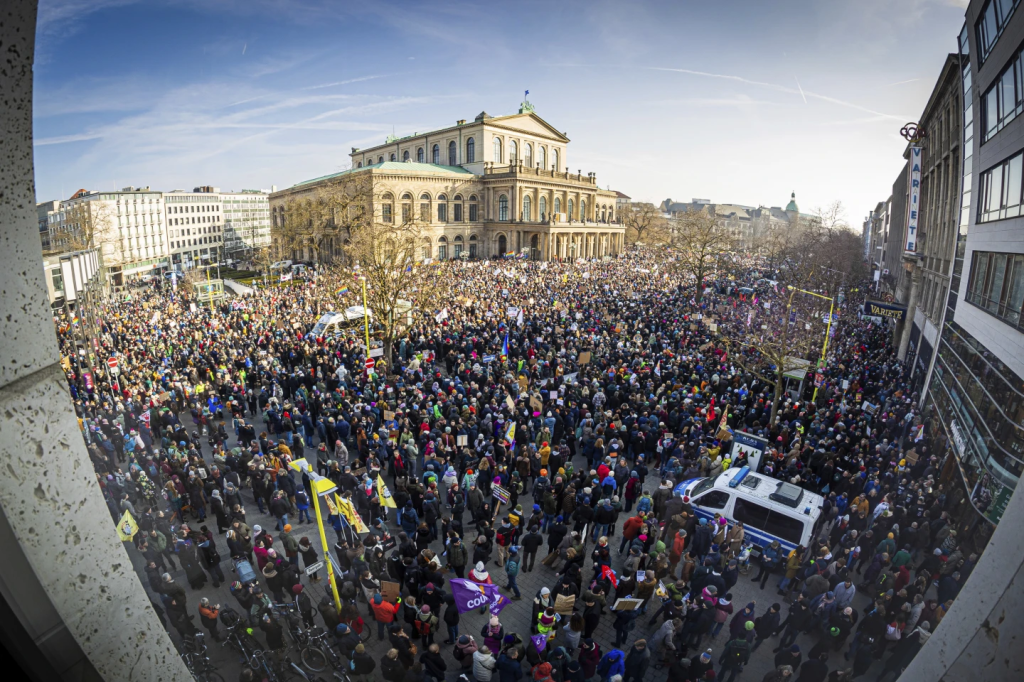
200,000 protesters!

Is that a lot?

Doesn’t that reflect German majority opinion? Well… No, it doesn’t. Not when the polls all indicate the opposite.

At least 200,000 protesters rally in Munich against far-right AfD ahead of German election – More than 200,000 protesters rallied in Munich, Germany, on Saturday against far-right extremism ahead of the country’s general election.

The far-right, anti-immigrant Alternative for Germany, or AfD, is in second place in recent polls and has prompted widespread protests across the country before voters cast their ballots on Feb. 23…

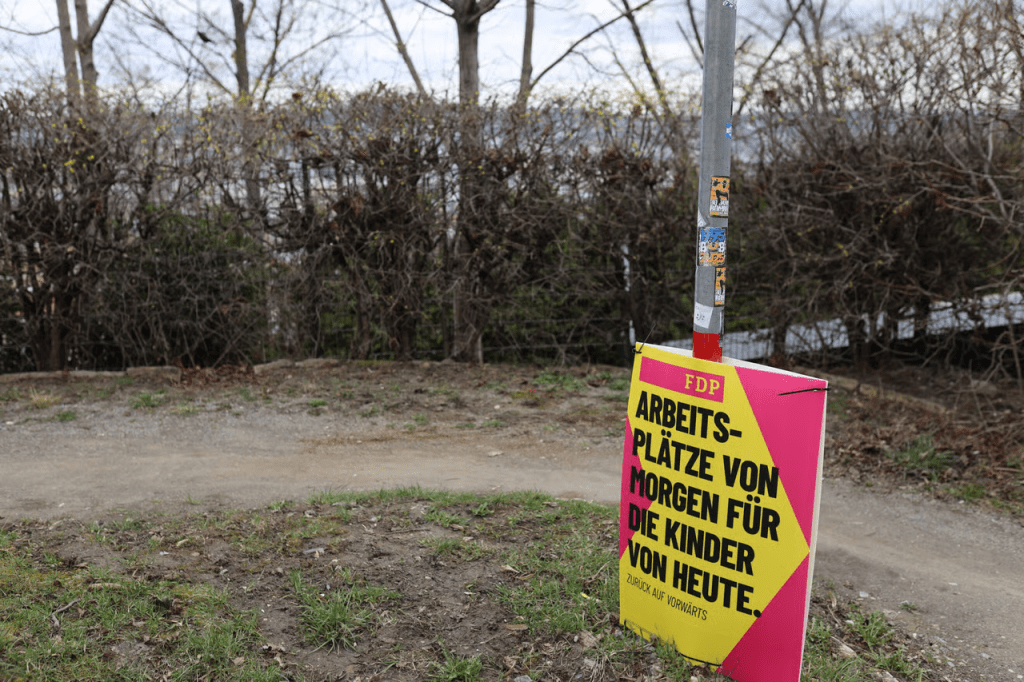
FDP deputy leader Kubicki rejects the idea that “firewall” demonstrations reflect majority opinion: Otherwise the red-green party would have made huge gains in the polls.

German of the day: Harte Linie

That means a hard line.

When it comes to Germany’s migration policy. Something that has never been taken before. Or maybe this time doch (after all)? Could it really be possible now?? Nah.

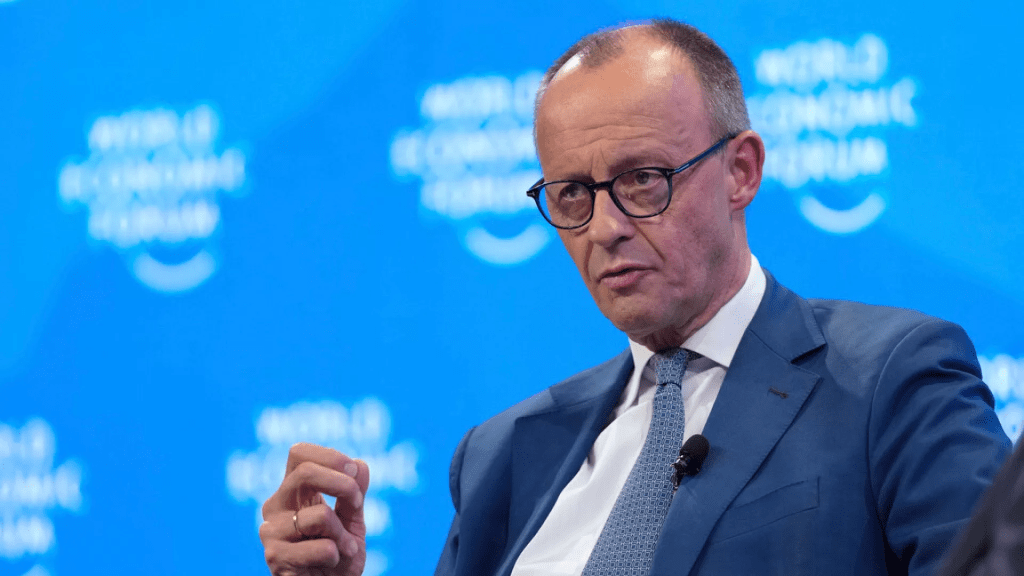
Germany’s opposition leader Merz under fire for vowing migration crackdown – Germany’s opposition leader Friedrich Merz is under fire for vowing strict border controls if he is elected chancellor, with the frontrunner citing a deadly knife attack that was allegedly carried out by a rejected asylum seeker as justification for a migration overhaul.

The leader of the Christian Democratic Union (CDU) on Thursday presented a five-point migration plan calling for, among other things, a “de facto entry ban” for all people without valid documents and permanent control of all of Germany’s borders…

Merz has steadfastly ruled out the possibility of working with the controversial AfD — which has been traditionally shunned in parliament amongst Germany’s more established parties.

Yet the AfD’s candidate for chancellor, Alice Weidel, emphatically supported Merz’s proposals, which she claimed her party had put forward first. Weidel said that the AfD could work with the CDU in order to gather enough votes for Merz’s measures to pass.

Well, if there was ever any doubt…

You must NEVER relax the debt brake, Germany.

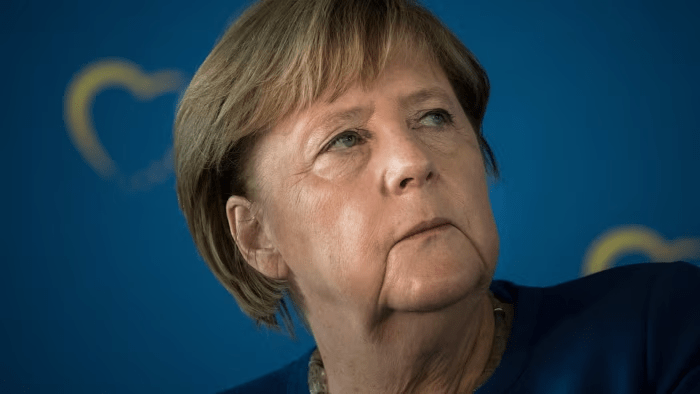
Relax Germany’s debt brake, says Angela Merkel – Former chancellor’s memoirs back reform of borrowing cap that she introduced into constitution.

Former chancellor Angela Merkel has called for Germany to relax its “debt brake”, in a sign of the growing political pressure to overhaul a borrowing cap that many economists say is too inflexible. 

Merkel, who served as chancellor between 2005 and 2021 and introduced the debt brake into Germany’s constitution, made the proposal for change in her autobiography Freedom: Memories 1954-2021.

The bad part isn’t that Germany suddenly has no functioning government…

The bad part is that nobody can tell the difference.

German Stocks Lifted by Demise of Scholz’s Fractious Coalition – German stocks leapt on Thursday after the country’s unpopular coalition government started to unravel, sparking hopes that early elections next year will bring a much needed economic boost.

Chancellor Olaf Scholz, a Social Democrat, brought an end to his three-party alliance with the Greens and fiscally conservative Free Democrats late Wednesday when he sacked FDP Finance Minister Christian Lindner. Scholz called for the next scheduled election to be brought forward to March from September, but the opposition wants it sooner.

Breaking up is hard to do

But somebody has to do it.

Germany’s loveless coalition teeters on brink of break-up – Chancellor Olaf Scholz snubs partners, fuelling speculation of early elections in spring.

Chancellor Olaf Scholz held a much-vaunted “industrial summit” on Tuesday, sitting down with business leaders and union bosses to figure out how to pull Germany out its current malaise. Pointedly left off the guest list: his own finance and economy ministers.

Robert Habeck, the economy minister, responded by unveiling plans for a multibillion-euro, debt-financed investment fund — an idea not previously discussed with cabinet colleagues — while finance minister Christian Lindner simply scheduled his own, rival business summit on the same day…

Speculation is growing in Berlin that the alliance could soon collapse, pulled apart by its own internal contradictions. Several German media outlets have even named a possible date for snap elections — March 9, more than six months ahead of schedule.

Predictably unpredictable

What do expect from a coalition government of three consisting of Green utopians, spendthrift social democratic regulation freaks and free-market capitalists (true liberals, in other words)?

This is how Germans vote. Remember: “Every country has the government it deserves.” Just look at the Banana Republic itself, if you don’t believe me.

EU partners lose trust in Berlin after policy U-turns – Lawmakers and diplomats in Brussels express frustration at Chancellor Olaf Scholz’s unpredictable coalition.

For years Germany was seen as a rock of stability and predictability in the EU. These days, its partners wonder what curveball Berlin will throw at them next. 

Last week the German government sent shockwaves through Brussels by withdrawing its support for a piece of legislation that it had long appeared to back: the EU’s new supply chain law.

Are Even The Germans Starting To Wake Up?

From this Green nonsense?

Nope. But there are signs of hope.

Sidelined Greens lose faith in the German coalition – Governing partners accuse each other of ‘crowbar’ politics and ‘exploiting social qualms’

The German Greens once thought they were in the driving seat of Olaf Scholz’s coalition. Some now feel like back-seat passengers on a political road to nowhere.

“There’s a lot of frustration,” said Rasmus Andresen, a Green member of the European parliament. “This coalition promised progress and a fresh start, but, to be honest, I don’t see much evidence of that now.”

The source of their anger is the series of painful concessions forced on them late last month by their coalition partners, Scholz’s Social Democrats and the liberal FDP, which dismayed senior Green leaders and enraged the party’s rank and file.

Scholz is for many Greens the cause of their plight. They once saw him as a natural ally — he had, after all, campaigned at the last election to become Germany’s “climate chancellor”. But these days they increasingly see him as an obstacle, ready to sell out Green interests for the sake of political peace.

“Scholz has sided with the FDP,” said Reinhard Bütikofer, another Green MEP. “The FDP and SPD obviously decided they could score political points by exploiting social qualms about climate policy. But that’s populism.”

The FDP Decides

It seems pretty clear to me who the next German Finance Minister will be.

Their boss, Christian Linder, will get the job. If he doesn’t, it won’t come to this odd coalition of SPD, Greens and FDP.

Lindner and the FDP stand for low taxes, debt limitation and a hard line towards Germany’s European partners. The climate crisis is to be addressed by private investment and carbon pricing. The Greens, by contrast, have put climate first – and for that reason advocate large-scale investment, lifting Germany’s “debt brake”, and a pro-European policy that continues the steps taken in 2020 towards common, debt-financed investment policy. It is precisely in these policy areas – where the differences between the Greens (and the SPD) and the FDP are greatest – that the finance ministry is critical.

German Of The Day: Zitrus-Koalition

That means “citrus coalition.” The Greens have green as their party color (what a surprise) and the FDP has yellow.

Germany’s Kingmakers – Difficult Talks Ahead for Greens and Free Democrats – The Green Party and the business-friendly Free Democrats plan to hold exploratory talks with each other before meeting with the main chancellor candidates in the coming days. They appear to be worlds apart but are already finding some common ground…

FDP leader Christian Lindner also continued Monday with the message he initiated on election night: measured praise for the potential coalition partner. The Union (CDU/CSU) and the Social Democrats (SPD) are not parties of change, he said. In talks between his party and the Greens, it would therefore be necessary to examine “whether, despite all the differences, this could become the progressive center of a new coalition government,” even if that seems like a bit of a stretch.