The European Debt Race

To the bottom.

You’ll never catch us! As in U.S.

Germany’s spending push drives up borrowing costs across Eurozone – Investors warn that higher bond yields could make it harder for members of the bloc to increase defence spending.

A surge in Eurozone government borrowing costs as a result of Germany’s planned defence spending spree will intensify debt pressures on other countries in the bloc and could make it harder for them to mount borrowing campaigns of their own, investors have warned.

No place to run

Except into debt?

“Blessed are the young for they shall inherit the national debt.”

German parliament approves Merz’s historic spending surge – Germany’s parliament approved plans for a massive spending surge on Tuesday, throwing off decades of fiscal conservatism in hopes of reviving economic growth and scaling up military spending for a new era of European collective defence.

The approval in the Bundestag hands conservative leader Friedrich Merz a huge boost, giving the chancellor-in-waiting a windfall of hundreds of billions of euros to ramp up investment after two years of contraction in Europe’s largest economy…

“The politician’s greatest asset is credibility. With these embarrassing actions, Mr Merz, you have already completely squandered yours. The voters feel betrayed by you, and rightly so.”

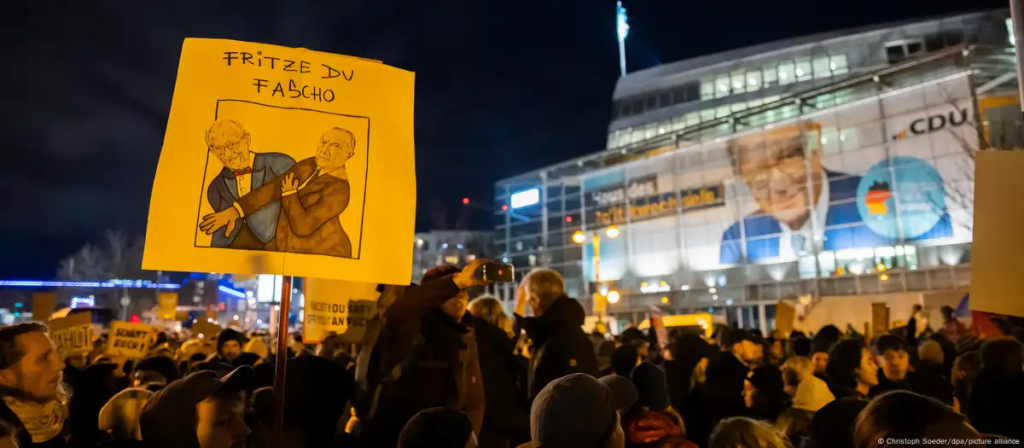
One-sided demonstrations directed against one party?

And funded by a government under the control of the opposing party?

This somehow sounds vaguely familiar.

Germany’s conservatives scrutinize state support for NGOs – Germany’s conservative CDU/CSU bloc is questioning the political neutrality of some NGOs. That could weigh on relations with its potential Social Democrat coalition partners…

In its inquiry, the CDU/CSU parliamentary group refers to an article in the conservative-leaning German daily Welt in which several experts on constitutional law expressed very critical views about the demonstrations.

“Associations that helped organize ‘firewall’ demonstrations did not act on a charitable basis,” argued Volker Boehme-Nessler from Oldenburg University. “The demonstrations were one-sidedly political. They were directed concretely against one party, the CDU.”

Don’t choose between security and prosperity…

Because you won’t get either.

Scholz, fighting for survival, says Germans should not choose between security and prosperity – Chancellor Olaf Scholz on Wednesday appealed to parties to pass measures such as raising child benefits and lifting tax thresholds before a February snap election, stressing that Germans did not need to choose between security and prosperity.

Scholz was addressing parliament in political leaders’ first public head-to-head since the collapse of the chancellor’s ruling coalition last week forced the country into a snap election that will likely take place in February.

We don’t have enough paper…

For the ballots, you know?

So we can’t have that vote of confidence and early election you voters want. Even though our government doesn’t have a majority anymore and is more non-functioning than ever. Sorry, fellow citizens. It’s out of our hands.

Geez. These German SPD guys would make good Democrats.

Germany: Paper questions punctuate election date debate – As lawmakers jostle over the timing of a vote of confidence after Germany’s coalition collapse, preparations are already being made for a snap election. Officials have warned of logistical issues with ballot printing.

A vote of confidence now?

Why? Everybody loves me.

I’m at least as popular here as Nicolás Maduro is in Venezuela.

German opposition parties and business groups on Thursday urged Chancellor Olaf Scholz to trigger a new election quickly to minimize political uncertainty after his rocky three-way coalition collapsed

The chancellor said he would hold a confidence vote in January, which he would probably lose, triggering a new election by the end of March — six months ahead of schedule.

The bad part isn’t that Germany suddenly has no functioning government…

The bad part is that nobody can tell the difference.

German Stocks Lifted by Demise of Scholz’s Fractious Coalition – German stocks leapt on Thursday after the country’s unpopular coalition government started to unravel, sparking hopes that early elections next year will bring a much needed economic boost.

Chancellor Olaf Scholz, a Social Democrat, brought an end to his three-party alliance with the Greens and fiscally conservative Free Democrats late Wednesday when he sacked FDP Finance Minister Christian Lindner. Scholz called for the next scheduled election to be brought forward to March from September, but the opposition wants it sooner.

Breaking up is hard to do

But somebody has to do it.

Germany’s loveless coalition teeters on brink of break-up – Chancellor Olaf Scholz snubs partners, fuelling speculation of early elections in spring.

Chancellor Olaf Scholz held a much-vaunted “industrial summit” on Tuesday, sitting down with business leaders and union bosses to figure out how to pull Germany out its current malaise. Pointedly left off the guest list: his own finance and economy ministers.

Robert Habeck, the economy minister, responded by unveiling plans for a multibillion-euro, debt-financed investment fund — an idea not previously discussed with cabinet colleagues — while finance minister Christian Lindner simply scheduled his own, rival business summit on the same day…

Speculation is growing in Berlin that the alliance could soon collapse, pulled apart by its own internal contradictions. Several German media outlets have even named a possible date for snap elections — March 9, more than six months ahead of schedule.

Last one out turn off the lights

Oh, sorry. Green energy already turned the lights off for you.

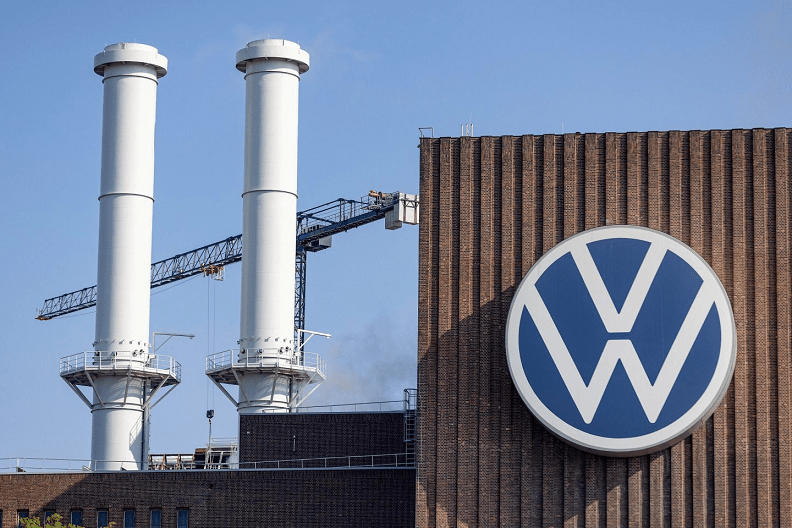
Germany in crisis: Intel and Volkswagen mull a multibillion-dollar withdrawal from the country.

For the first time in its 87-year history, Volkswagen is considering shutting down plants in Germany, where it employs around 300,000 people, as the company ramps up efforts to save €10 billion in costs…

Reuters reports that Intel will consider pausing or halting plans for its €30 billion ($33 billion) factory in the east German city of Magdeburg as the semiconductor manufacturer looks for cost savings. Germany had committed €9.9 billion ($10.9 billion) to the project when it was announced in June last year.

Yes, but we’re rebuilding it thoroughly

We’re from the government and we’re here to help.

The rebuilding of Berlin’s Pergamon Museum is 40 years behind schedule – It’s yet another German construction debacle.

Almost 25 years ago, in October 1999, Gerhard Schröder, Germany’s then chancellor, attended a ceremony to mark the renovation of Berlin’s Old National Gallery, one of five world-class museums that constitute the Museumsinsel (Museum Island) in Berlin. Mr Schröder talked about the courage and vision needed to rebuild the rest of the quintet within ten years. “We will manage this,” he promised…