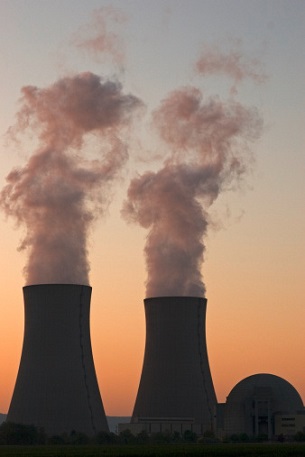
Double Your Pleasure, Double Your Fun!

On the double! And no, you’re not seeing double. Electricity prices have nearly doubled for German consumers since 2000.

Double

So I guess this famous German Energiewende (energy turnaround) is what one could call a two-edged sword. You know, something having a double meaning?

Germans are leading a double life if you ask me. If they still think that this is going to work, I mean. So stop the double-talk already, people. Get this Energiewende nonsense over with on the double before you end up doubled up with laughter – and those men in the white coats come to take you away.

Etwas läuft schief am deutschen Strommarkt: Während Stadtwerke sich seit Jahren über sinkende Strompreise freuen, hat sich der Preis für Verbraucher einer Studie zufolge seit 2000 fast verdoppelt.

Energiewende Update: German Solar Energy Production Still Not Working At Night

Or when it’s cloudy and gray and yucky outside (an estimated 359 days a year here). Wind energy does, however. But only when there is enough so-called Wind (wind) to go around.

Wind

German environmentally renewable scientists have now been informed, however, and once they figure out a way to keep it sunny and windy all day long this German energy turnaround thing is going to turn everything around for good.

Because Energiewende has been accompanied by a rapid move away from nuclear power following the Fukushima disaster Germany has had to make up its energy deficit by increasing its reliance on coal for the first time in years. German CO2 emissions have actually been rising over past three years.

Mystery Crater Discovered In Germany

As if the recent discovery of the mysterious mystery crater in the Yamal Peninsula of Siberia had not been mysterious enough…

Crater

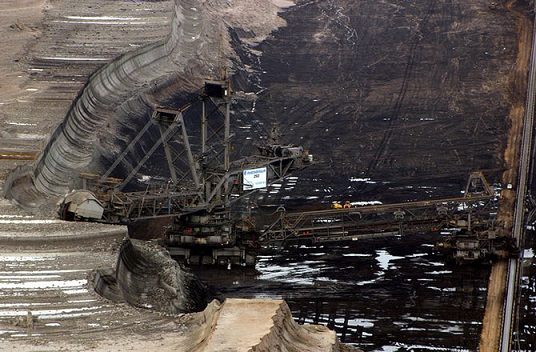
German scientists have now discovered a giant, 50-square-mile mystery crater near Hambach, Germany, as well.

Hole

The German mystery crater appears to have been at one time filled with unimaginable amounts of something called “brown coal,” one of the dirtiest fuels on earth, until this dirty substance was removed by a mysterious machine some 30 stories tall to then be burned at mysterious German coal-burning power stations, which is the real mystery, of course, as Germany continues to insist that it is the world’s leader when it comes to the development of renewable energy sources – and they’re still digging.

Since the late 1970s, giant earth-moving machines have been digging what German environmentalists decry as “Europe’s biggest hole” at Hambach in the Lower Rhine basin.

German Energy Turnaround Finally Turned Around For Good?

As in your classic “tango uniform” turnaround? She is way too expensive, señor.

Turnaround

The German Energiewende (energy transition) – once an international model – threatens to disintegrate…

The Handelsblatt Research Institute monitored 24 industrialised and newly industrialising countries over a span of 5 years, looking at 51 different indicators. In the end, the researchers condensed the data into two overall rankings: mapping the status quo, and tracing the trend of the past 5 years.

Good news first: Germany’s current ranking is a respectable 8. Only smaller states with “good topographies” had better results, explained Rürup during the presentation of the study. Sweden holds first place, followed by Norway, Austria, Switzerland and Denmark. But even France – due to its high share of nuclear power – and Spain outranked Germany.

But for Germany, the results of the second category are even worse. Here, in the “dynamic ranking”, which reflects the developing trend during the examination period, Germany came in last place.

The reason for this, according to the study, are rising CO2 emissions and high per capita energy consumption. Energy prices have also risen significantly in recent years; nowhere, do households spend more on their energy bills than in Germany.

Nach der Bund-Länder-Einigung auf die Ausgestaltung der Energiewende droht Gabriel neues Ungemach. Grund sind die hohen Kosten für das Projekt.

PS: If only they could learn how to harness the power of Berlin’s rising ground water.

Energy Turnaround? Nein, Danke!

Not if the SüdLink power lines have to go through my backyard!

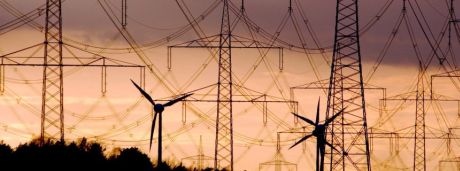
Grid

Network providers planning one of the country’s most important power-transmission pathways presented a proposal on Wednesday for an 800-kilometer, or 500-mile, corridor of high-voltage lines. The power lines would carry electricity from wind turbines in the blustery north states to power-hungry industries in the south...

But many Germans balk at the idea of high-voltage power lines running through their backyards and the fields around their communities. Last week, angry villagers in Bavaria protested plans by the network operator Amprion to construct a similar high-voltage line through their state. An attempt by the power company TenneT last year to have citizens invest in another planned expansion to the grid in the state of Schleswig-Holstein failed to win substantial support.

And mark my words here folks, the real ugliness hasn’t even begun yet. They’re never going to get this thing built.

“The corridor is not definitive, and we need feedback from citizens and communities to be able to plan this important link.”

Where’s The Money?

All of a sudden. For all of that five-year-plan-renewable-energy-turnaround-ideology-project-like-stuff in Germany, I mean. She is gone, señor.

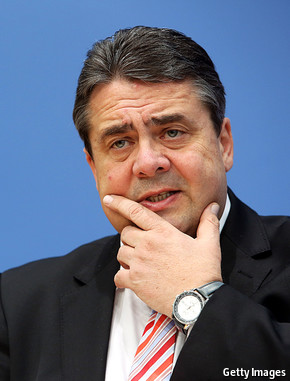
Gabriel

Or at least more and more German citizens are finally waking up and simply just aren’t prepared to keep on paying ever more for less and less of whatever it was that this so-called energy turnaround of theirs was supposed to be delivering.

That is why Superminister Gabriel (didn’t he used to sing with Supertramp?) is now urging (ordering) German parliamentary lawmakers to start cutting state subsidies for renewable energies – for German industry – because they are rich and capitalistic or something and are therefore evil (he’s an SPD Superminister) and haven’t really been milked properly for this one yet. And the po folks just aren’t willing to keep paying more and more, like I said [By the way, the S in SPD stands for “social” and everything with “social” in it means “free lunch.” Read Margaret Thatcher’s quote down there on the right if you want to learn more.].

Of course why the energy turnaround has to keep on turning around the way it does like this in the first place is the really interesting question here, I find, but certainly not one that anyone here in Germany appears to be willing to ask. At least not quite yet anyway.

Yup, renewable turnaround money has sure gotten tight around here these days. Not even a Swabian housewife can help out anymore.

“We need to break the dynamics of ever-rising electricity bills, while ensuring a stable supply of energy for all.”

Sunny, Windy, Costly And Dirty

What’s not to like here?

Super Minister

“Super minister?” I’d say this is more like a job for Superpenner.

The difference between the market price for electricity and the higher fixed price for renewables is passed on to consumers, whose bills have been rising for years. An average household now pays an extra €260 ($355) a year to subsidise renewables: the total cost of renewable subsidies in 2013 was €16 billion. Costs are also going up for companies, making them less competitive than rivals from America, where energy prices are falling thanks to the fracking boom…

Cost is not the only problem with the Energiewende. It has in effect turned the entire German energy industry into a quasi-planned economy with perverse outcomes. At certain times on some days, sun and wind power may provide almost all German electricity. But the sun does not always shine, especially in winter, and the wind is unpredictable. And “batteries”—storage technologies that, for example, convert power to gas and back again to electricity—on a scale sufficient to supply a city are years away. Nuclear-power plants are being phased out (this week’s court decision that the closure of a plant in Hesse was illegal will raise costs even more, as it may entitle the operator to more compensation). So conventional power plants have to stay online in order to assure continuous supply. 

German Word Of The Day: Zwangsumlage

Zwangs- = compulsory. Umlage = levy, share in the costs. Put those two together and what do you get? Forced to share. But we’re talking about money here folks so let’s  just call it another tax and get it over with already.

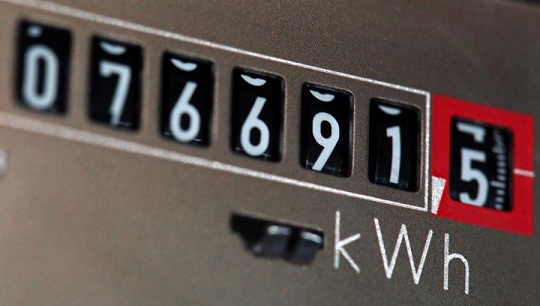
Strom

This latest planned tax consists of forcing German households to purchase so-called “smart meters” or modern electricity meters that are supposed to regulate energy consumption by drawing electricity from that so wonderfully green German energy grid whenever this energy is cheaper. You know, like when hell freezes over?

This will only set back German consumers another 70 or 80 euros after already having been hit with a seven percent energy bill increase planned for next year, too (the seven can and will change, of course, and we all now in which direction it will be going).

Turn it around as much as you want. Anyway you turn this German energy turnaround around, you’ll always get the same result. Once you’ve turned it around, I mean. She is like way too expensive, señor.

But what can you expect from a government that is about to go retro and way back in the Wayback Machine to the good old days of SPD Never-Never Land again?

“Verbraucher sollten mit attraktiven Angeboten überzeugt, statt mit immer mehr ordnungsrechtlichen Einbaupflichten gezwungen werden.”

PS: The next German word of the day will be Abzocke. Here’s a tip: It means rip-off.

Debacle, Disaster, Fiasco…

Just a reminder here again: “There is no free lunch.” Honest.

Lunch

Government intervention at its best (again). Germany’s deliberate attempt to make its energy greener using price guarantees and mandatory quotas for green energy IS NOT WORKING.

Try and remember: The whole idea was to make renewable energy more competitive and, therefore, in the end, cheaper. Well this attempt is so not working right now that German consumers pay higher prices now than ever before and German industry is soon to follow. And this, even though there is actually an oversupply of power. In essence, an energy bubble has been created because Germany’s renewable energy producers get a guaranteed minimum price for what they produce (this now includes farmers and communities and anybody else who can still get into the ponzi scheme).

Imagine you have various consumers going to a grocery store. Some of them want to buy a bottle of beer for 1 USD. Others would like to buy a bottle of champagne for 30 USD. In normal life people would just pay 1 USD for the beer and bubble-lovers would pay 30 USD for champagne. The German energy market is different. People who want the champagne pay 2 USD for it and those who want beer have to pay 2 USD. It’s a good deal for the champagne drinkers, getting subsidized by the beer buyers.

…Perhaps the least fair part of the whole scheme is how these prices disproportionately impact low-income households, who are forced to subsidize green energy for richer families to support politicians’ green energy visions.

Whoopee! The Electricity Prices Are Going Up Again!

Seven percent in the coming year! For starters.

Strom

Hot dog. And all because of the The German Renewable Energy Act.

And this act kind of goes like this: Every kilowatt-hour that is generated from renewable energy facilities receives a fixed feed-in tariff. Renewable energy plant operators receive a 20 year, technology specific, guaranteed payment for their produced electricity. Anyone who produces renewable energy can now sell his ‘product’ for a 20-year fixed price.

And who pays this tariff? You guessed it.

Die EEG-Umlage steigt im kommenden Jahr voraussichtlich um einen Cent je Kilowattstunde.