Guns R Us

How magnanimous or something. Now that NATO is running out of munitions to use in the Libya conflict (go Europe!), Germany has decided not to obstain from sending weapons to its allies.

The positive response to the politically sensitive demand is another concession to its allies by the German government, which has been heavily criticized in recent weeks because of its Security Council abstention in the March vote, which resulted in a resolution authorizing the use of force to protect Libya’s civilian population. Russia and China also abstained.

“NATO allies must pool funds or face decline: Gates”

Everything Is So Wonderfulawful Here

Things have never been better here in Germany, we are told. And yet the German nation still can’t seem to get up off the collective couch (the psychiatrist’s kind).

This guy has an interesting take on Germany’s latest “season of angst” or why a prosperous nation has this obsessive need to turn on itself (and those around it).

His bewilderment is uncalled for however, I find. I can only wonder why he wonders. The Germans were, are and always will be collectively schizophrenic, in their own peculiar (cute?) little way. They are permanently krankgeschrieben (off sick) and that couch is, well, where they live.

Yet it is very hard to find anyone here who is happy about this state of affairs. Unlike the great Rhineland industrial booms of the 1950s and 1970s, this one is provoking Germans to turn against their government, against Europe, against technology and growth, against outsiders. It is an inward-looking, self-questioning moment in a country that the rest of Europe very badly needs to be involved in affairs outside its borders.

Green Electricity Threatening Energy Turnaround

Yeah, I know. You thought that Germany’s Energiewende (energy turnaround) was synonymous with green or eco-power (I did too). But if you listen to what some scientist types are saying (Rheinisch-Westfälischen Institut für Wirtschaftsforschung or RWI, for instance)–and you won’t, and nobody else will either–the present state of renewable energy in Germany is so clearly deficient and so way too costly (especially when it comes to generating solar energy) that they recommend rethinking the whole big turnaraound thang (not that all that much thinking had gone into it in the first place or anything, that rethinking part was just a figure of speach).

Some of these folks are even starting to call this mess Der große Solarschwindel (The Great Solar Energy Scam). But, like I said, nobody is particularly interested in hearing about things like this. Or do you want the Green Shirts to come knocking on your door one night? And after all, money is no object here. It never is when it isn’t your own.

Es bestehen derzeit in Deutschland so große Defizite in Bezug auf Leitungsbau, Speicherkapazitäten und bei der Vernetzung mit den europäischen Nachbarn, dass es vorerst nicht ratsam erscheint, mit dem Ausbau regenerativer Stromerzeugungskapazitäten fortzufahren.

Stress and the City

A shocking new study has come to the completely unexpected conclusion that German city dwellers are more “stressed-out” than their country bumpkin counterparts.

Researchers at the Zentralinstitut für seelische Gesundheit (too stressful to translate) found that a certain ganglion of the limbic system adjoining the temporal lobe of the German city brain involved in emotions of fear and aggression (the amygdala) was more fearful and aggressive than your every day German hick’s amygdala is, itself already much more fearful and aggressive than other human amygalas anywhere else in the world you can possibly think of.

“Who would have thought that?” one researcher asked another researcher, brutally shoving him aside in impatient disdain to confront the next one. “I grew up in Berlin and we’re not at all aggressive. That’s a myth. Or it’s just a show. Or do you think you’re big enough to tell me you think that we are?”

Städter erkranken häufiger an Depressionen, Angststörungen, Schizophrenie.

German Recycling Destroying Umwelt

Bad consumer! Environmental groups are alarmed and warning that the entire German reusable bottle system as we know it may soon be on the verge of collapse. And it’s all because of you, ihr Flaschen (“you bottles,” a German idiom for losers). You’re recyling the wrong bottles (the plastic ones, these are “bad”).

Horror of horrors or something. Just when Big Green Brother finally got you to robotically return your bottles to the reusable bottle robots located at your local supermarket, like you should, for your own good, you start buying more plastic returnables (thinking that these are as “good” as good old glass ones), causing the share of environmentally friendly bottles in circulation to sink from 70 to 50 percent. If this continues, the whole system will become “unprofitable,” whatever that means.

It seems that Fearless Leader’s five-year plan actually called for a percentage of 80 percent of environmentally friendly bottles to be in circulation so you have all failed miserably and will now have to be reprogrammed at your own cost again so that you know better and start buying the good glass recyclable bottles instead. And returning them to the robots (the machine ones). After you have emptied them, I mean (the bottles). Ah, the hell with it. They’ll explain it all to you better later.

Eine bessere Kennzeichnung und ökologisch differenzierte Steuer werden verlangt.

Debt Expert Deutschland

SPIEGEL ONLINE: Mr. Ritschl, Germany is coming across like a know-it-all in the debate over aid for Greece. Berlin is intransigent and is demanding obedience from Athens. Is this attitude justified?

Ritschl: No, there is no basis for it.
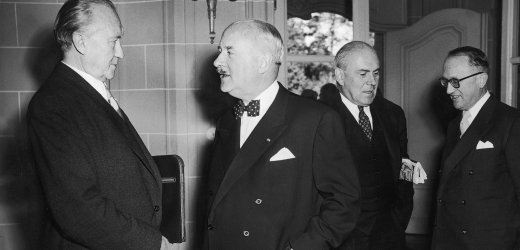
SPIEGEL ONLINE: Most Germans would likely disagree.

Ritschl: That may be, but during the 20th century, Germany was responsible for what were the biggest national bankruptcies in recent history. It is only thanks to the United States, which sacrificed vast amounts of money after both World War I and World War II, that Germany is financially stable today and holds the status of Europe’s headmaster. That fact, unfortunately, often seems to be forgotten.

SPIEGEL ONLINE: What happened back then exactly?

Ritschl: From 1924 to 1929, the Weimar Republic lived on credit and even borrowed the money it needed for its World War I reparations payments from America. This credit pyramid collapsed during the economic crisis of 1931. The money was gone, the damage to the United States enormous, the effect on the global economy devastating.

SPIEGEL ONLINE: The situation after World War II was similar.

Ritschl: But right afterwards, America immediately took steps to ensure there wouldn’t be a repeat of high reparations demands made on Germany. With only a few exceptions, all such demands were put on the backburner until Germany’s future reunification. For Germany, that was a life-saving gesture, and it was the actual financial basis of the Wirtschaftswunder, or economic miracle (that began in the 1950s). But it also meant that the victims of the German occupation in Europe also had to forgo reparations, including the Greeks.

“He warns the country should take a more chaste approach in the euro crisis or it could face renewed demands for World War II reparations.”


Soccer Really Is A Woman’s Sport

Former Germany captain Michael Ballack stepped up his sharp criticism of Germany coach Joachim Loew, saying he had already decided to quit the national team when Loew announced that the player had no future with the side.

The 34-year-old former Chelsea midfielder said on Sunday that he wanted to announce the decision himself.

Ballack and the German football federation (DFB) have been trading barbs ever since Loew made the announcement on Thursday.

Meanwhile

The octopussies. The men, I mean.

“We agreed that I would make the announcement myself during the summer break.”

Dangerous Facebook Parties Threatening To Undermine Peaceful German State Of Peace And Quietness

Unerlaubte (unauthorized) Facebook parties are popping up everywhere these days, shocking the general German public and keeping the nation at an unusually high level of nearly unbearable anxiety again already.

Many are beginning to ask themselves how something like is this is even conceivable, much less possible in a constitutional democracy.

In a recent incident, for instance, all a German Facebook user had to do was announce to everyone on Facebook that a Facebook party in Wuppertal had gone Facebook public and some 800 rowdy Facebook party makers (with Facebook police escort) soon descended upon the unsuspecting village inhabitants, reeking of beer and wreaking Facebook havoc in the process (the rowdies, not the villagers).

To save Facebook face, authorities are now considering the possiblity of forbidding Facebook Parties everywhere forever (don’t worry, they’ll announce it on Facebook first). Popular support is guaranteed.

Genau das macht Facebook-Partys so gefährlich: Es ist nicht nur völlig unklar, wie viele Teilnehmer kommen, es ist vor allem schwer zu kalkulieren, wer dem Aufruf folgt.

Skippy is approaching the Hauptstadt!

Germans are always finding wild animals that don’t belong in their natural German habitat. It’s just what they do.

The other day it was racoon attacks in the Government Quarter. Last October it was a mysterious black panther monster in Trier. Then there are the obligitory annual alligator/crocodile sightings. Now it’s a freakin’ kangaroo in Brandenburg.

I’m still waiting for the pink elephants, though. What is it with this Extrawurst (being something special) mentality here? Why can’t they just tell fish stories and get abducted by aliens like everybody else does?

Die Spur verlor sich dann. Es gebe bisher keine Hinweise, woher das Tier stammt oder wem es gehört.

“Nobody has the intention of building a wall”

It was 50 years ago today,
Walter Ulbricht lied his ass away (as in off).

He’s been going in and out of style (mostly out),
but he’s still guaranteed to raise a smile.

Some world-class lies are better (and more complex) than others, especially when they are answers to questions that nobody ever asked. Was his just a Freudian slip? Did he purposely bring up not building a wall to bring the issue (everyone leaving East Germany) to a head and finally get Krushchev’s permission to build the thing? Or was he just a fun-loving prankster. At the moment I’m inclined to think it’s that last one. If you listen closely to his little laugh, it sounds way too much like Barney Rubble’s (the German synchronization).

Das hämische Lachen, das die Dreistigkeit der Lüge auch 50 Jahre danach noch zu steigern vermag, trägt comichafte Züge. Kein Wunder, erinnert es doch stark an Barney Geröllheimer, den besten Freund von Fred Feuerstein aus der US-Zeichentrickserie „The Flintstones“. Zumindest in der deutschen Übersetzung gleicht Barneys – von Gerd Duwner synchronisierte – berühmte „Hehehehe“-Lache der von Walter Ulbricht, als der DDR-Staatsratsvorsitzende am 15. Juni 1961 in einer legendären Pressekonferenz Geschichte schreibt – in dem er auf eine Frage antwortet, die gar nicht gestellt worden ist.