Bundeswehr On The Front Line Again

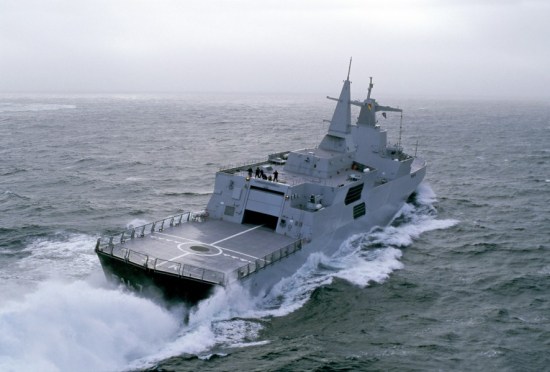
When it comes to fighting for German weapon system exports, I mean. Talk about your military industrial complex. The Germans sure have one – and are clearly in denial about it – which is the real news item here if you ask me. Take the latest sale of frigates to Algeria, for instance (I mean please).

These pacifistic (German made) and very expensive peaceships not only make big profits for traditional Waffenschmiede (weapons makers) like Thyssen-Krupp Marine-Systeme, they finally give Germany’s alibi army something vernünftig (reasonable) to do: Train the folks who might actually be using these weapons one day – and in a thoroughly German thorough way, too, I am sure.

Who says the Bundeswehr isn’t an effective force? No, not a fighting one, as a sales force.

“Die Ausbildung wird in Deutschland und auf Hoher See stattfinden.”

Germany Not Considering Military Options Again

Just in case you were wondering, I mean (this time they’re not considering them for Syria).

Not like anybody would ever expect them to consider otherwise. I mean, is the Pope a Catholic? Do chickens use fowl language? Do vacuum cleaners suck?

Germans never consider military options, even when they maybe ought to. Unless it’s an Angriffskrieg (war of aggression), I mean. And that’s been a while. It’s just what they (don’t) do. They don’t use weapons, people. They just, you know, sell them.

“We want to avoid a wildfire in the region.”

Ship? What Ship?

This must have been a big misunderstanding or something. A German-owned freighter loaded with weapons from Iran bound for the Syrian regime of Bashar Assad and stopped on Friday near the Syrian port of Tartus has now disappeared off the watery face of the earth.

Und das ist auch gut so (and a good thing, too), as we all know that Germans would never disregard a weapons embargo, neither for fun nor profit, being the pedantic pacifists they are, so this must have been one of those Fata Morgana things that happen out there on the high seas from time to time.

Weapons from Iran? Maybe it was that infamous ghost ship the S.S. Günter Grass.

Der Frachter, der schweres Militärgerät geladen hat, schaltete seinen Transponder aus und ist nicht mehr zu orten.

“We don’t like your profligate spending,”

Germans are always lecturing the Greeks. “Except when it comes to buying our ridiculously expensive weapons systems,” they maybe ought to add.

Over much of the past decade, Greece – which has a population of 11 million – has been one of the top five arms importers in the world.

Most of the vastly expensive weapons, including submarines, tanks and combat aircraft, were made in Germany, France and the United States.

The arms purchases were beyond Greece’s capacity to absorb, even before the financial crisis struck in 2009. Several hundred Leopard battle tanks were bought from Germany, but there was no money to pay for ammunition for their guns. Even in 2010, when the extent of the financial disaster was apparent, Greece bought 223 howitzers and a submarine from Germany at a cost of €403 million.

Pacifism Pays

It appears that Germany took a more active part in the Libyan uprising than believed.

Tons and tons of high-powered German assault rifles have been rescued by Libyan rebels from Muammar Gaddafi’s arsenals, weapons that “weren’t supposed to be there” (funny how German weapons always turn up where they are not supposed to be).

“The German government does not know how weapons of this type could have possibly ended up in Libya.” So they are not really there, in other words. The German government has the German weapons industry (shhh, not so loud) completely under control, you see. Right? Ja oder nein? Good. No abstentions here.

Geez. Haven’t them there crazy Libyans ever heard of gun control or nothin’?

Germany’s Latest Contribution To The Arab Spring

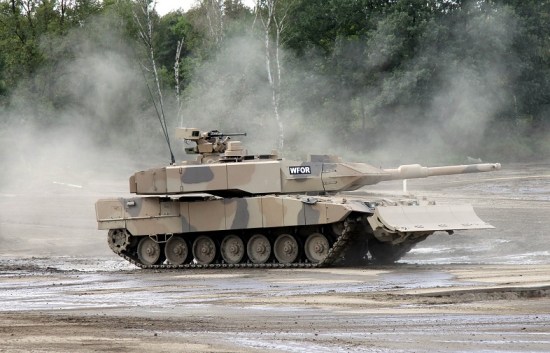
These must be special Panzer for Peace or something, these 200 ultra-modern Leopard battle tanks Germany is now prepared to supply to Saudi Arabia.

This is a dramatic reversal of Germany’s decade-long policy of not furnishing that zany authoritarian kingdom with heavy weapons and is clearly designed to send a strong message to freedom-loving Arab protesters everywhere (the Saudi military recently helped put down protests in Bahrain, if you recall).

Whether that is the right message or not, that’s another question.

According to the Stockholm International Peace Research Institute (SIPRI), the main buyers of German weapons systems in the years 2006 through 2010 were:

    Greece (with a share of 15 percent)

    South Africa (11 percent)

    Turkey (10 percent)

    South Korea (nine percent)

    Malaysia (seven percent)

SIPRI said that Germany advanced from fifth to third place among the biggest arms sellers between 1998 and 2009, even though a previous center-left government pledged in 2000 to pursue a “restrictive'” policy on exporting defense technology.
Are these the sanctions you were talking about, Guido?

The issue of German exports is more complex. After the embargo was lifted, Germany’s arms business with Libya was quickly put back on track. German exports to Libya were worth €53 million in 2009, the third highest in Europe.

The Gadhafi regime has been blocking the mobile phone and GPS networks in Libya for days — possibly with the help of German technology — to prevent protesters from being able to communicate with each other.

And there is also controversy over the radar technology that Germany supplied to Libya to help it secure its borders. In 2010, the EU pledged to give the dictator €50 million so that Libya could prevent African refugees from reaching Europe’s coasts. But this and other deals like it are now coming back to bite the EU.

“The situation in Libya illustrates the fundamental problem that the long-term effects of arms transfers are not taken into account.”

This is Germany

Huh?

Germany’s President Horst Koehler has thrown in the towel for getting heat about having said this:

“In my view, however, I think our society is on the right path to fully understanding that a country of our size, export-oriented as it is, and therefore dependent upon foreign trade… In a country like ours we must also know that in doubt, in an emergency, military intervention will also be necessary to protect our interests. To keep free trade routes open, for instance, to prevent regional instability, for example, these are things that would otherwise have a definite negative effect upon our trade, our jobs and our income. Everything should be open for discussion here, and I believe that we are making good progress to that end.”

My, how scandalous. How could the pacifist citizens of the world’s third largest weapons exporting nation possibly take such shocking and unsavoury presidential provocations like this sitting down? They couldn’t take it sitting down, of course, so Horst had to step down.

This is just too ridiculous for me. Somebody please tell me what I missed here.